Diese Seite enthält keine deutsche Übersetzung.
STORIES OF THE HEAT - LA MALADRERIE, Aubervilliers
This summer was exceptionally hot across Europe. What were the hottest days like in the terraced housing of Aubervilliers? Where could residents find relief from the heat?
The workshop took place at La Maladrerie in Aubervilliers, a social housing estate designed by Renée Gailhoustet in the 1980s.
The neighbourhood includes public services, such as a library, an art center and local retails as well as numerous ateliers for artists on the ground floors. Social housing flats on the upper stories have private terraces that can be used to grow vegetables, plant fruit trees or even install a swimming pool. In this sense, the big terraces and greened ground floor area function as urban microclimates that contribute to a cooling of the whole district, while fostering social interaction, and recreation.
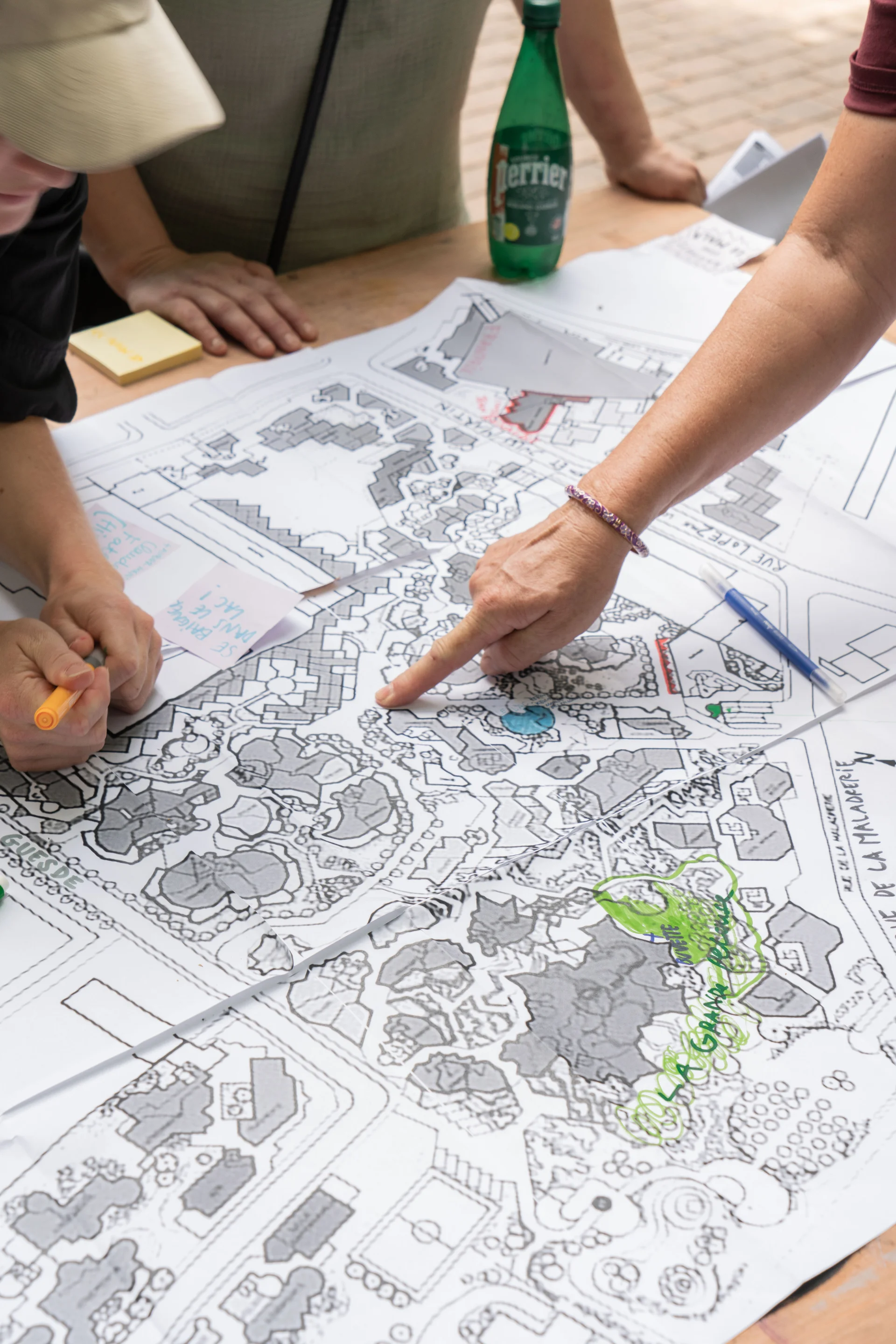
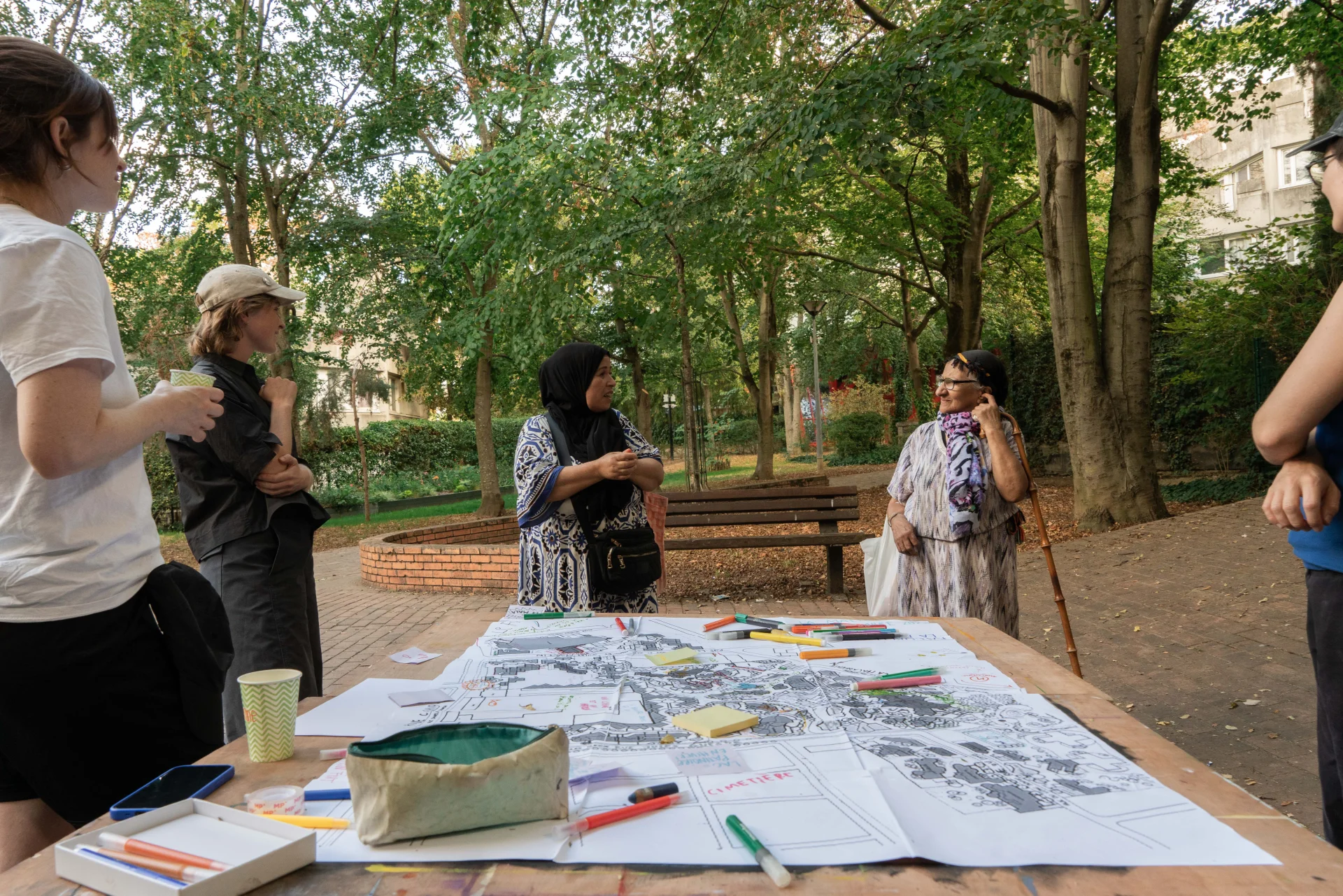
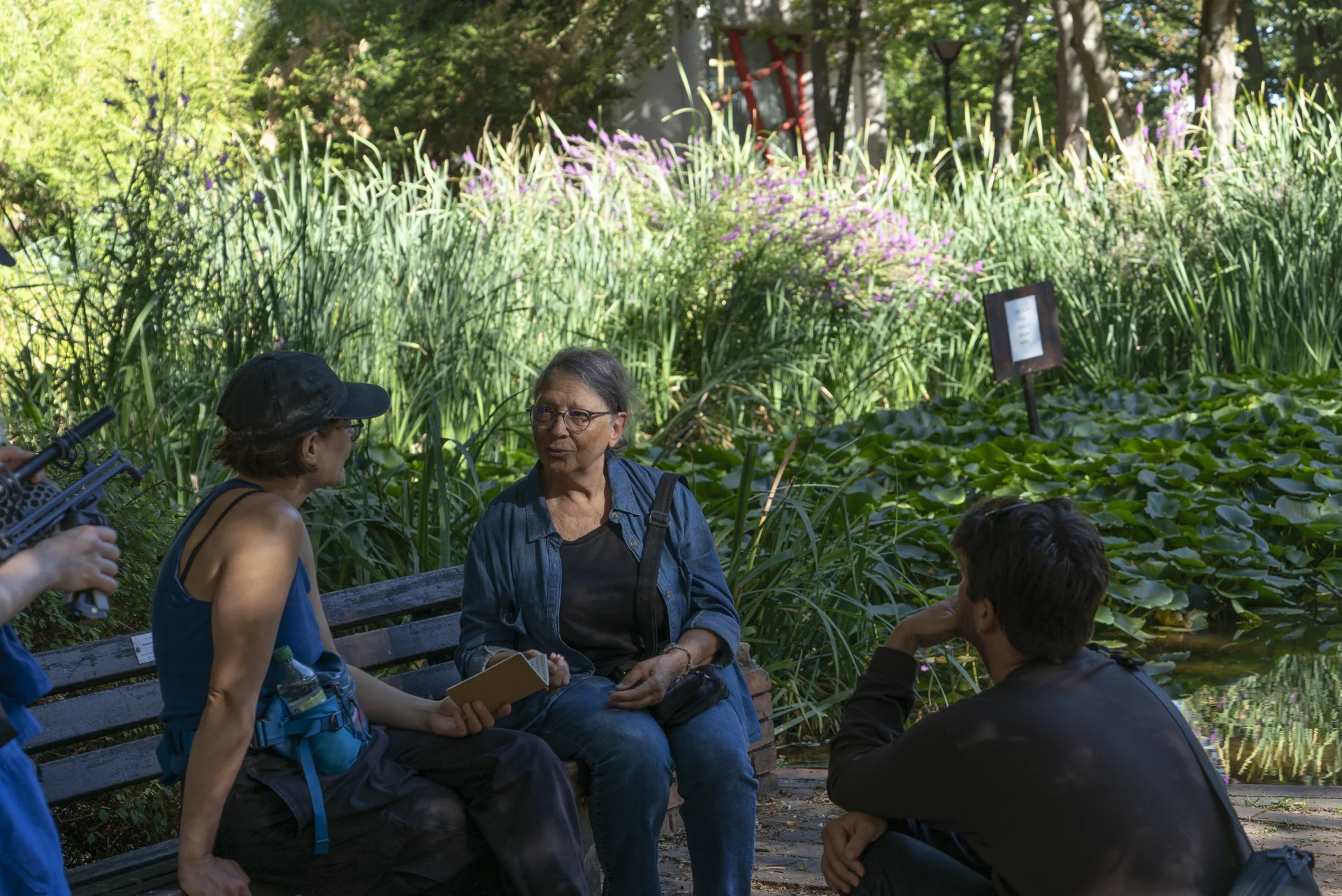
We invited residents and passersby to share their experiences of the heat and mark on a map the places where they liked to spend time during the summer. The aim of this investigative workshop was to explore the spatial and ecological qualities of the terraced architecture through the lived experiences of its residents, and to consider its potential as a reference for heat-resilient housing.
With its abundant greenery, garden terraces and shaded passages, Gailhoustet’s architecture offers small oases of coolness within the dense Parisian suburb, and should be viewed as a reference for sustainable and social contemporary housing. In times of increasing urban heat effects and a capitalized housing market, we look at her architecture to find out how mass housing can still foster beauty, the joy of living, heat resilience and community.


“It is undoubtedly time to rekindle some hope in an architecture that is more attuned to everyday life – one that grapples with these fundamental and sophisticated questions concerning individual well-being, encounters between fellow human beings, and the forms of social life – the very questions that any political debate raises.”