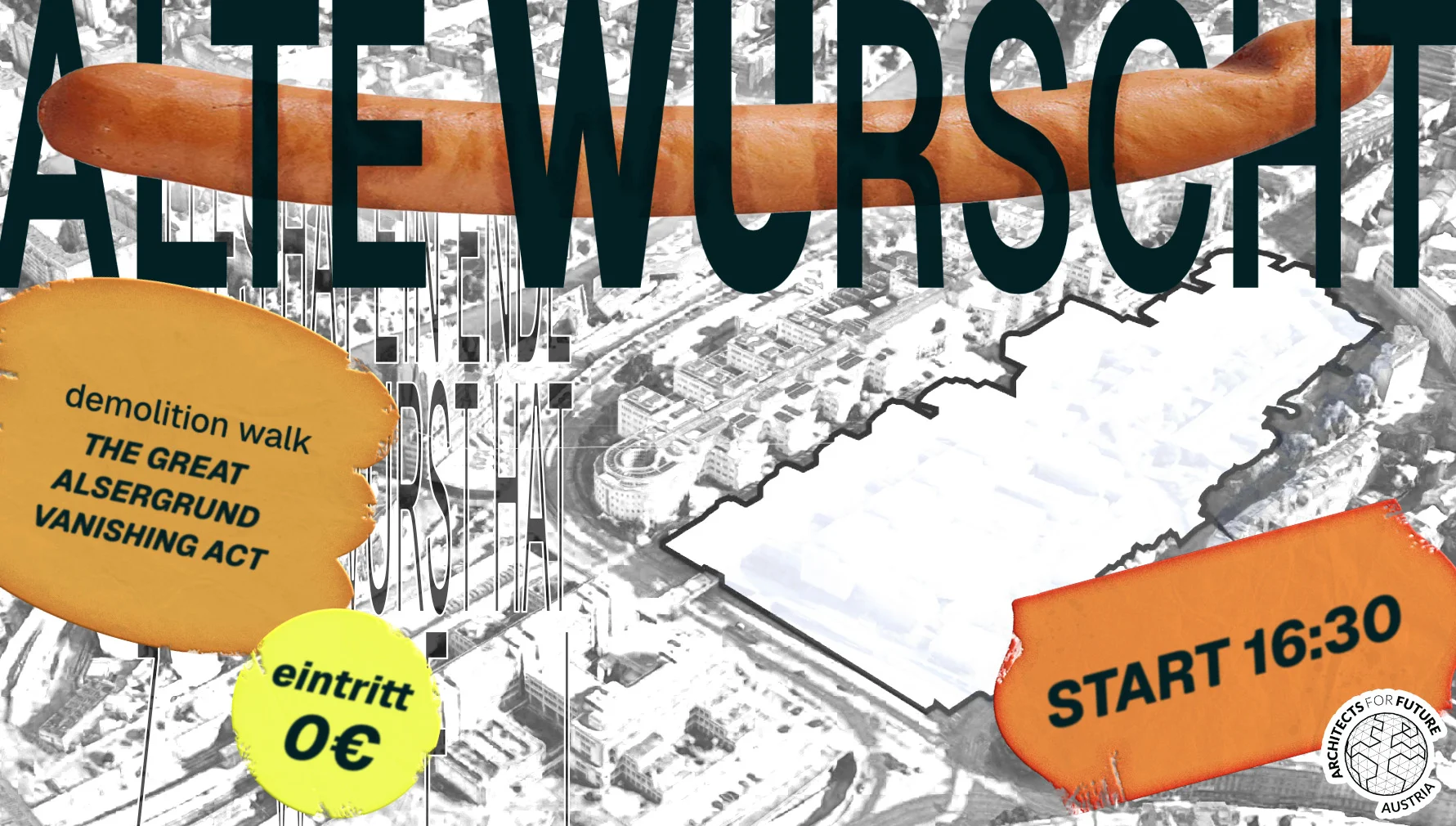
Old WUiener - Demolition walk: The great Alsergrund vanishing Act
Diese Seite enthält keine deutsche Übersetzung.
At the center of the event series "Old WUiener" is the question: What does the demolition of a building actually mean, and how much sense does it actually make? Demolition affects all of us - especially when entire city districts and places that shape identity disappear, causing irreversible ecological damage. Hardly any other place in Vienna shows our absurd approach to existing buildings as clearly as the Old WU (the old economics university building). The Old WU is threatened with demolition - the competition is currently underway and will run until summer 2027. Together with architects4future, Kollektiv Raumstation, studio kollision and the Allianz alte WU we are giving the Old WU, the old Wiener, one more day of attention. True to the saying "Everything has an end, only the sausage has two," we want to join forces and explore alternatives to demolition. Three events taking place directly at the Alte WU on September 6, 2026, will show that demolition is far from WU-rscht (far from irrelevant). The events: Demolition walk: The great Vanishing Act/ Performance "Too Hot to Handle – Bäume statt Beton"/ Open air film screening
Demolition walk: The great Alsergrund vanishing Act
As part of the “alte WUrscht” event, Architects for Future Austria are organizing a demolition walk through the districts of Alsergrund and Josefstadt, starting and ending at the Alte WU on Althangrund.
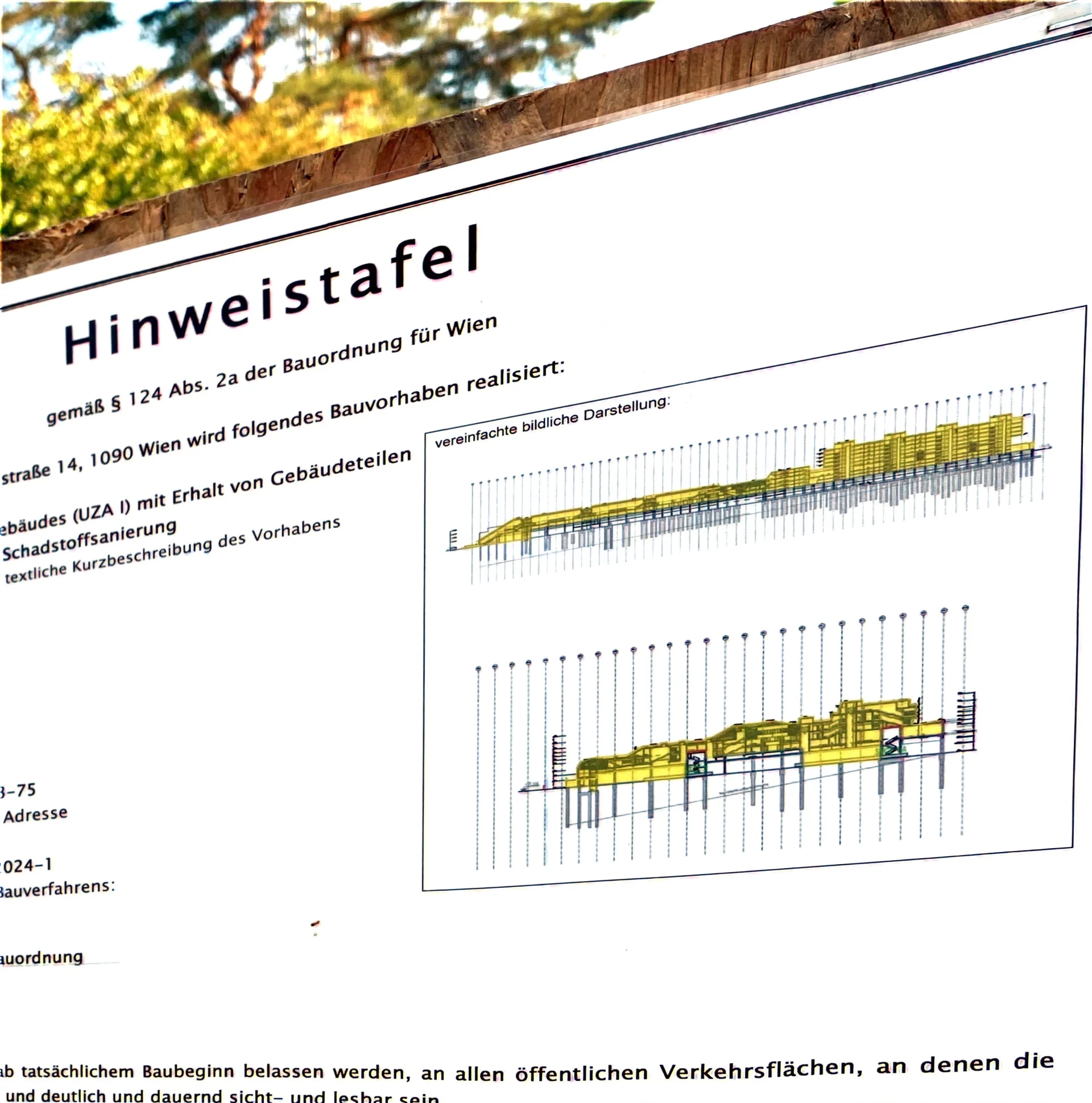
The former University of Economics and Business (WU) building was opened in 1982 and is already scheduled to be largely demolished by 2027, even though the building is fully functional and has been used for a wide range of temporary purposes. The planned demolition is one of the largest individual demolitions Austria is likely to see in the coming years, and is emblematic of a construction practice that too readily sacrifices existing buildings instead of preserving, renovating, and adapting them.
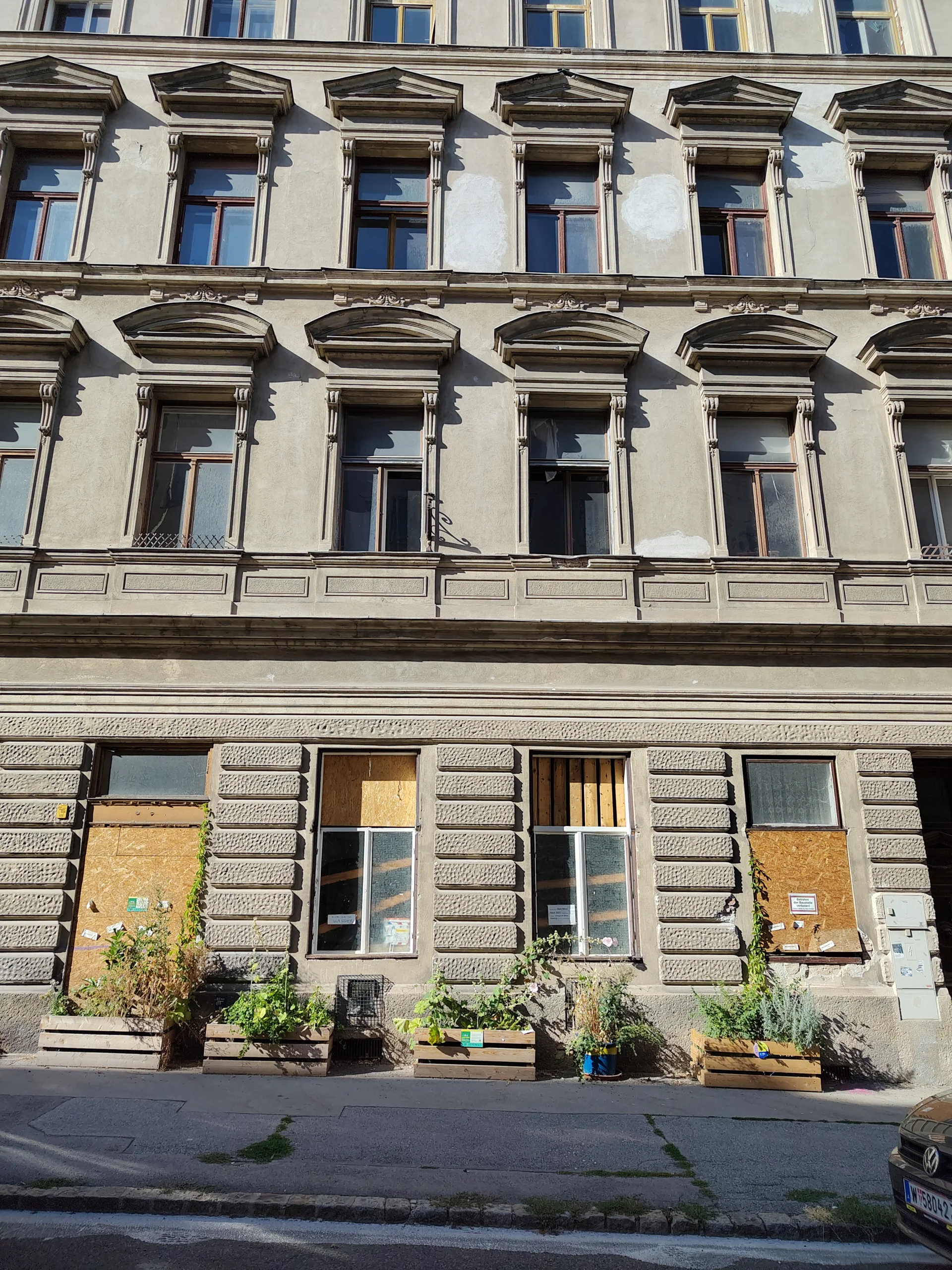
Starting at the Alte WU, the walk will visit other buildings in the immediate area where the same logic can be observed. On Alserbachstraße, for example, a Biedermeier-era ensemble in an inner courtyard has been left to deteriorate for years. On Anastasius-Grün-Gasse, a Gründerzeit building has stood empty and boarded up for years. So far, the building authorities have seen no need to intervene.
That things can also be done differently is demonstrated by a Biedermeier house on Nußdorferstraße, which has been transformed through sensitive renovation and creative temporary use into a vibrant space for artists and musicians. A positive counterexample right in the heart of the neighborhood.
The walk is not intended as a conventional guided tour, but rather as an invitation to an open conversation while walking: about embodied carbon, the waste of resources, the social consequences of vacant buildings, gaps in Vienna’s protection of historic buildings, and what it would take to make renovation and adaptation the rule rather than demolition.
Links
Event hosted by:

Architects for Future Austria
Architects for Future Austria is a non-profit association advocating for a socially and ecologically sustainable transformation of the building sector in Austria. The initiative brings together …