What We Mourn, What We Celebrate, What We Imagine: a two-day workshop of collective memory and visioning for Metaxourgeio
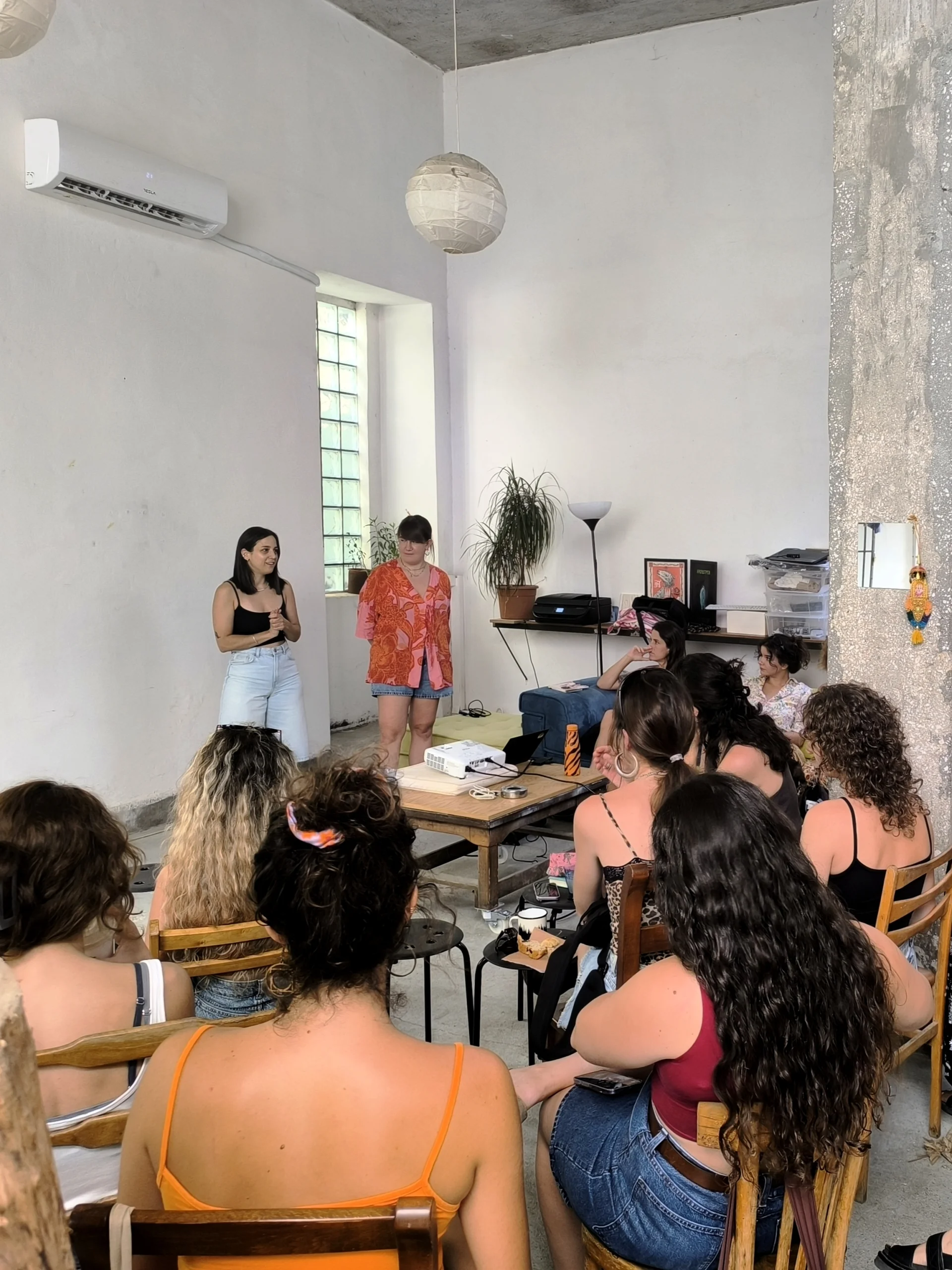
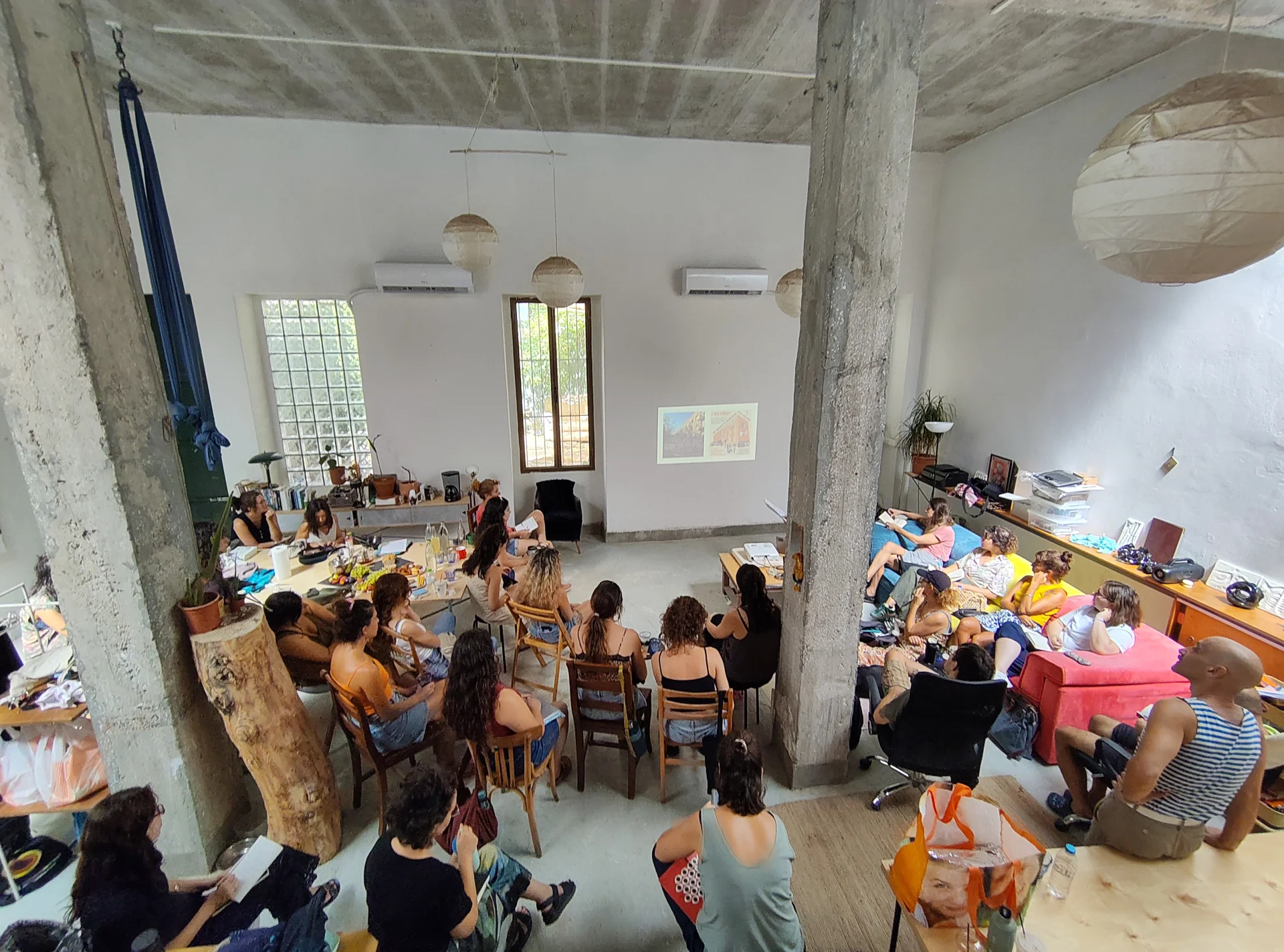
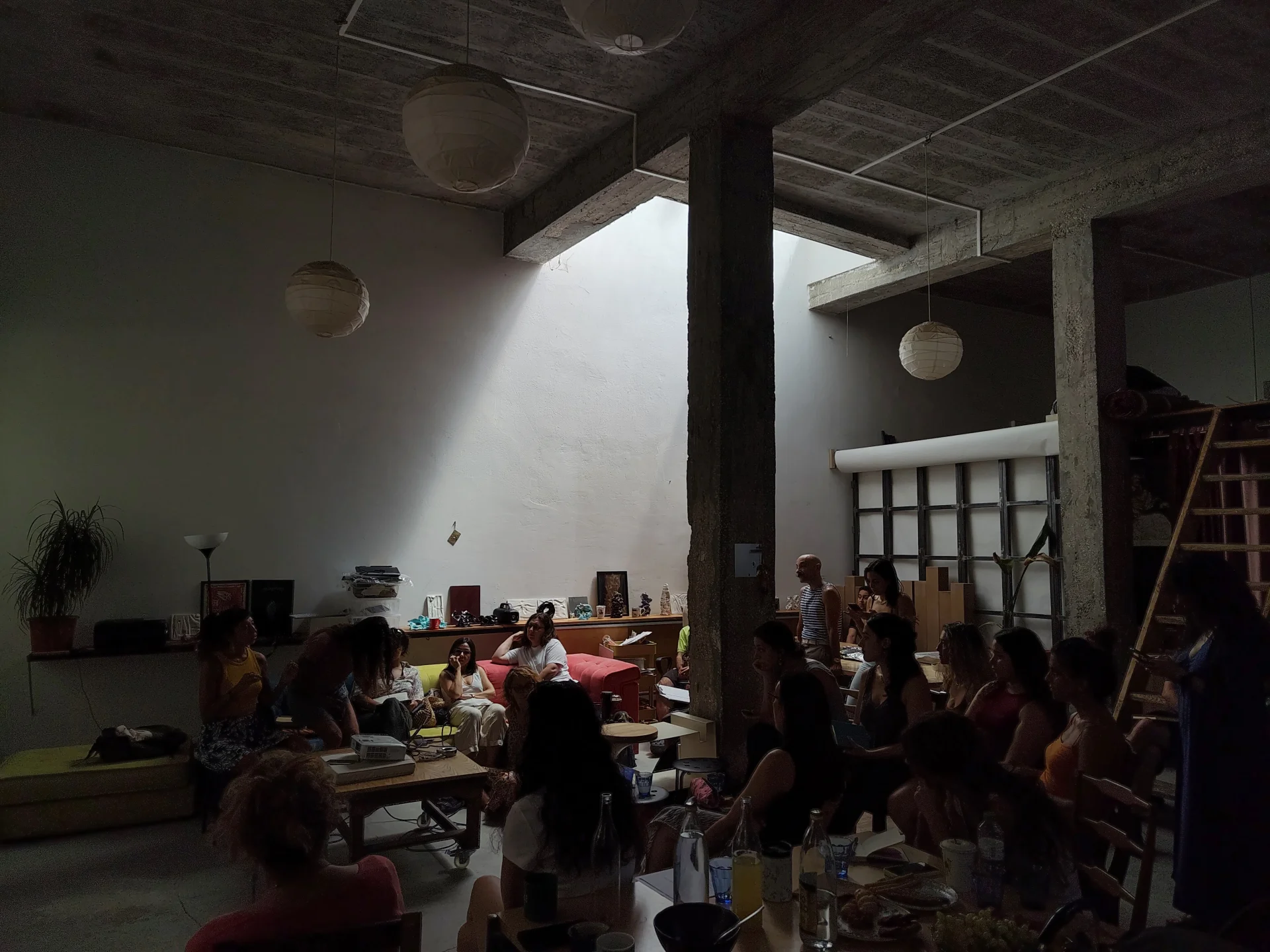
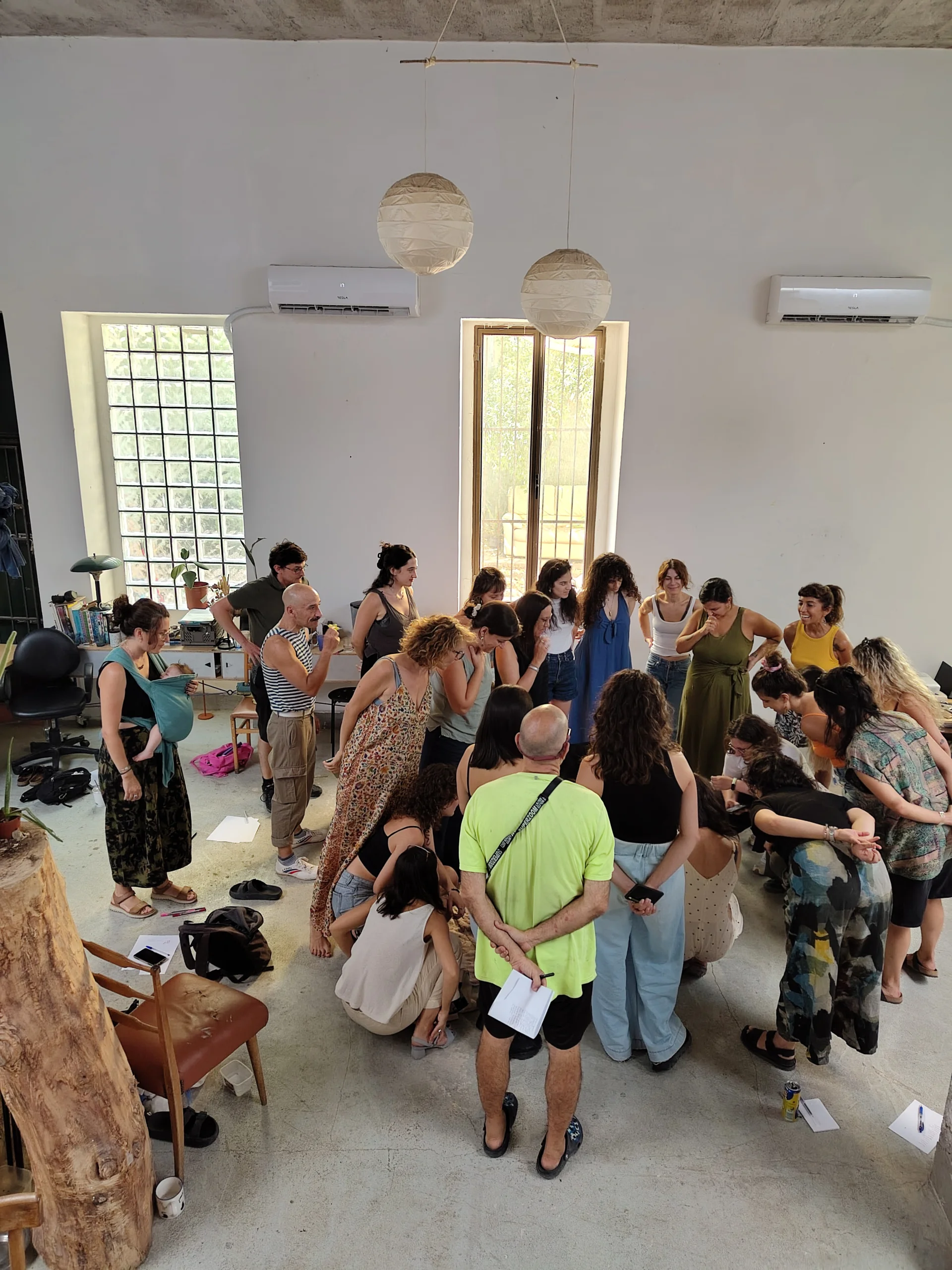
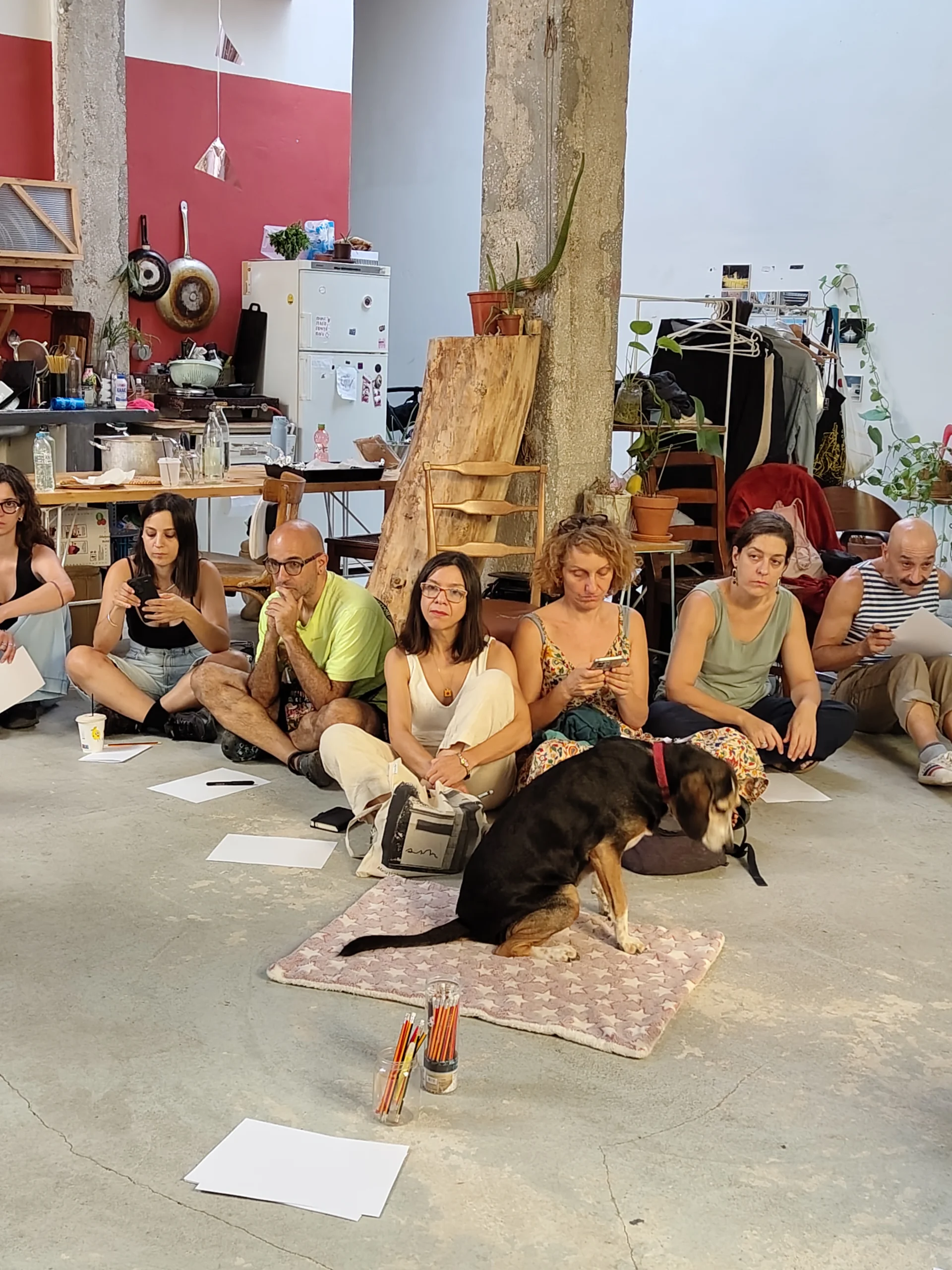
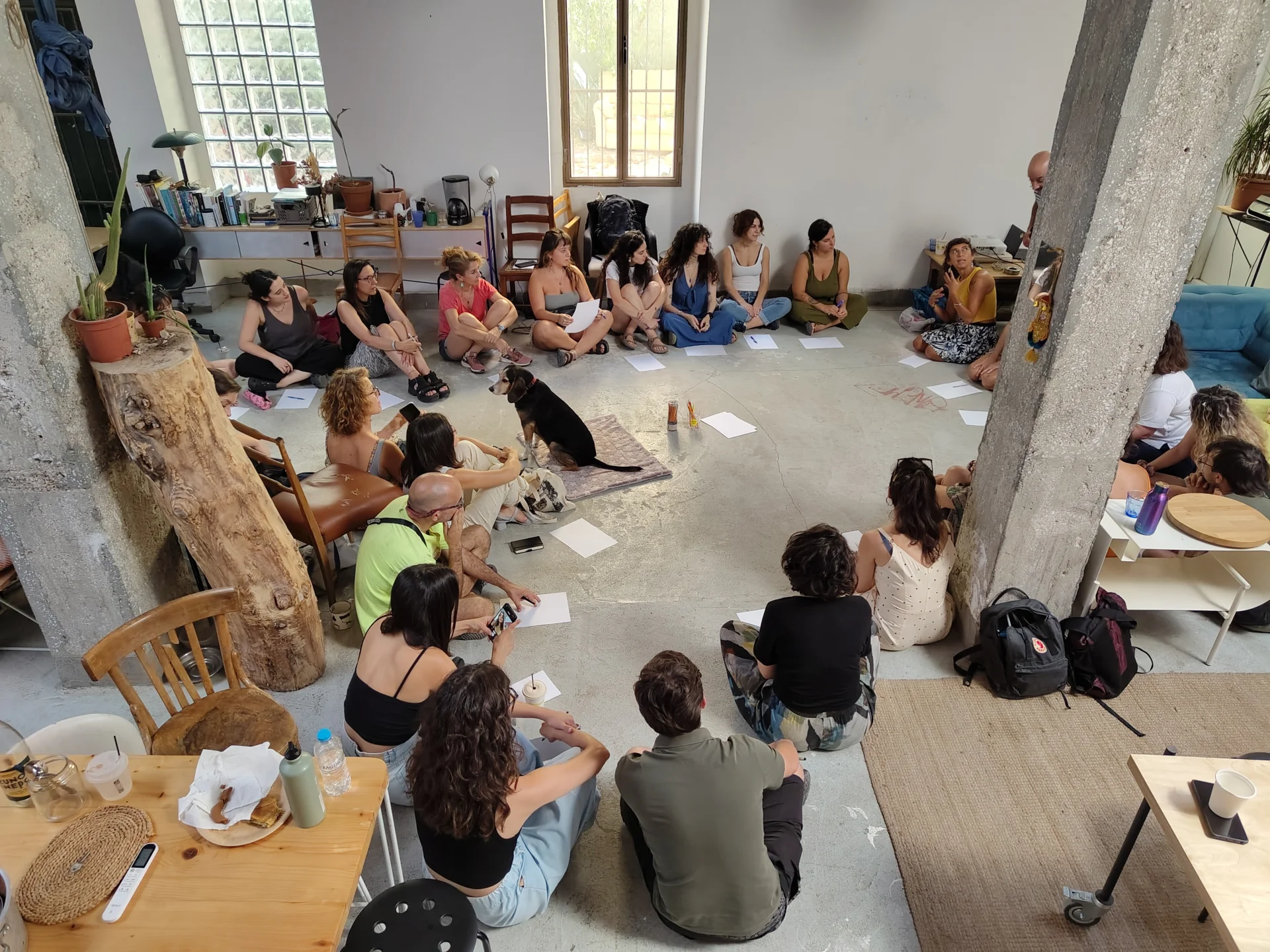
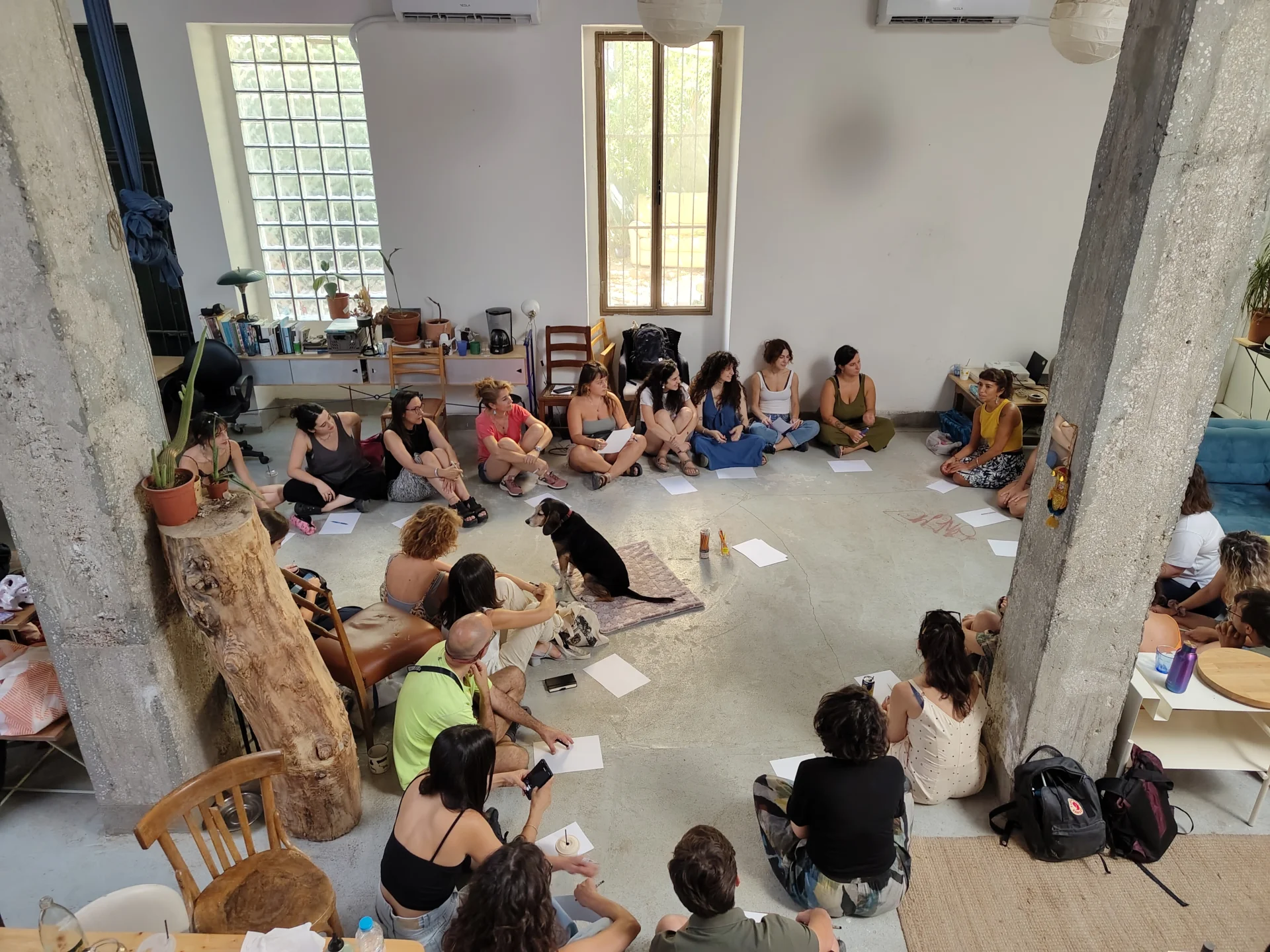
On the 5th and 6th of September, a group of around twenty people -residents, architects, activists, researchers, practitioners- gathered in Metaxourgeio for a two-day workshop on critical cartography, collective mourning, and urban futures. The workshop was organised by ACAN Greece as part of the European Action Week 2026, under the ACAN Intenrational network-wide concept Saving the Future We Already Have.
Metaxourgeio is a neighbourhood that holds a lot. Central Athens, layered working-class and migrant history, and now -rapidly, visibly- the pressure of gentrification. Short-term rentals replacing long-term residents. Buildings emptied, repurposed, demolished. A place that is being rewritten by forces that have little interest in what was already written there. The question the workshop set out to ask was simple and difficult at once: what would it look like to map this neighbourhood from the inside, not from the perspective of property lines and planning permits, but from grief, from joy, from the imagination of the people who live and care about it?
Day One: Walking, Listening, Grieving
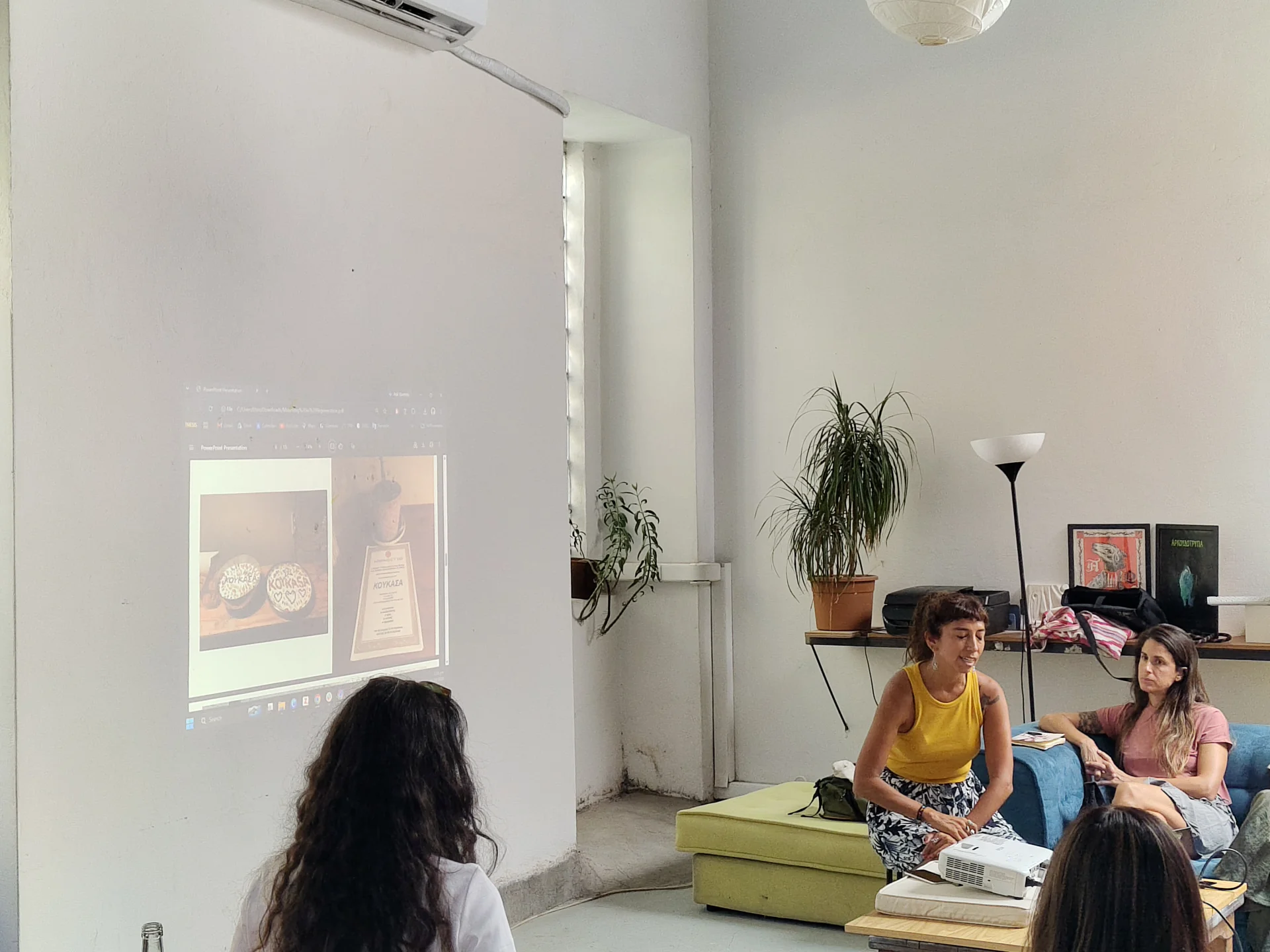
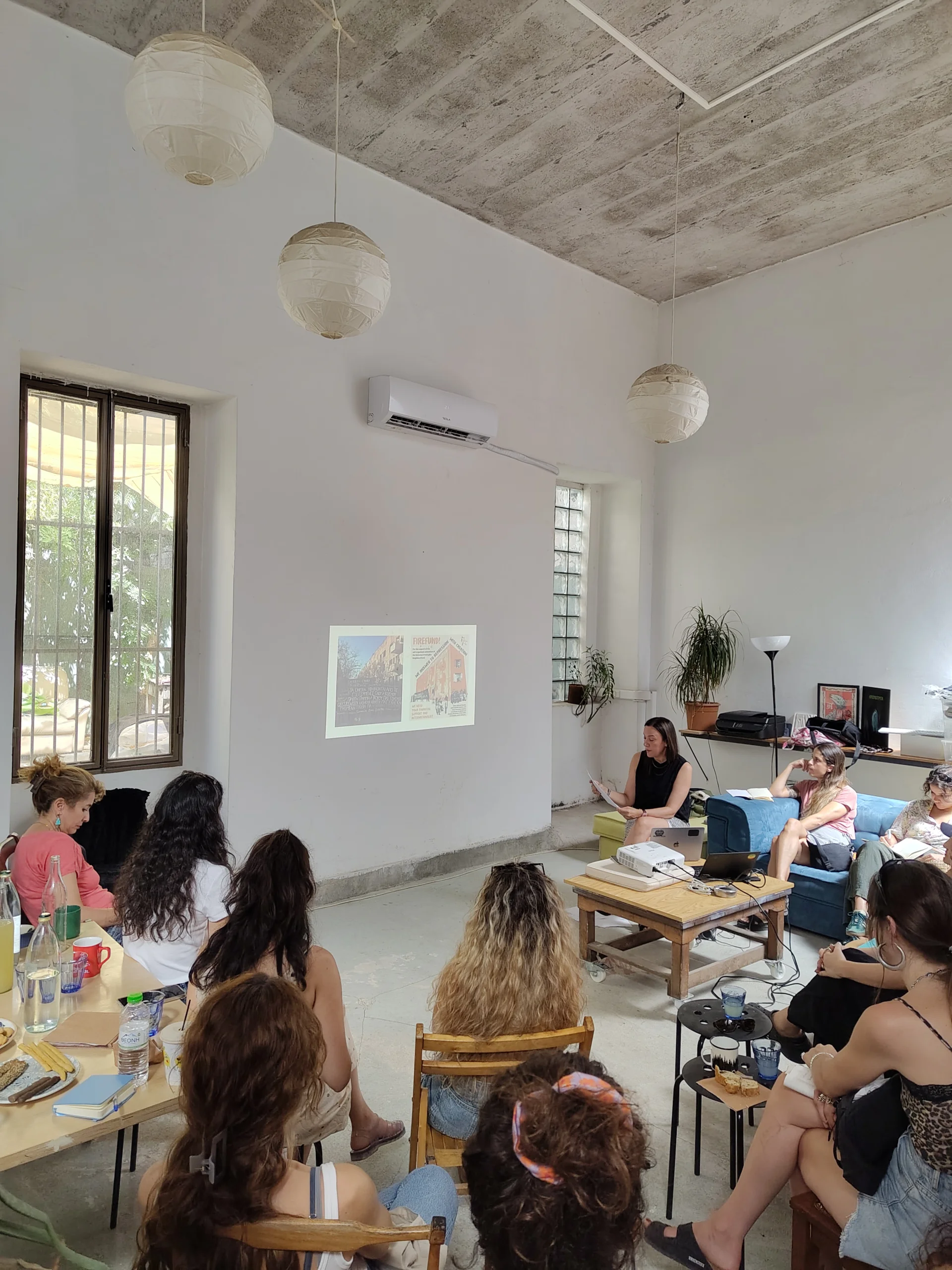
The first day opened with Penny Travlou, Associate Professor of Cultural Geography at the University of Edinburgh, who untangled the complexity of how cities are studied and represented. Her presentation moved through the relationship between culture, investment, gentrification, and the transformation of neighbourhoods, and arrived at a provocation that set the tone for everything that followed: who has the power to define and represent the city? Maps, she reminded us, are never neutral. They are choices about what counts, what is named, what is made legible, and to whom.
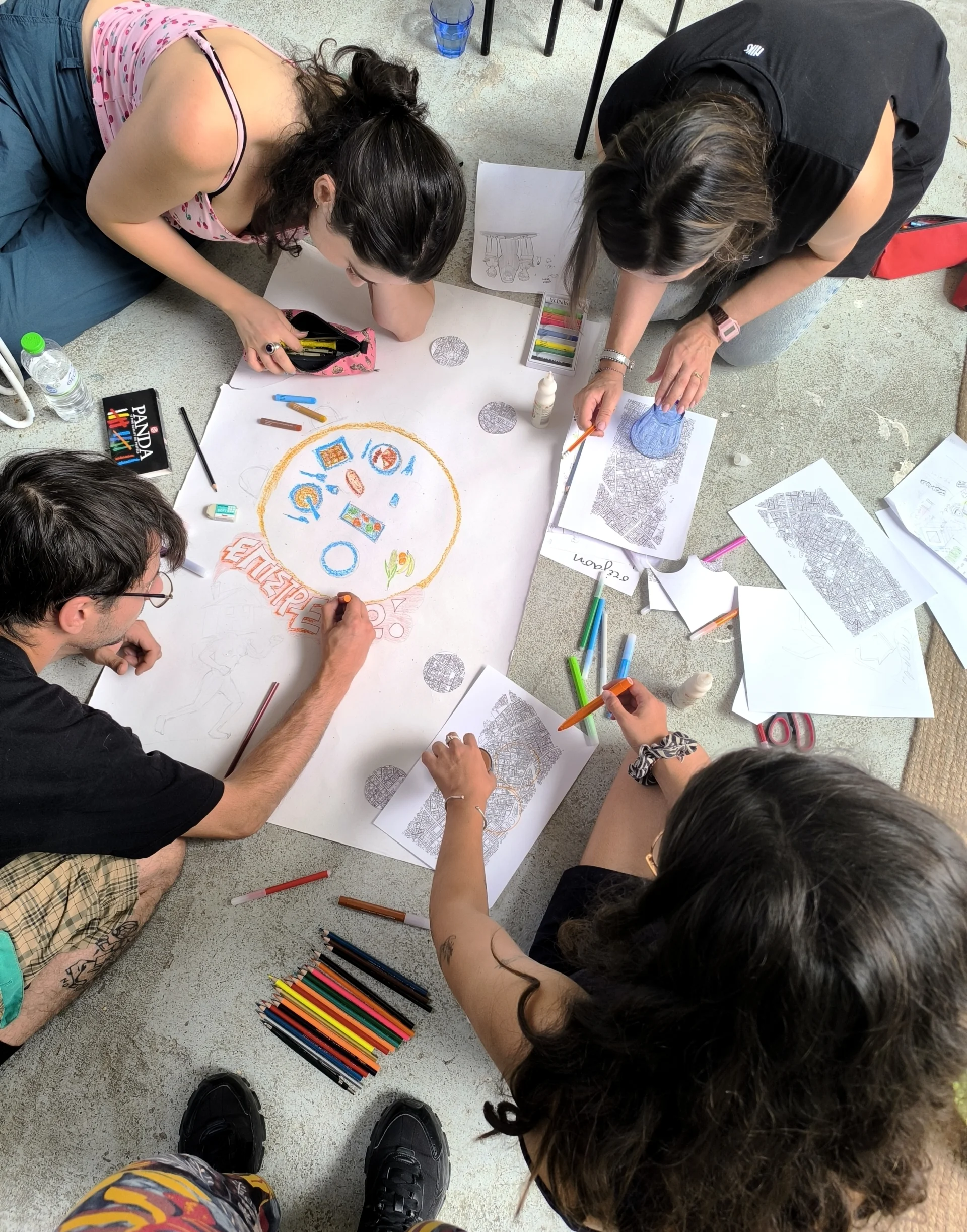
As Penny noted, maps don't simply describe reality, they construct it. Daphne Delfaki and Katerina Boucoyannis introduced the group to counter-cartography. A neighbourhood coloured "high risk," a boundary drawn through a community, a satellite image that flattens lived complexity into geometry - these are political acts, not technical ones. And yet, counter-mapping has a long tradition of resistance: indigenous communities asserting territorial claims, residents documenting what official data erased, the Situationist dérive producing maps that looked nothing like a planner's. The invitation was simple: to walk the city differently, and draw it again from below.
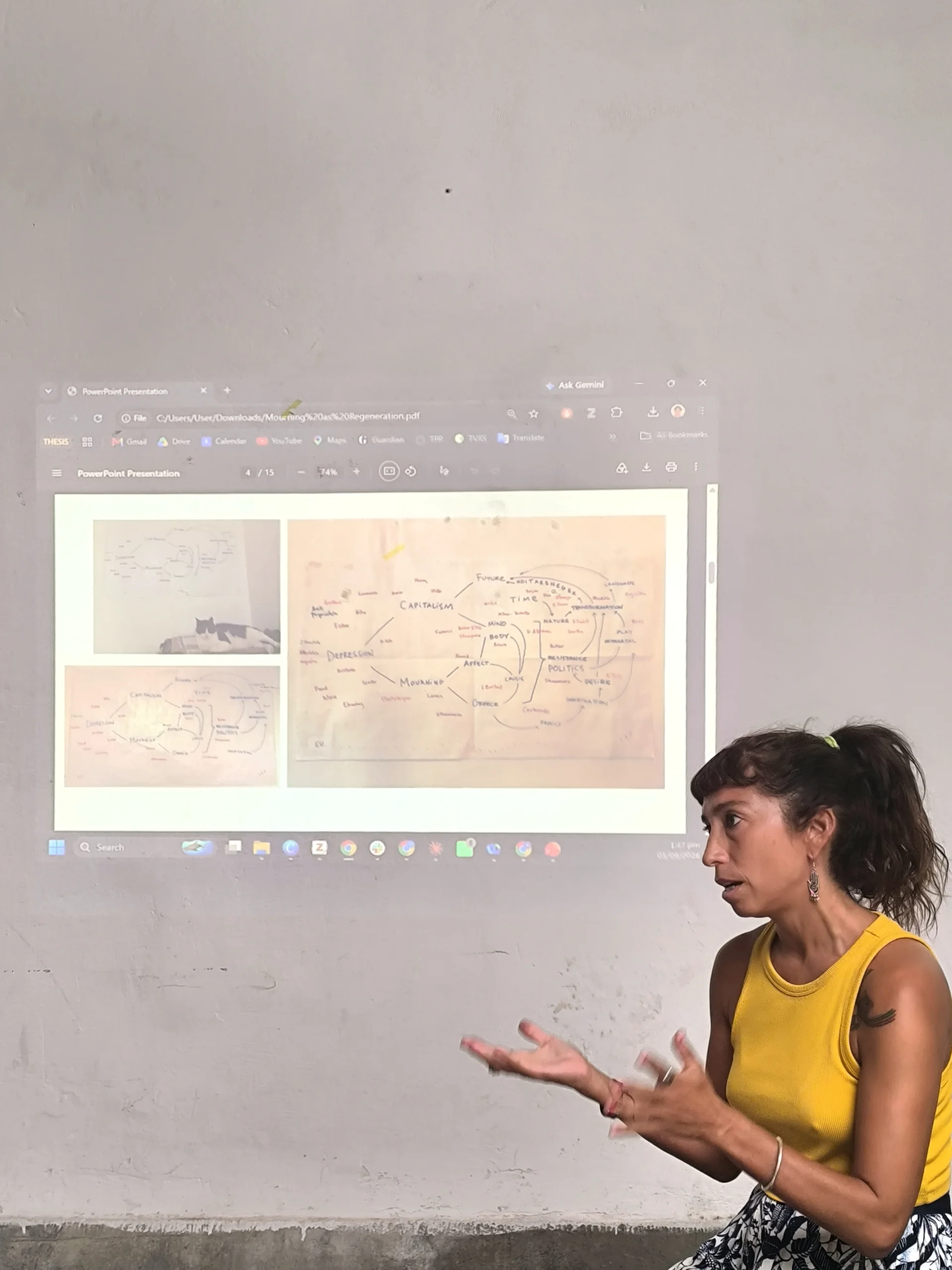
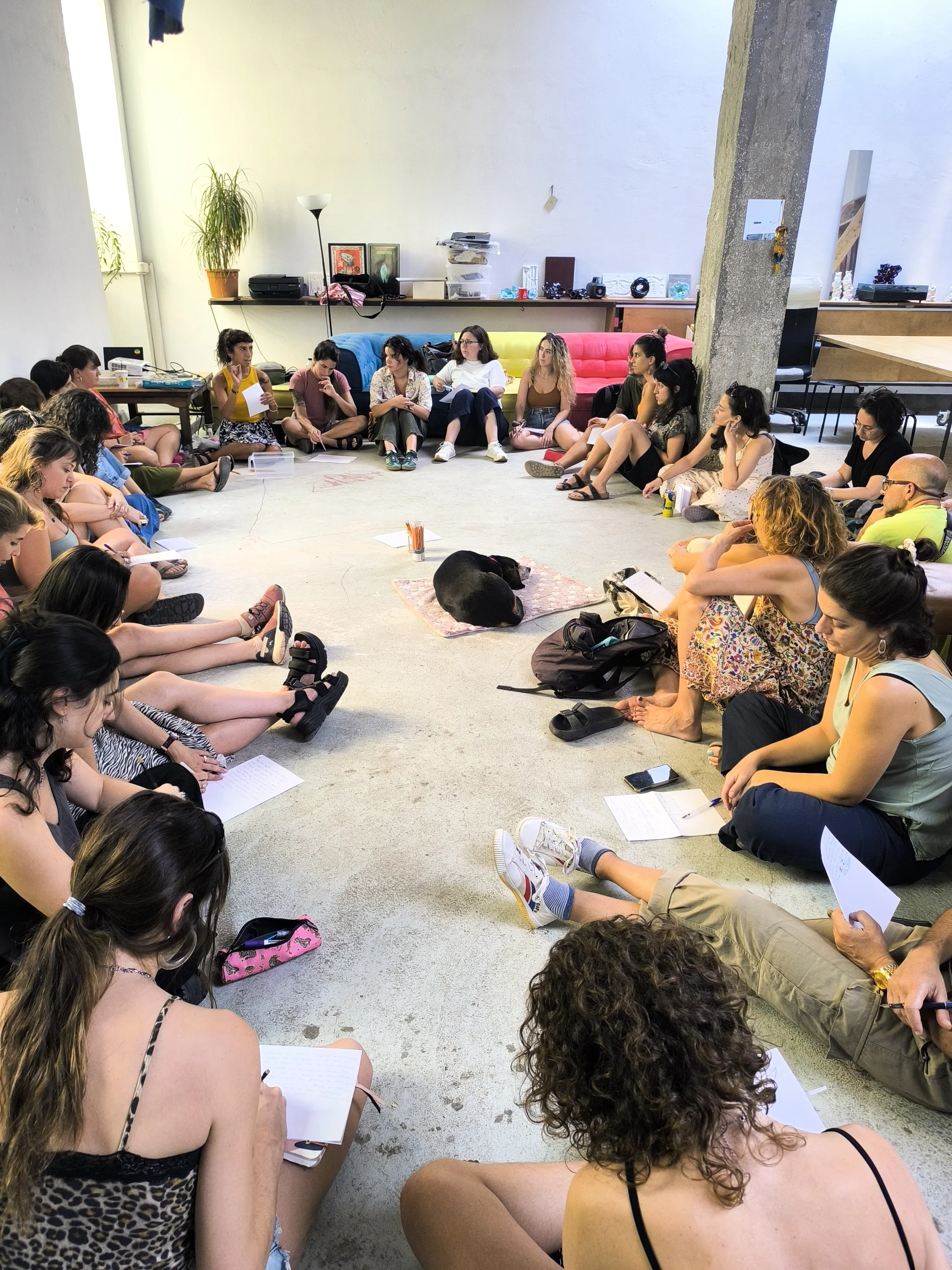
Eliana Otta, Peruvian artist and co-founder of the ecofeminist collective Mouries in Athens, then brought her research on collective mourning into the room. Drawing on her doctoral project Lost and Shared, she shared her concept of "fertilising mourning" -grief understood not as an endpoint but as a regenerative, transformative force. And then she did something unexpected: she made us part of it. What followed was less a presentation than a ceremony- a space of shared intimacy and attention, where loss became something that could be held collectively rather than carried alone. Several people in the room cried. It felt necessary.
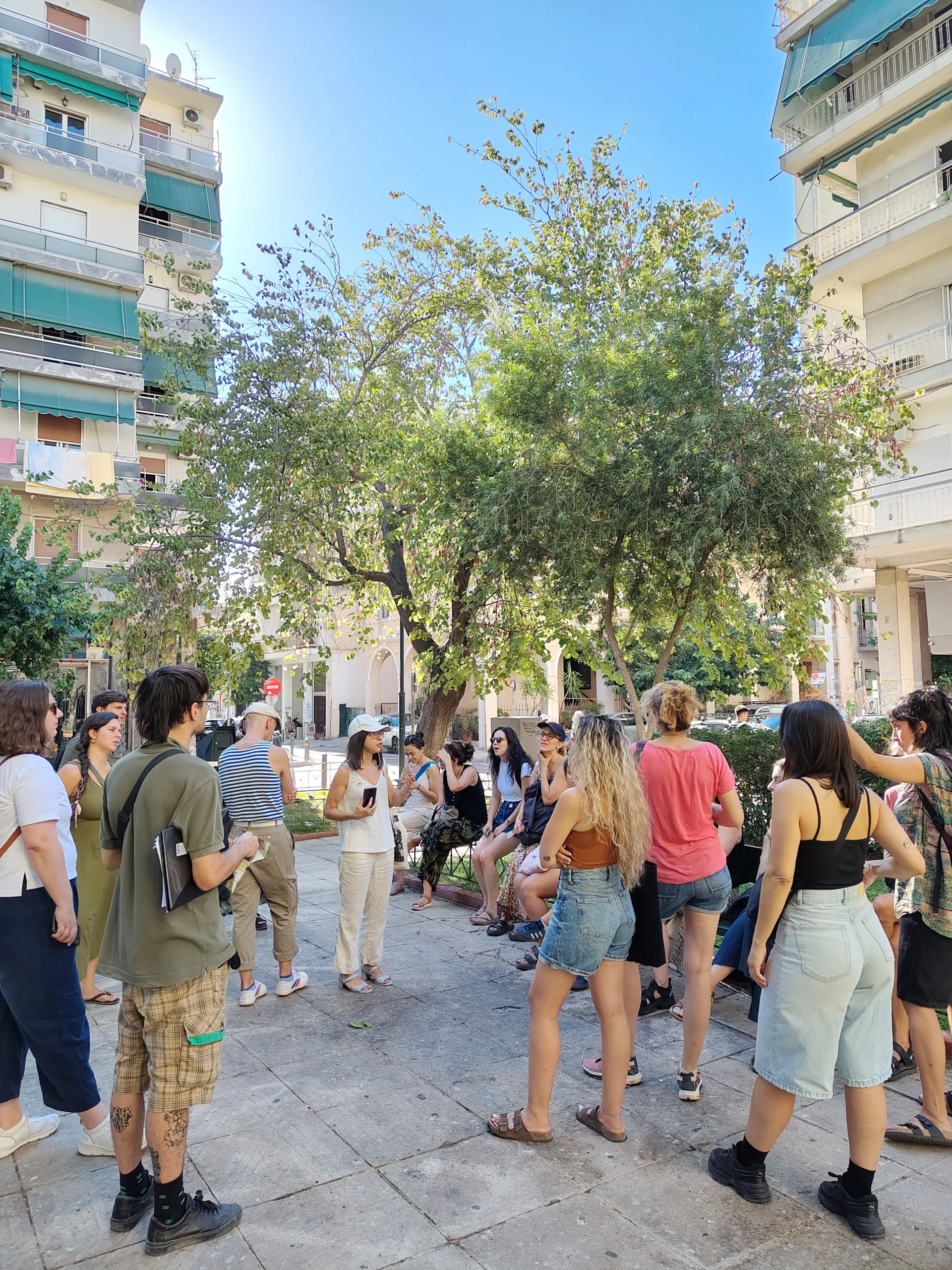
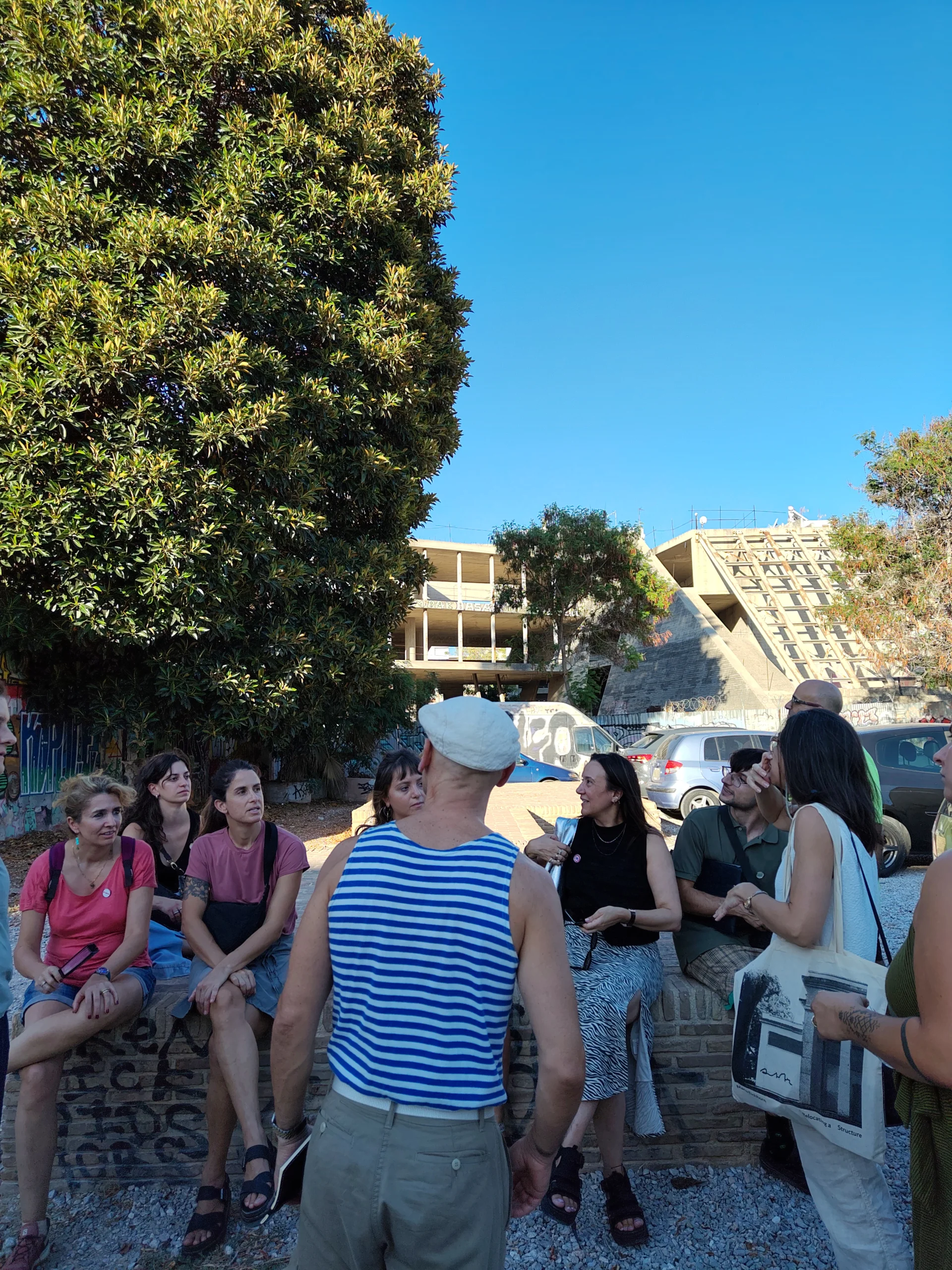
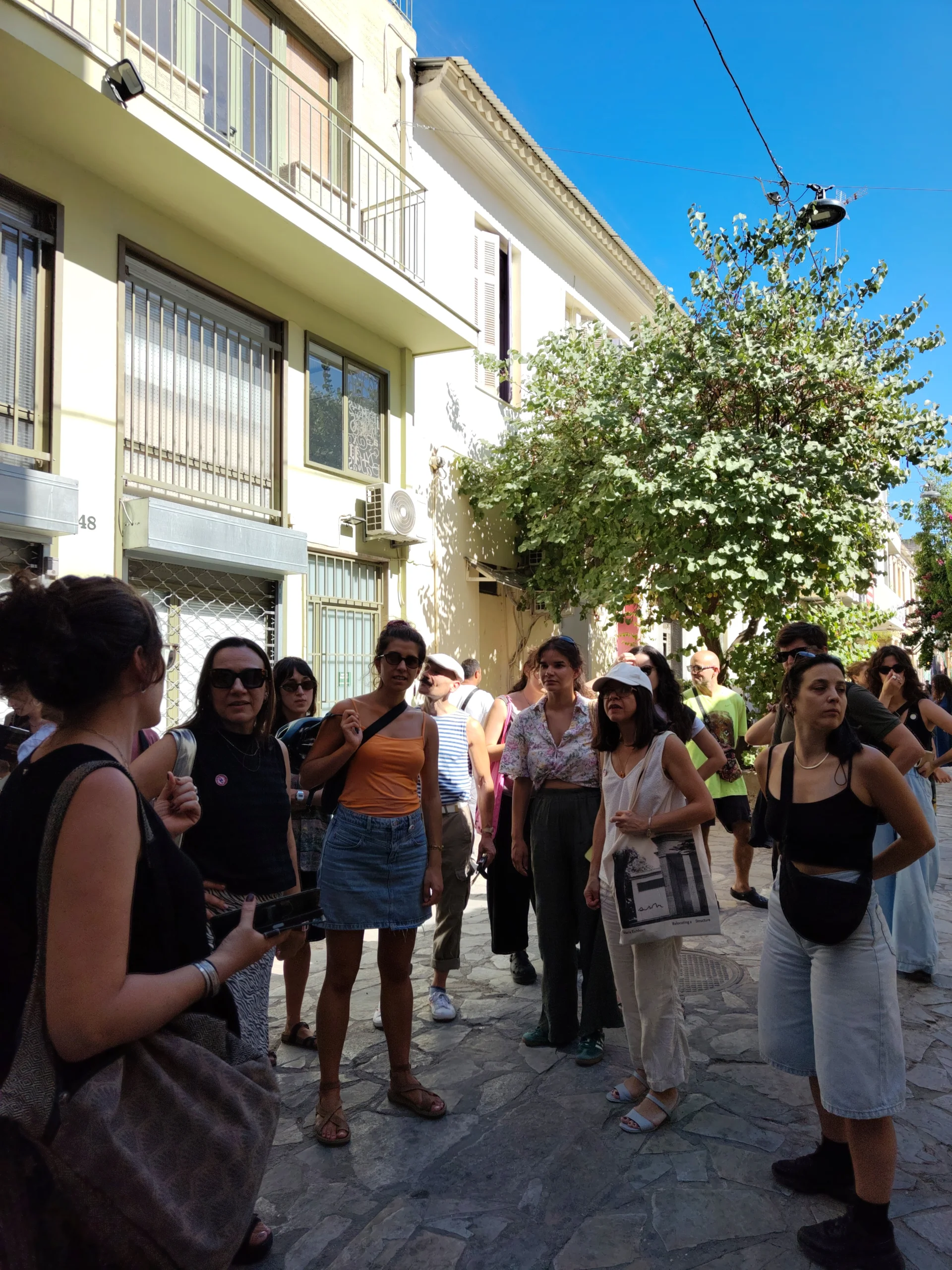
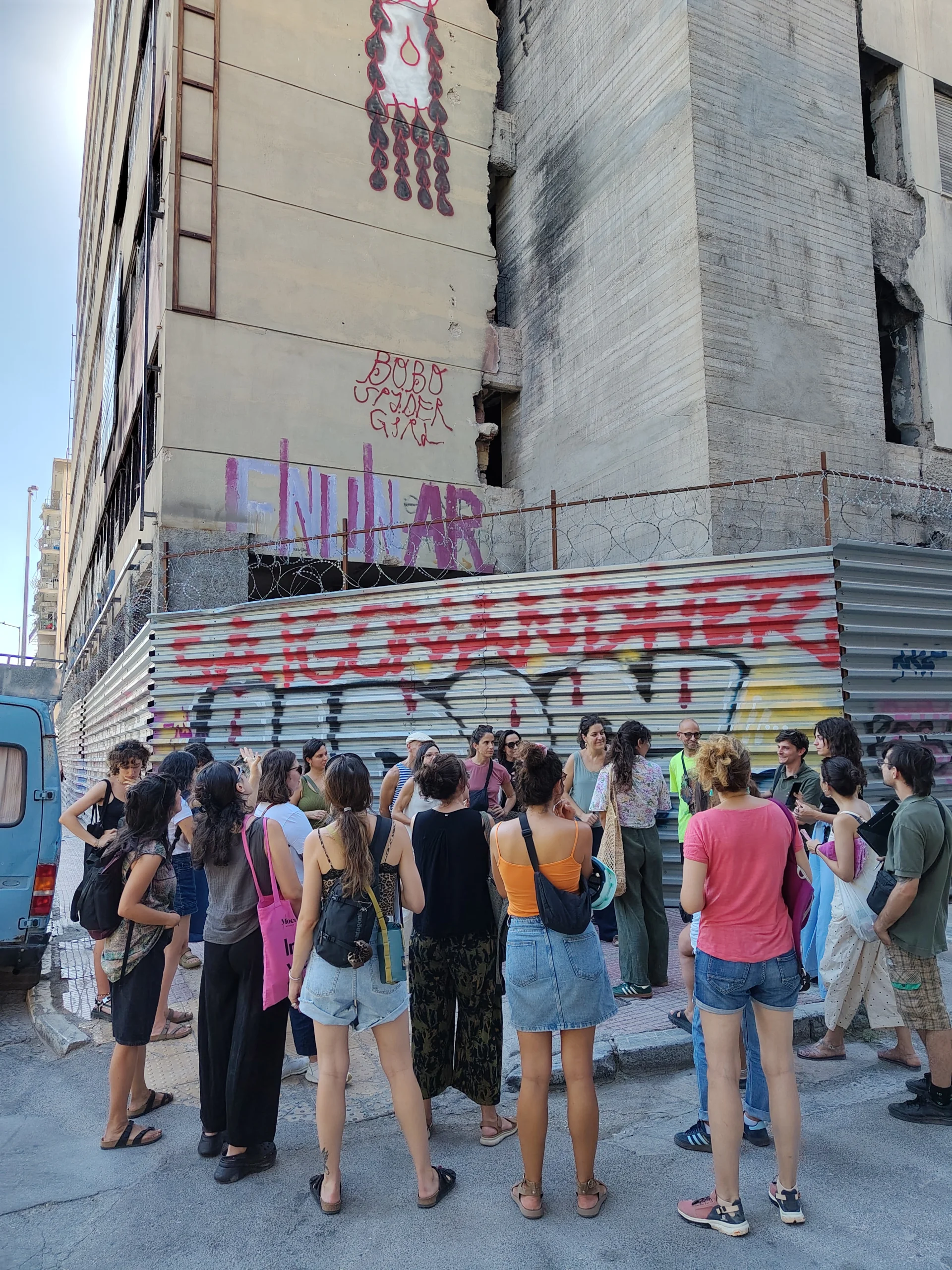
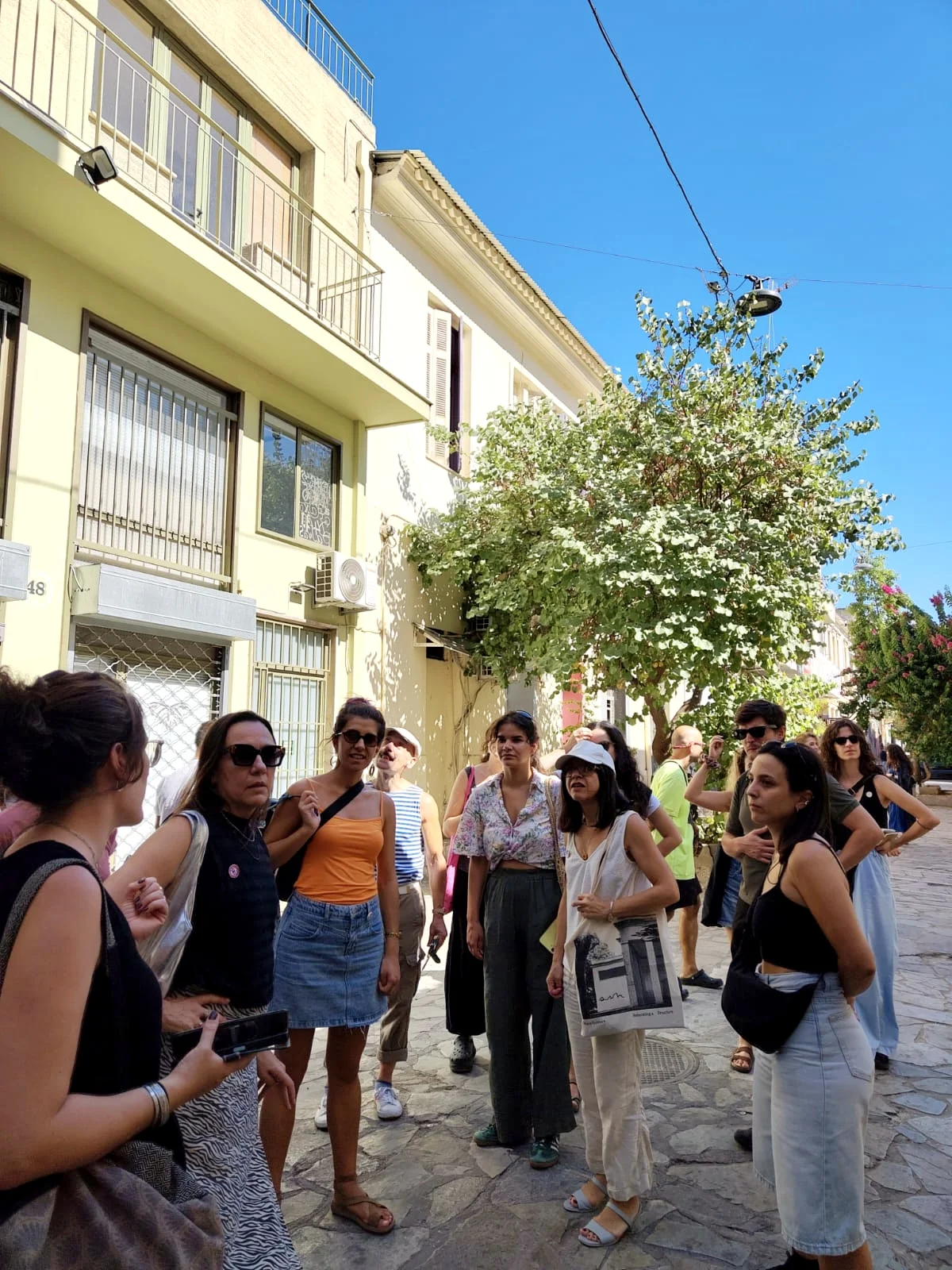
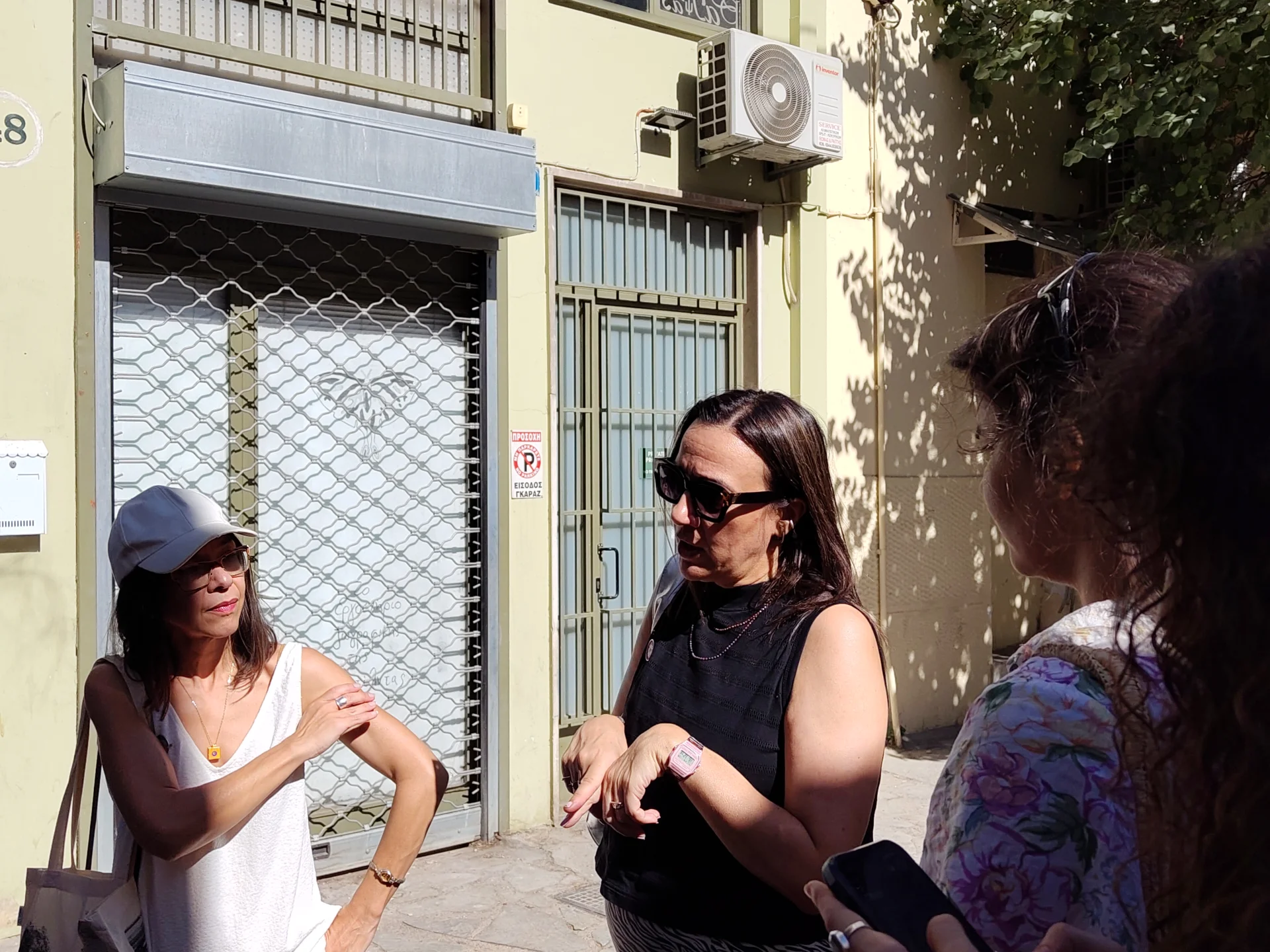
In the afternoon, Constantina Theodorou -architect-researcher, urban performance practitioner, and member of CoHab Athens- led the group through the streets of Metaxourgeio. The walk was planned as a guided route through sites of memory and change, but it quickly became something more alive. Participants who knew the neighbourhood began to speak: pointing out what used to be there, what had closed, what felt different, what stubbornly remained. The walk became a conversation between the street and the group, between the past and the present, between what could be seen and what could only be remembered.
Day Two: Dreaming, Weaving, Making
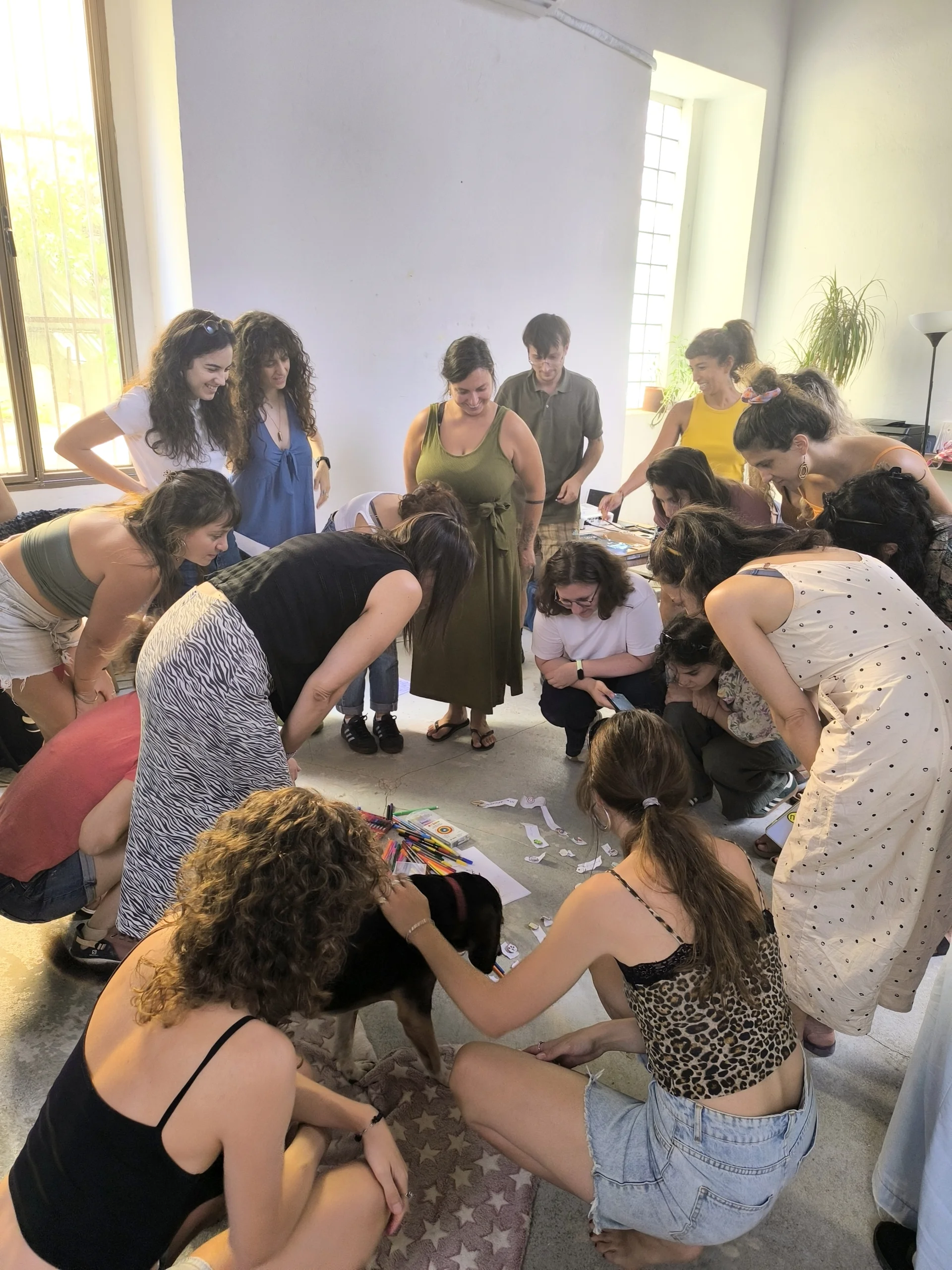
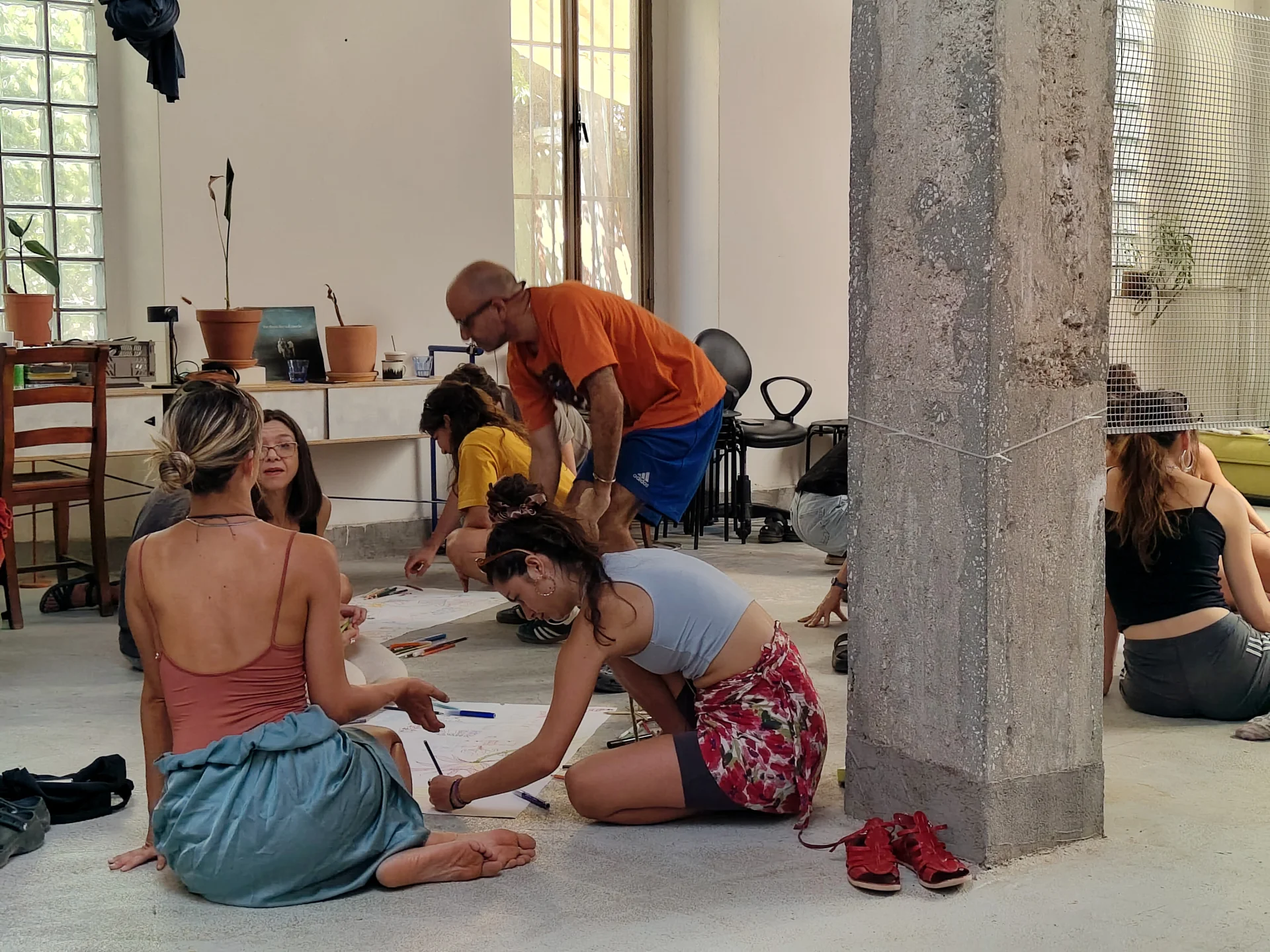
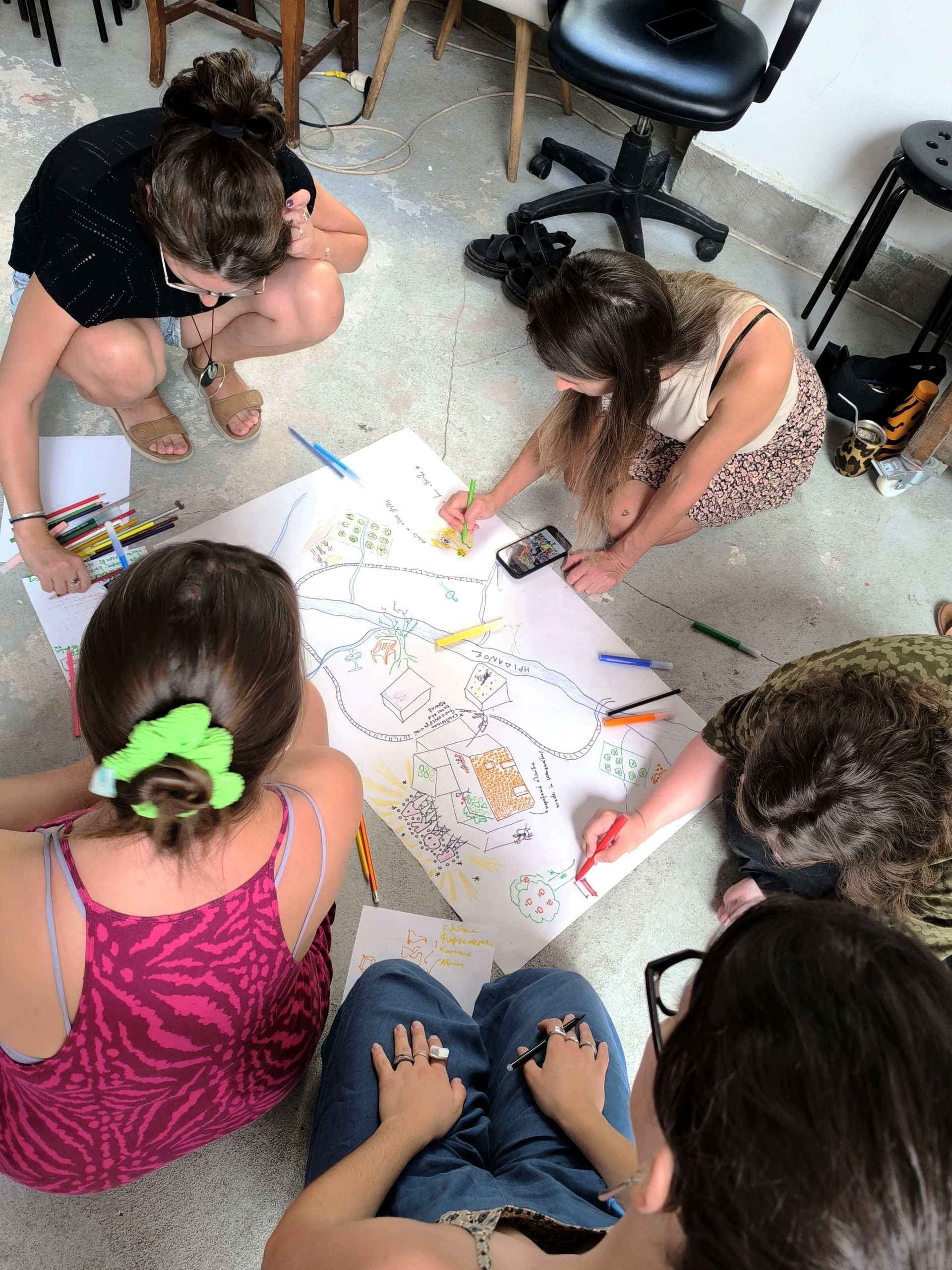
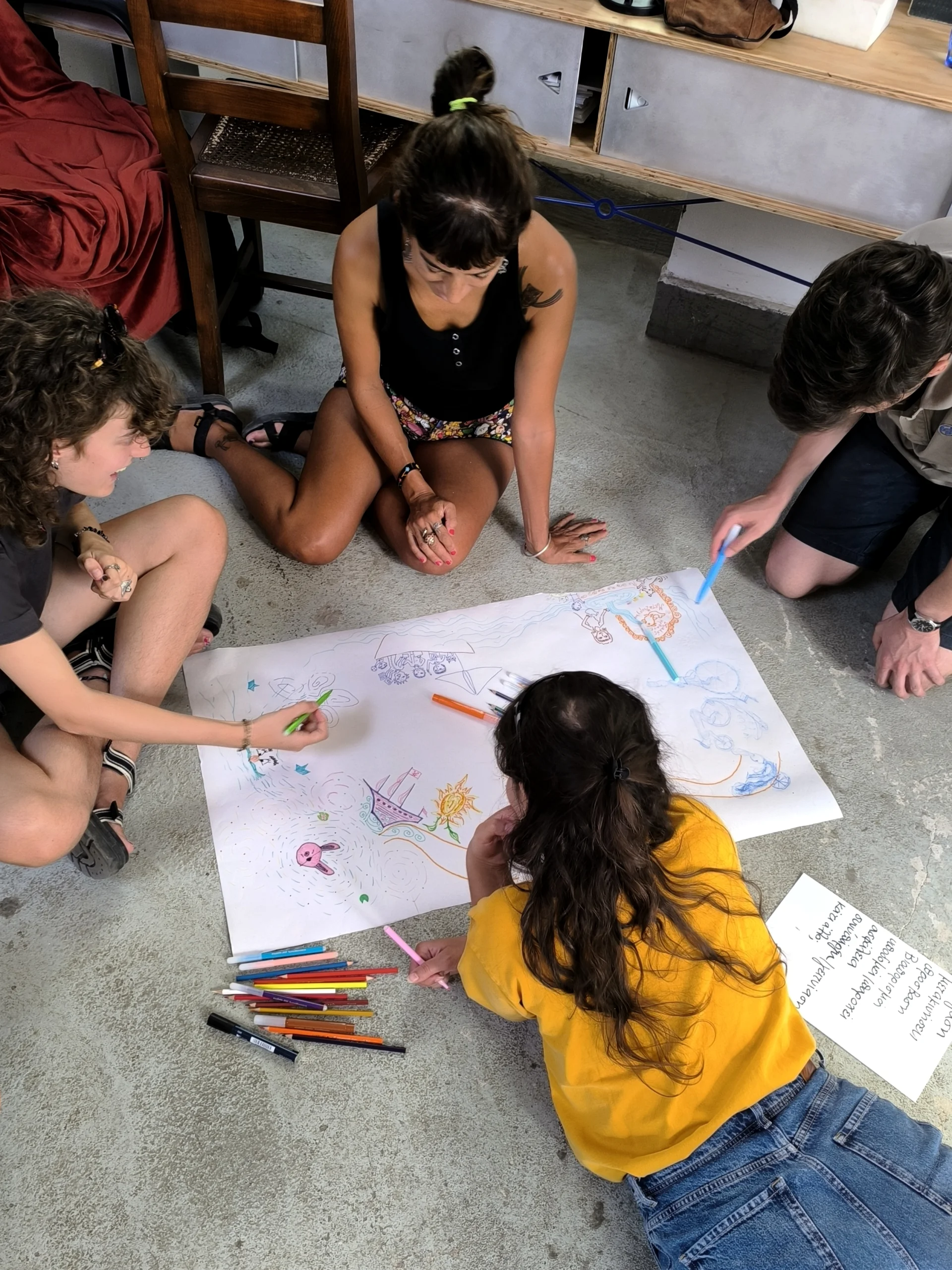
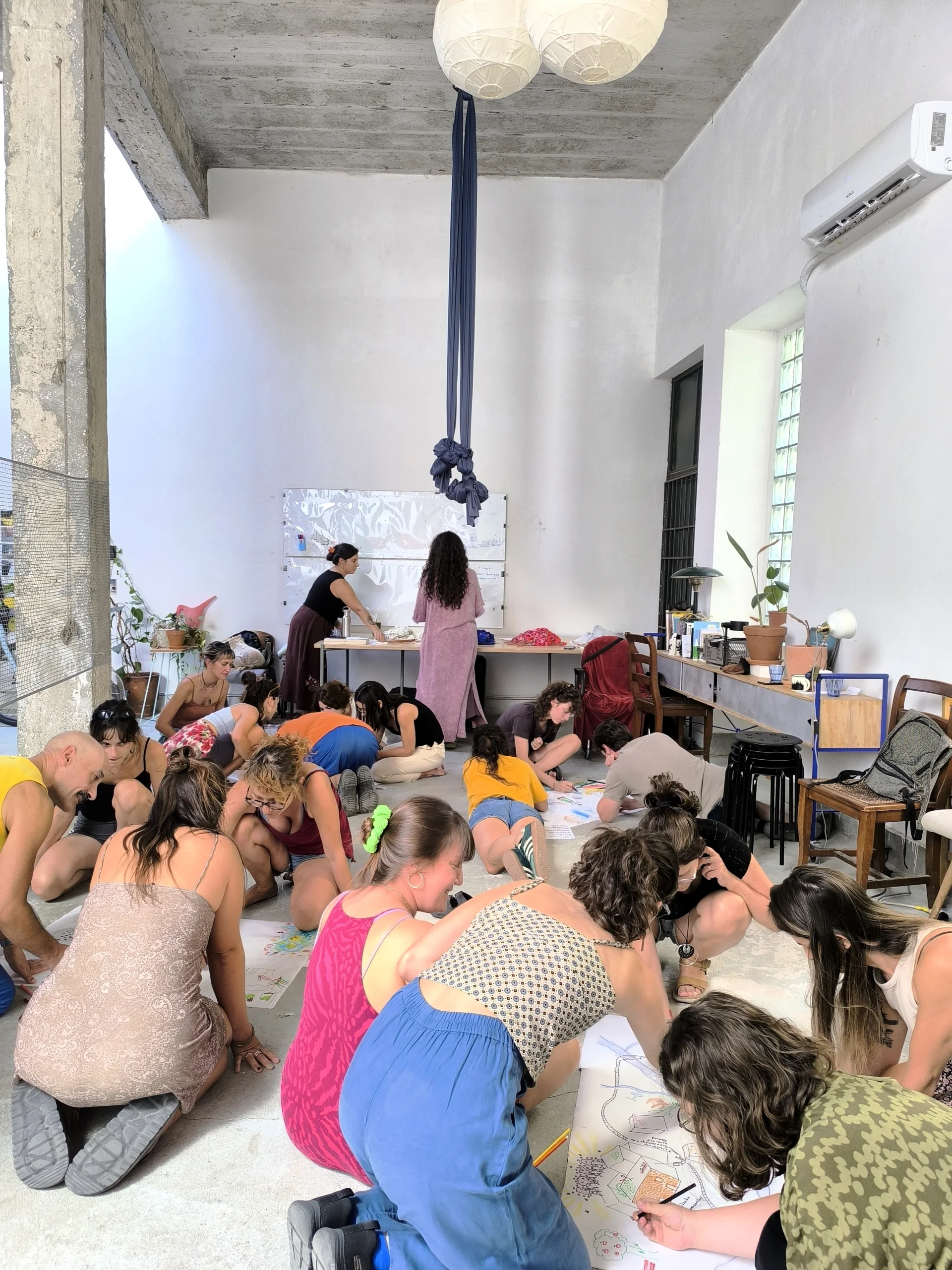
The second day began with a future visioning workshop led by Venetia Galanaki and Eirini Sakellari. Working from an ecological metaphor -roots and mycelia spreading quietly underground, making connections invisible from the surface- they asked participants to imagine the neighbourhood not as it is but as it could be. What would a Metaxourgeio built on solidarity look like? What forms of rooted care could become fertile ground for different futures? The exercise seemed to unlock something in the room. People became expansive, playful, specific. Visions multiplied.
And then came the weaving.
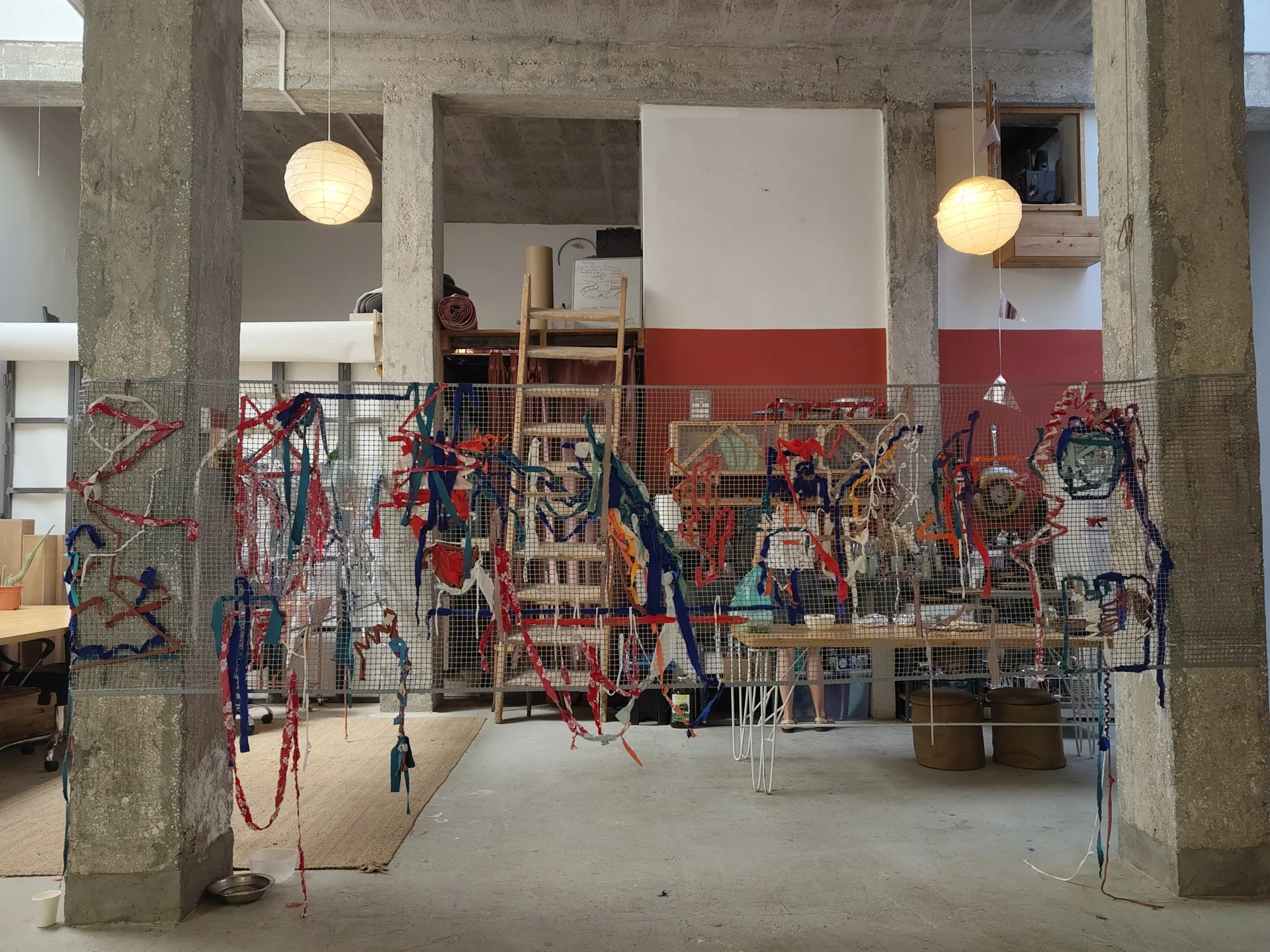
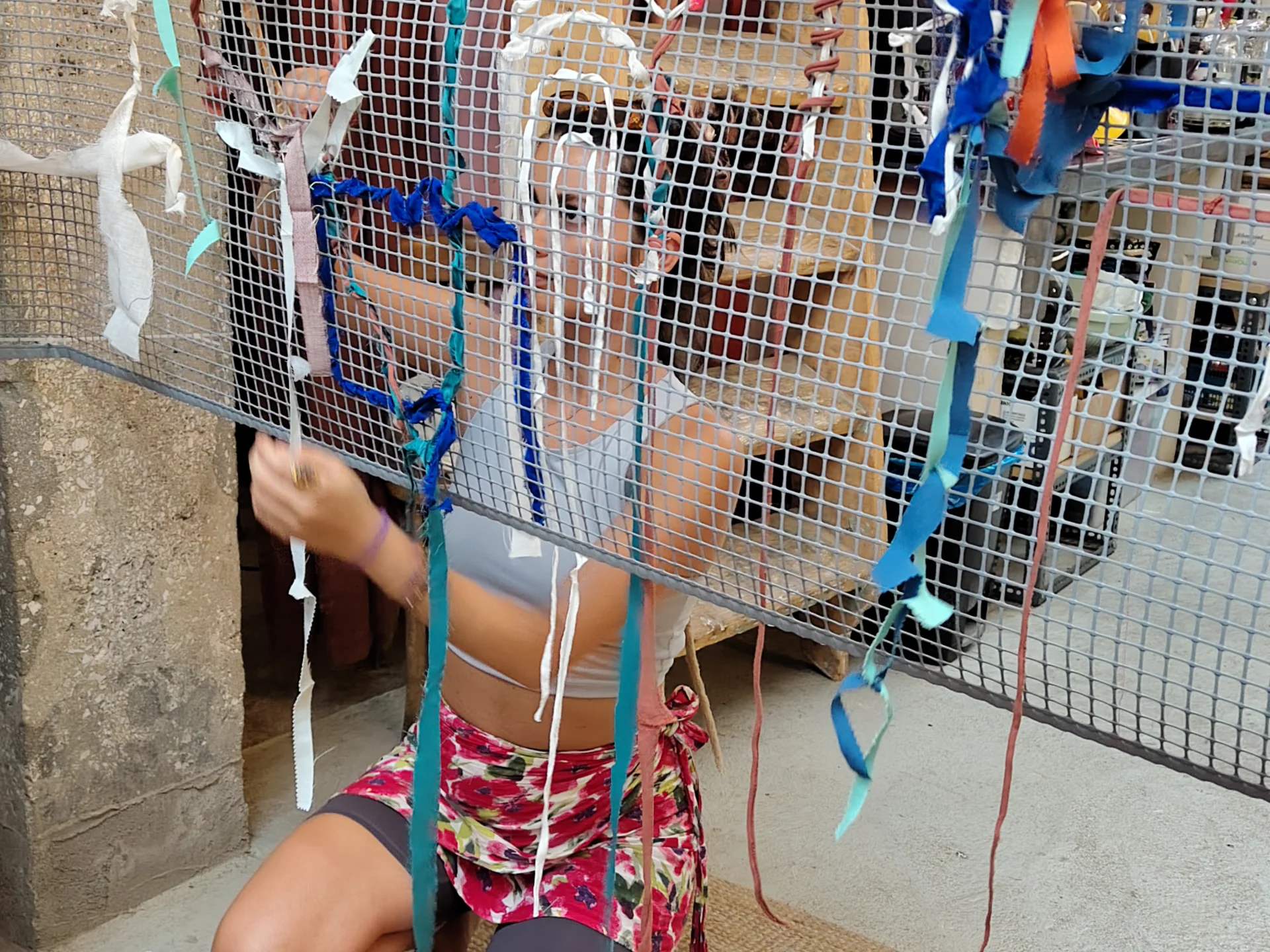
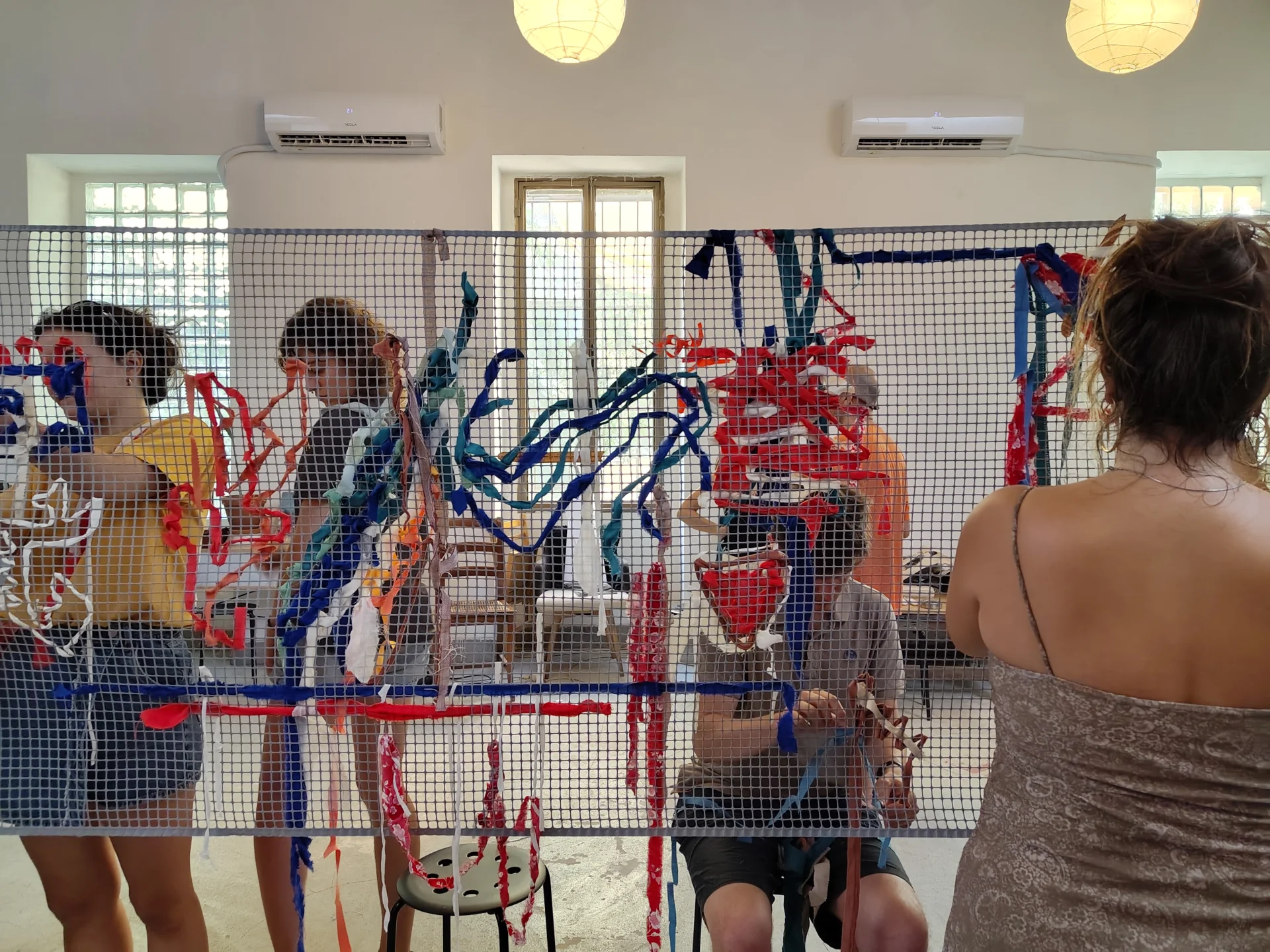
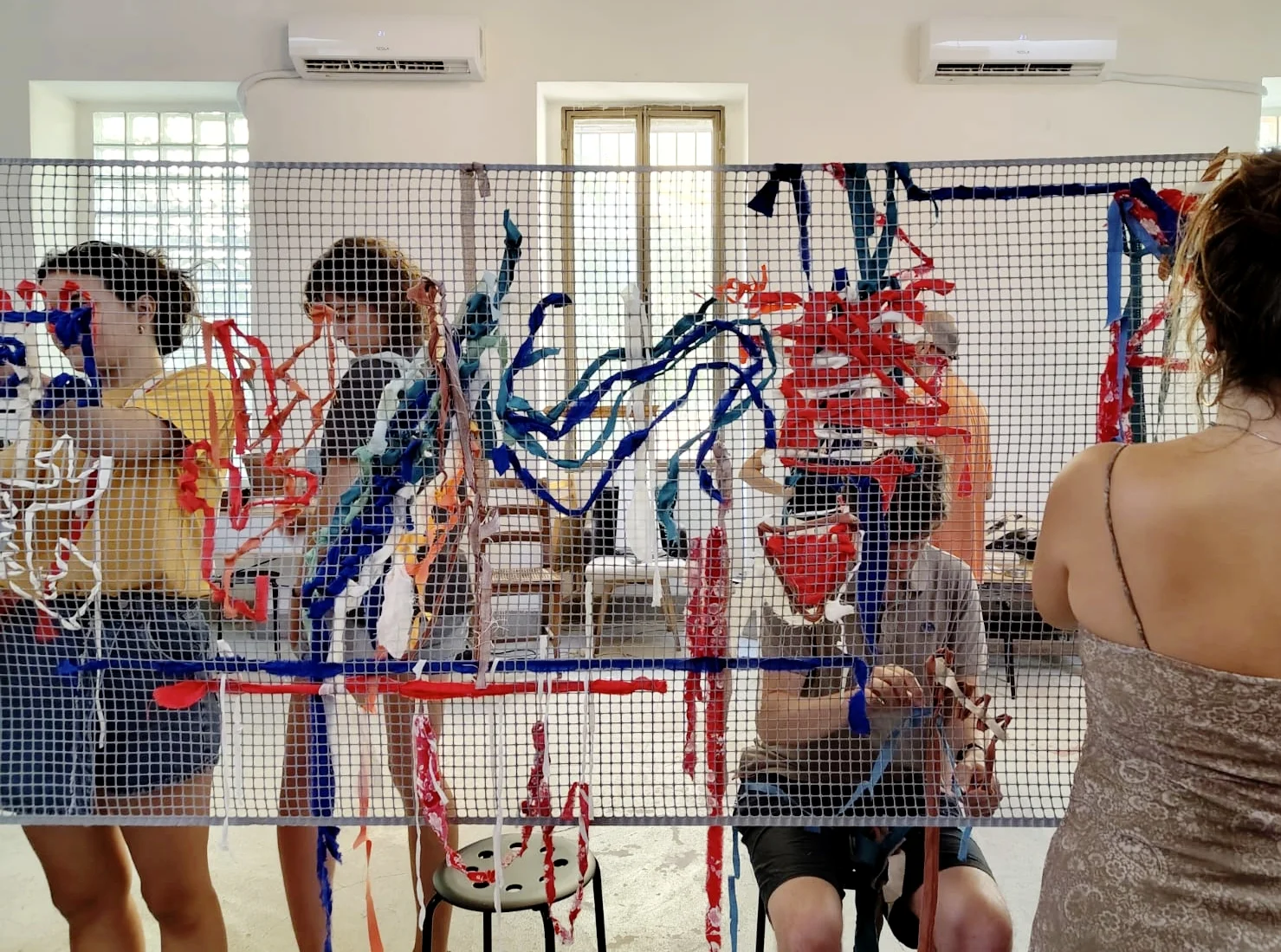
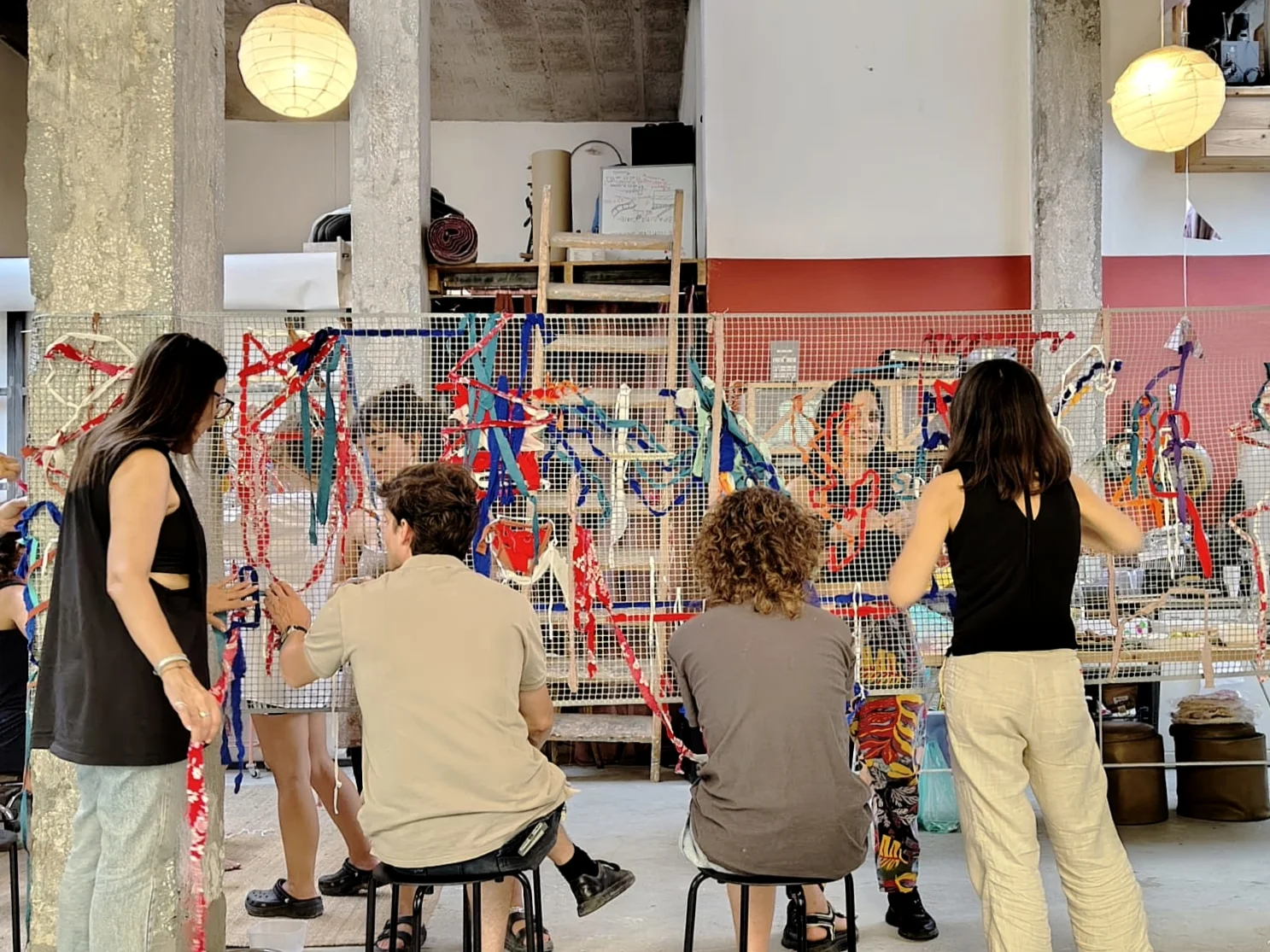
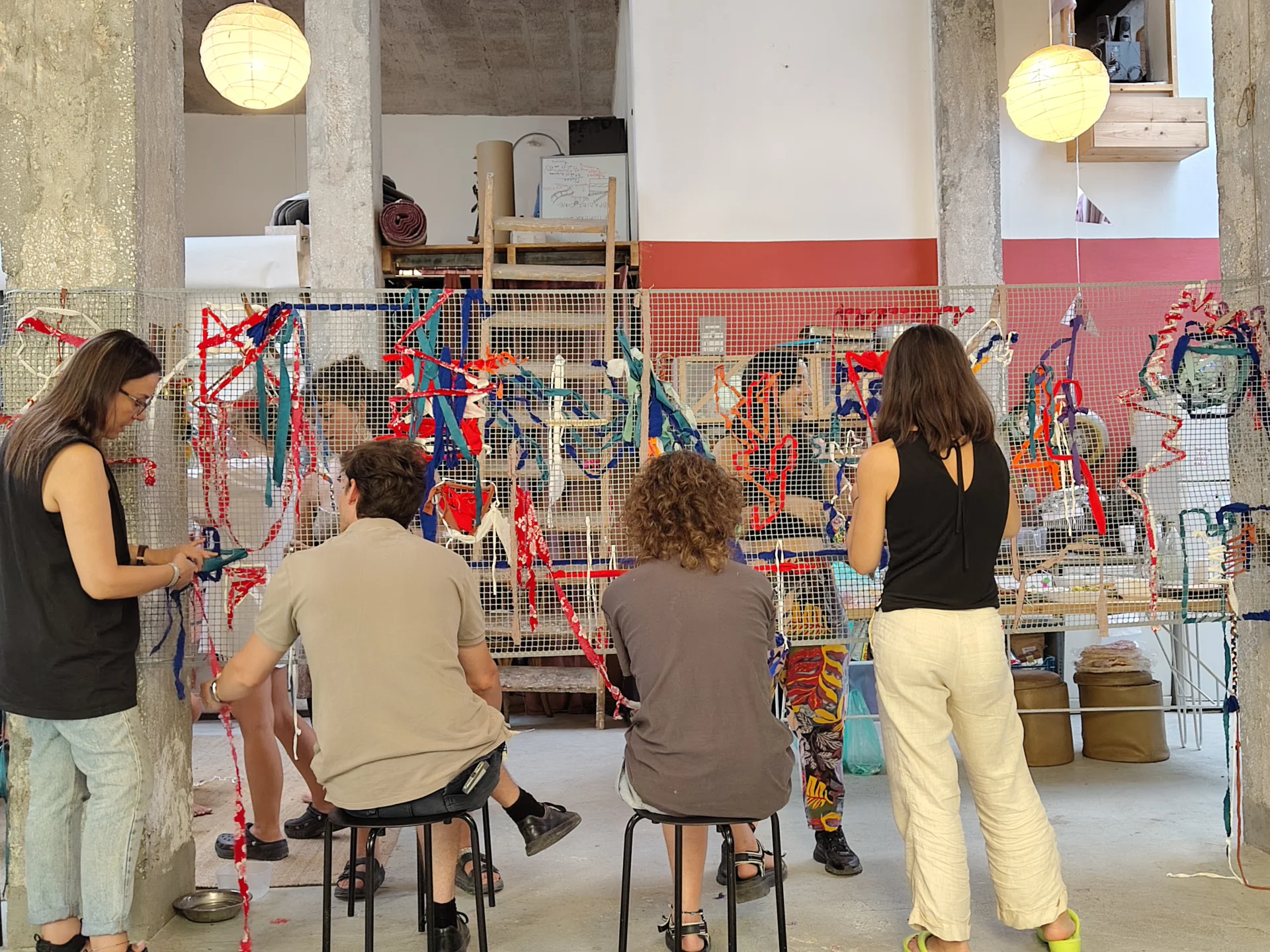
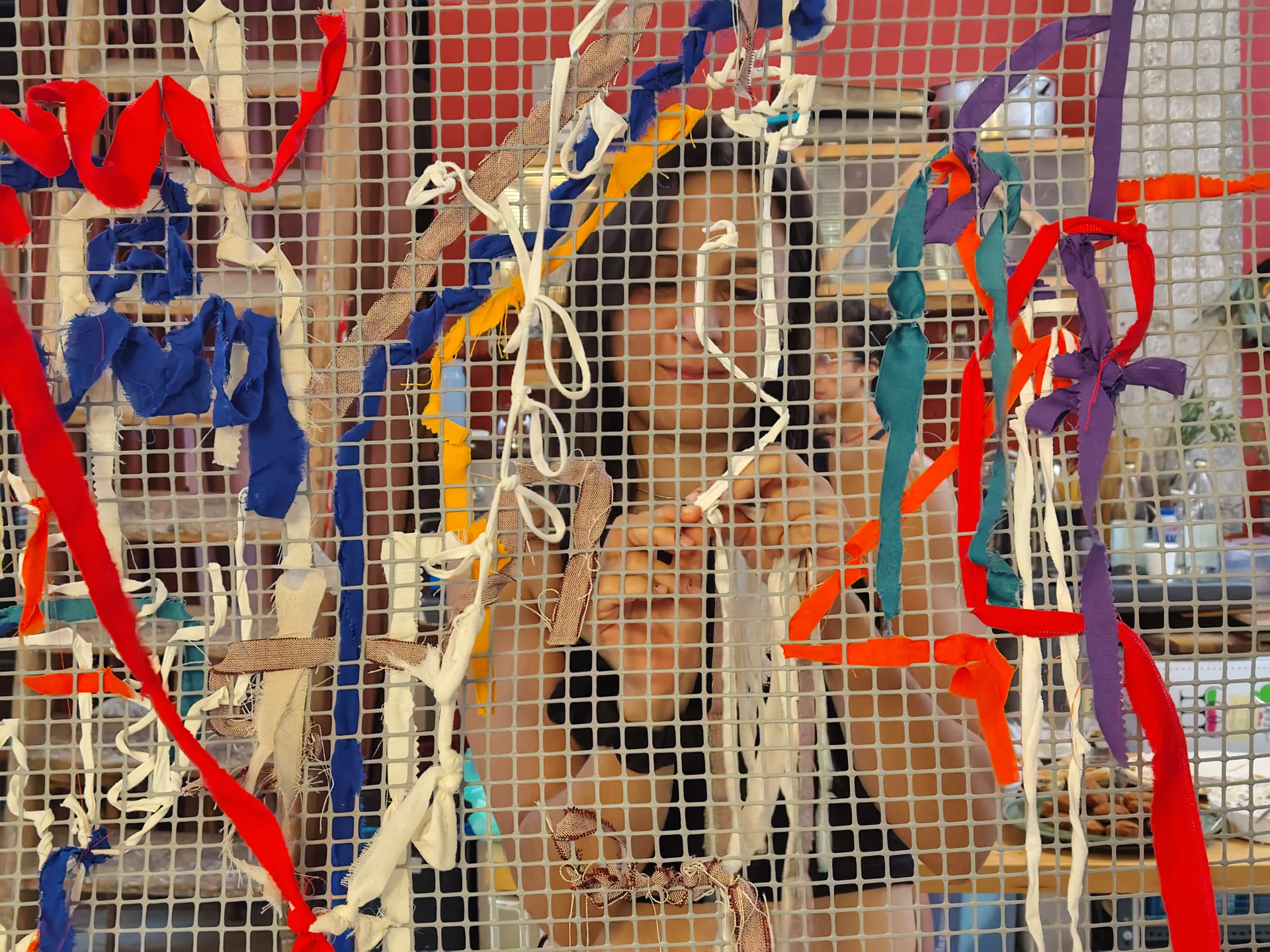
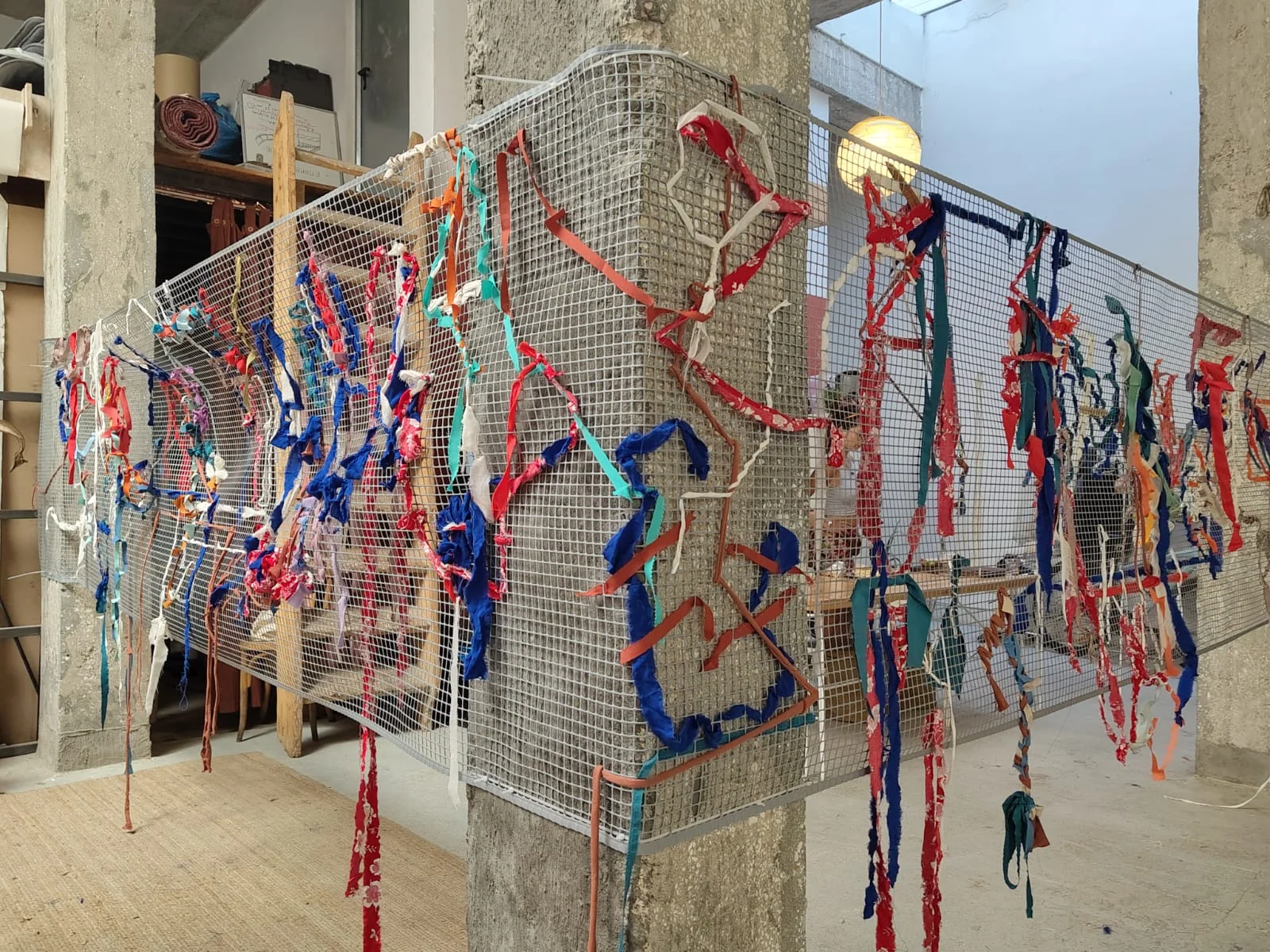
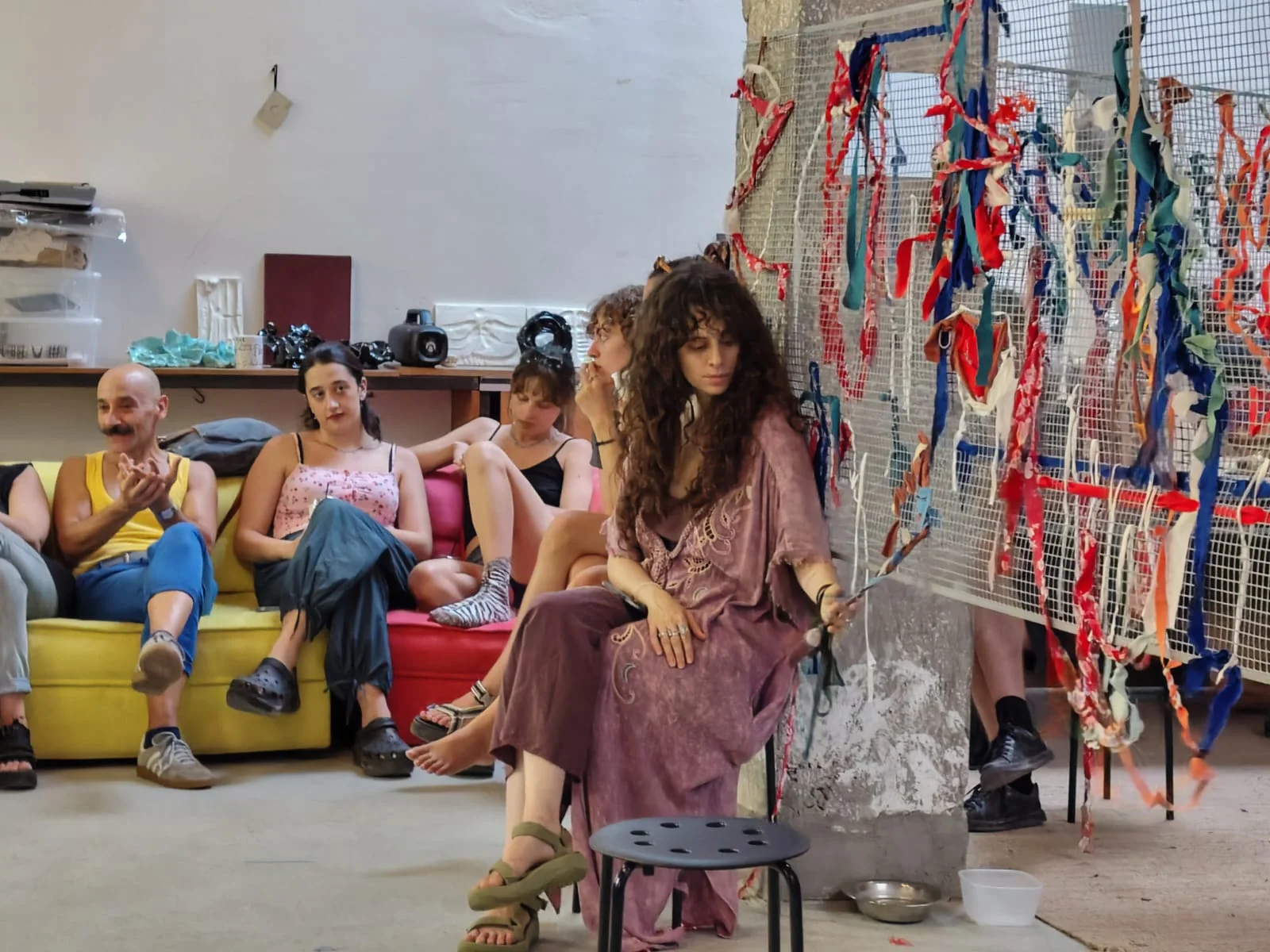
The final session asked participants to translate everything -the mourning, the celebration, the imagination- into a collective textile. The loom was a wire fence: a structure found everywhere in Metaxourgeio, one that encloses, demarcates, controls access. The choice was deliberate. Participants wove threads through it using a colour system that carried the workshop's three axes: dark colours for grief, cool tones for what survives and resists, warm tones for what could still be. The rule was that all three had to be present - because, as the instructions put it, we need all of them.
What emerged was not a map in any conventional sense. There were no coordinates, no scale, no legend in the usual meaning of the word. It was a collaborative textile made of different hands, different experiences, different emotions and visions. Dense in some places, sparse in others. Contradictory. Layered. Alive in the way that a neighbourhood is alive — not as a fixed image but as an ongoing negotiation between people and place, between past and possible.
A temporary Community
What stayed with people at the end was not only what had been made but what had formed around the making. Over two days, sharing food, walking the same streets, sitting with the same grief and the same hope, a temporary community assembled itself. Residents, architects, activists, researchers -people who would not normally share a room- found themselves in conversation about the same place, from very different angles, in a way that felt genuinely open.
Gentrification tends to isolate. It displaces not only people but the social fabric that connected them, the corner that was a meeting point, the institution that was a common ground. One small thing this workshop did was to briefly reassemble something like that fabric: a space where the neighbourhood could be looked at together, mourned together, imagined together.
The wire fence with its woven threads was later installed in the space, where it remained on display for the rest of the Action Week. A map of sorts. A record of a weekend. A small, collective insistence that the future of this neighbourhood belongs to the people who already know it.
The workshop was designed and coordinated by Katerina-Shelagh Boucoyannis and Margarita Micha, on behalf of ACAN Greece and it is part of the wider ACAN network initiative "Saving the Future We Already Have," within the European Action Week 2026, themed "Building the Future We Need".