Building Against the Clock: Save the Future We Already Have! Rotterdam
Diese Seite enthält keine deutsche Übersetzung.
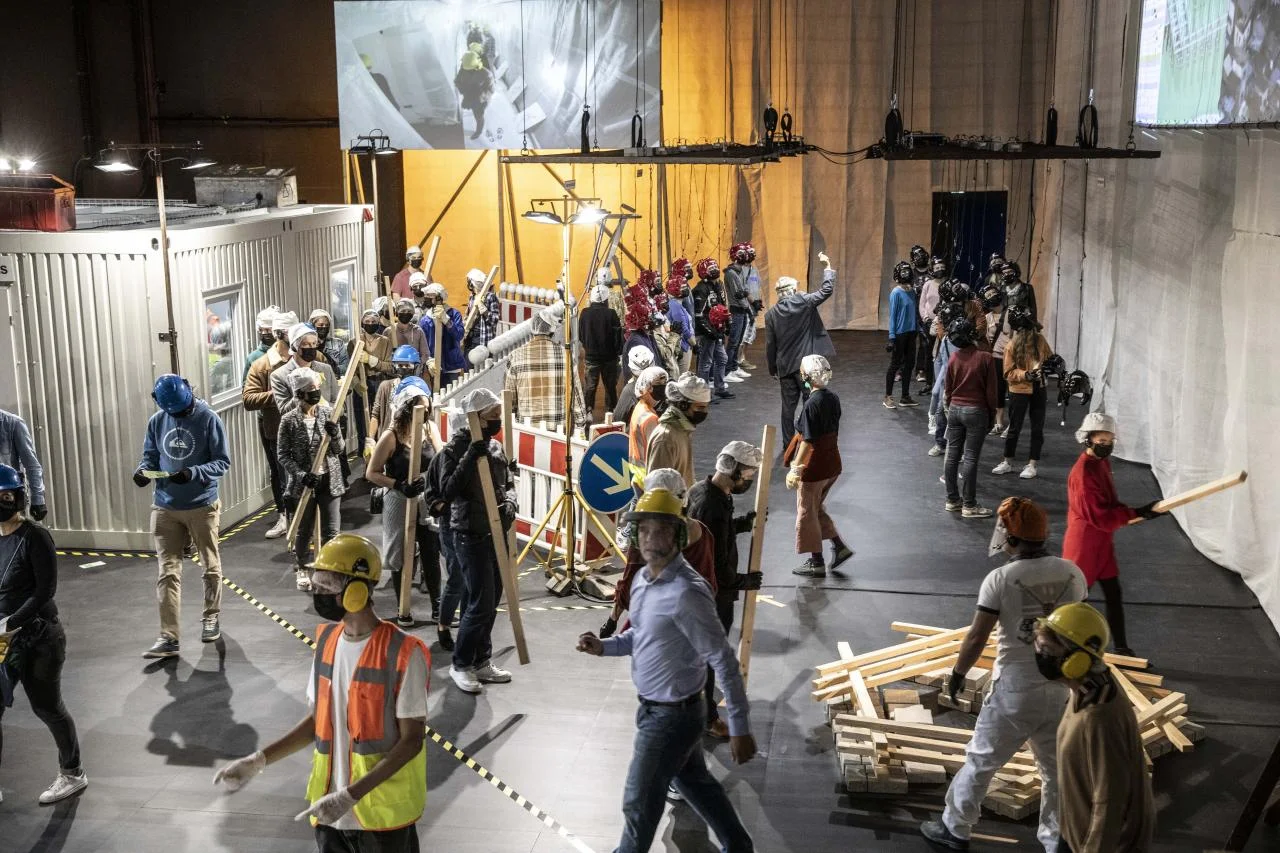
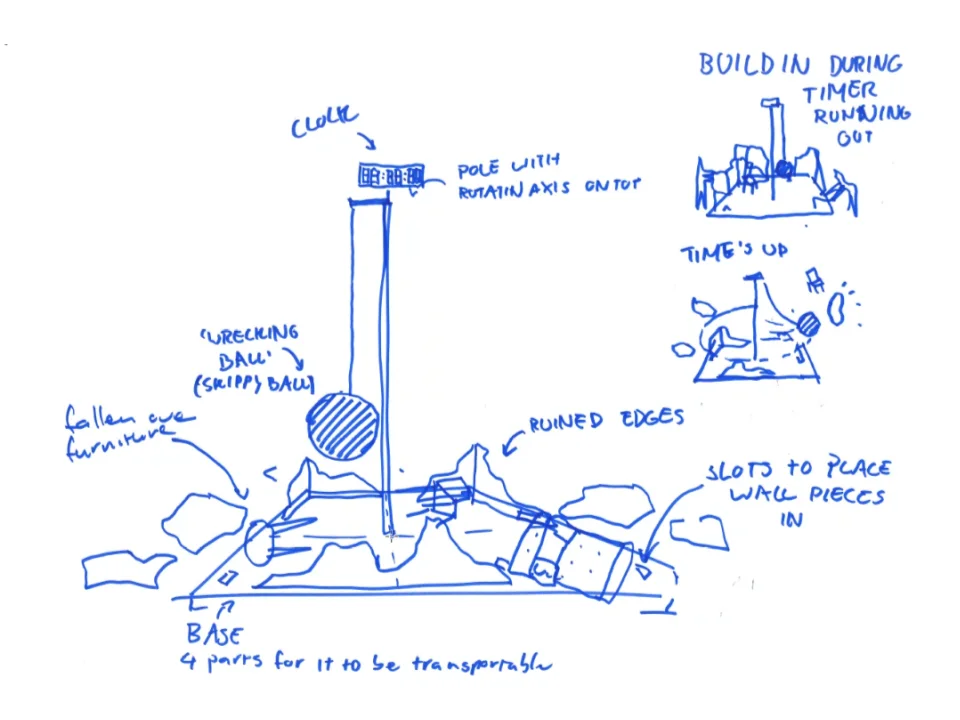
One building is destroyed approximately every 40 minutes in the Netherlands. In this public performance, construction industry workers relentlessly and repeatedly build and destroy the same structures in a cycle that exhausts them and the natural world they are part of, while a ticking clock keeps the score every 40 minutes. A powerful metaphor highlighting the climate and biodiversity crisis, housing pressure, and our failure to value what already exists. This public performance asks a provocative question: if we are building against the clock, why are we destroying the future we already have?
Rotterdam is known as the reconstructed city of the Netherlands. After it was bombed to the ground during WWII, it has undergone a continuous cycle of reconstruction and renewal under increasing speculative pressure. Here where demolition and new construction are a daily business, we are planning a public performance that transforms a public space into a living construction site trapped in an endless loop of exploitation. Performers dressed as construction workers continuously build structures while others repeatedly demolish them. Every act of creation is interrupted by destruction, and every demolition resets the building process.
The performance reflects the contradiction at the heart of contemporary construction in both wider Europe and the Netherlands: while the built environment remains one of the largest sources of carbon emissions, and its carbon budget exhausted, we continue to demolish perfectly functional buildings and replace them with new ones rather than prioritizing reuse and renovation. At the same time, the action highlights the working culture within architecture and construction, where people work under constant pressure to produce solutions without questioning the systems they serve. The action culminates in collective exhaustion, asking a simple question: if we never stop to reflect, how can we build a future worth living in?
We find striking that a building is demolished approximately every 40 minutes in the Netherlands, and we want to bring attention to this. Therefore, we want to make use of a symbolic ringing of a clock, a "gong" sound, echoing the measurable frequency at which buildings are demolished in the Netherlands. The clock becomes both rhythm and warning, turning statistics into a physical, audible sinister force inside the performance.
Finally, we think that the revaluing, reuse and maintenance of our existing built environment ultimately requires urgent, better regulatory frameworks. Therefore, we plan to reach our municipality policy makers with a statement signed by ACAN and those who will support our action, and send them en-mass to their institutional addresses. This will let them know what civil society, students and professionals in the built environment are demanding, posing pressure where it matters.
Above being made aware of the issues we face in the built environment, the public can and will be involved in the action in a number of ways: joining in in the performance, or signing and sending the statement letter to our local policy makers, or by adding buildings to the Dutch Demolition Map and supporting the Right to Housing - Now and Forever! European Citizen Initiative.
At each location, we will display banners and informative posters made by all thematic groups of ACAN NL. We want to share our ACAN Demolition Atlases, highlighting wider issues concerning extraction in the natural world and biodiversity loss, the role of education and practice in the (lack of) climate literacy and action, and the importance of using natural and reused materials in buildings. All the materials we intend to buy, print, make will then be reused at the Amsterdam performance the week after, at the International Architecture Biennale Rotterdam, the Architecture Film Festival Rotterdam, in future events and assemblies.
Location
The event will take place in front of the Rotterdam Central train station.
Event hosted by:
ACAN Netherlands
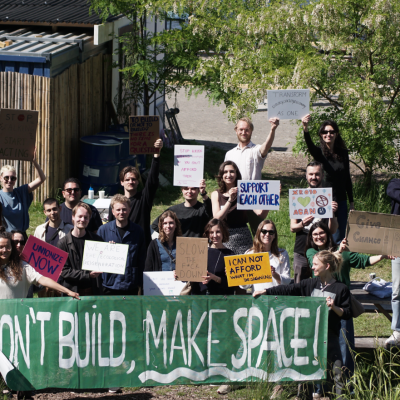
Architect Climate Action Network Nederland (ACAN NL) is the Dutch chapter of an international network of individuals and organisations within architecture and related built environment …