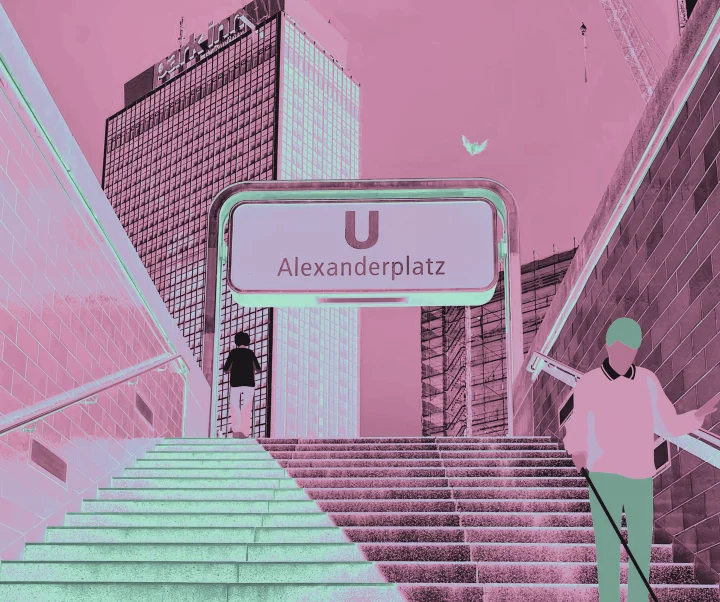
The sound of inclusion at Alex in Berlin
Departing from the question ‘What might this place sound like?’, Soundtrackcity and Architects For Future Berlin invite you to join us on a sound walk and subsequent workshop at and around Alexanderplatz in Berlin. Together with sound artists and the public, we aim to explore the interplay between architecture and urban sound, and to propose sound as a medium for urban planning.
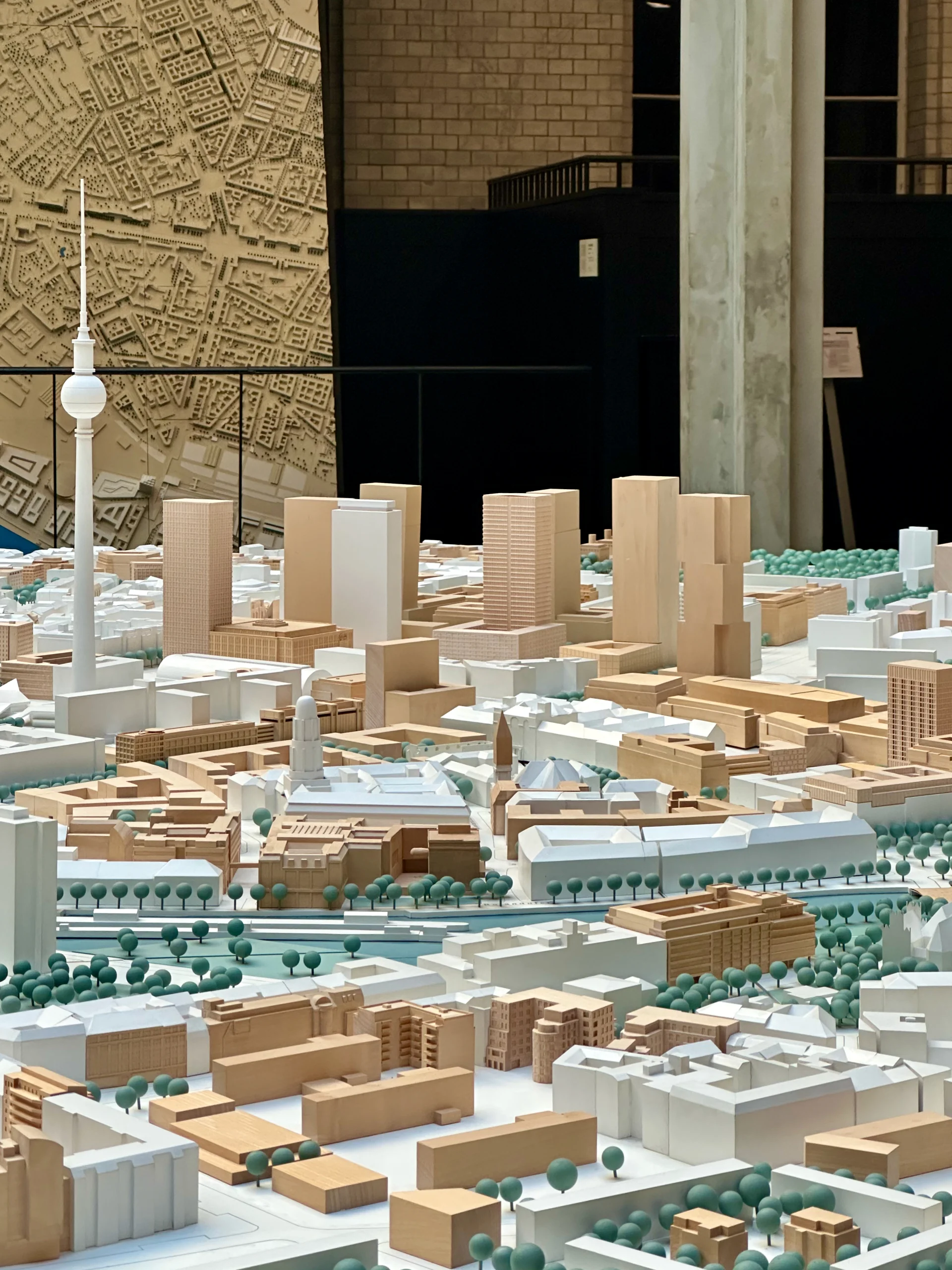
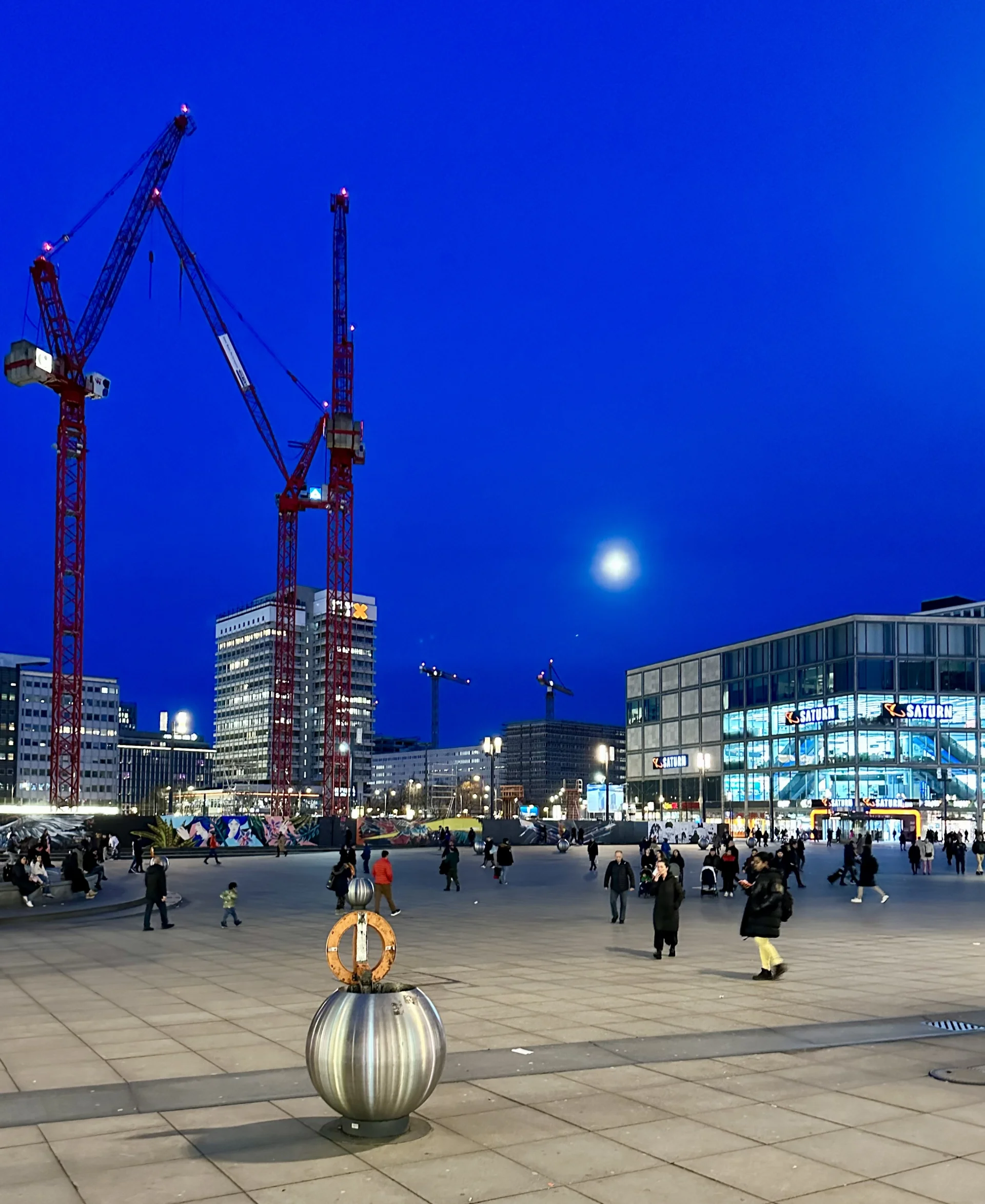
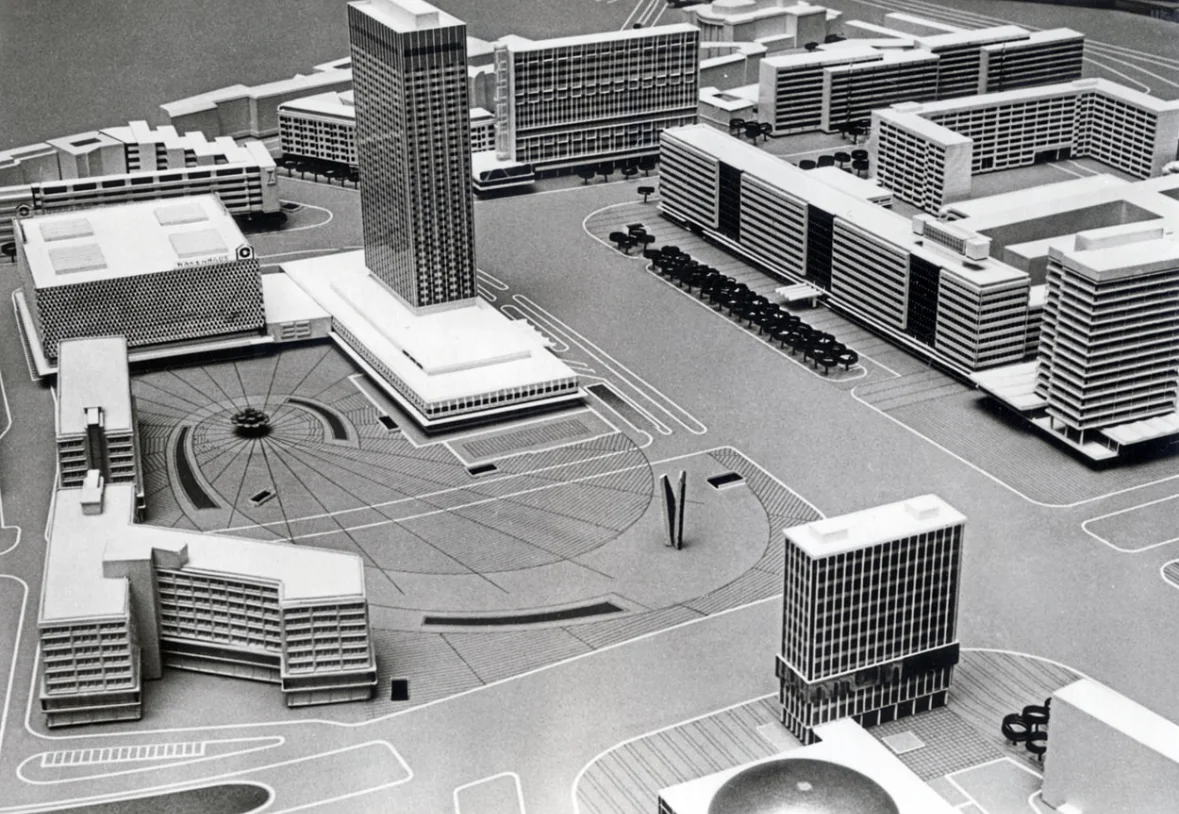
Few places in Berlin have been shaped by large scale urban redevelopment like Alexanderplatz and its adjacent neighbourhoods. From a medieval trading area to a major 19th-century transport and commercial hub, it was radically redesigned during the GDR as a symbol of socialist modernity. Since Berlin's reunification, it has continued to evolve as a transport hub, commercial centre and public space. Located at the center of Berlin, Alexanderplatz exemplifies the tensions between modes of fast and slow mobility, open space and verticality, leisure and consumption.
Tuning into the sounds of Alexanderplatz could be a way of making sense of these contradictions. Yet, despite the richness of sensory "data", visualist thinking prevails in architecture and urban planning; meanwhile, other sensory experiences, such as hearing, smelling, or tactility, are not commonly regarded. So also at Alexanderplatz, where visual considerations dominated the design of the area, and the question of how it sounds / might sound has rarely been posed.
Coupling curiosity and expertise, Soundtrackcity and A4F Berlin teamed up in response to this shortcoming - with the goal to explore the intricate links between the urban built environment and the sonic atmospheres it helps form.
The project explores sound as an integral part of sustainable urban planning and asks how the way we design and build spaces influences our acoustic, natural and social environment. It understands the transformation of the construction industry not only as a material and energy transition, but also as a shift in perception, participation and inclusion.
We believe a sustainable city must take into consideration the needs of people with visual impairments, an ageing population, children and people from different cultural backgrounds, all of whom might relate to the city in different ways based on how it sounds to them.
We ask:
How do differently hearing people experience urban space?
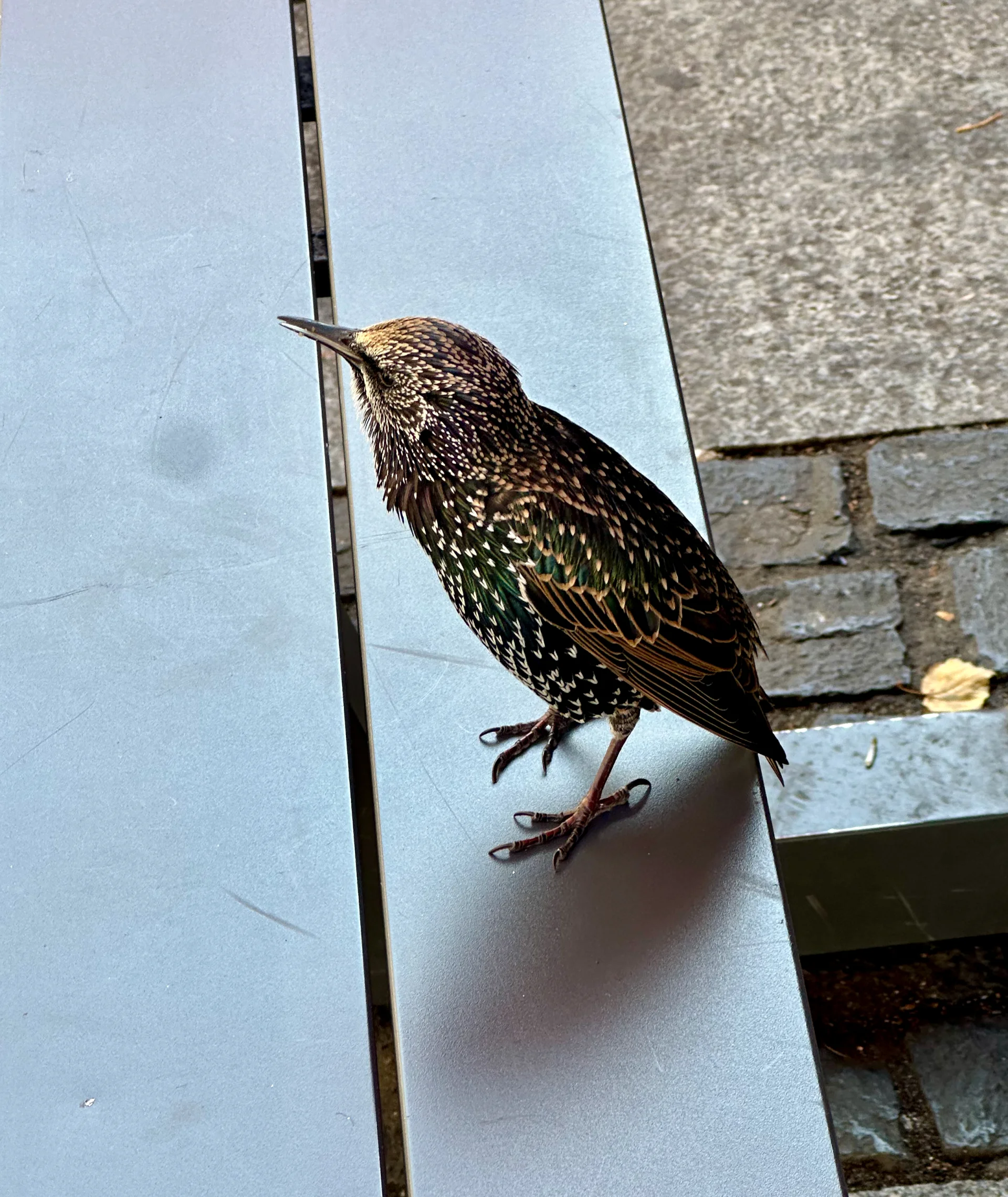
How does biodiversity feature in urban soundscapes?
In what way can urban design contribute to cities that sound welcome and habitable to different people and also to other life forms humans co-exist with?
In pursuit of these questions, the European Action Week offers a great opportunity to connect sonic approaches to urbanity with practical know-how by architects and other spatial practitioners. We want to foster an interdisciplinary dialogue between the world of sound, the built environment and local communities.
Where & When?
Meeting point are the ruins of a former monastery at Klosterstraße 73a in Berlin-Mitte, at 14 o' clock on Sunday, 13 September.
To activate our sense of hearing, the event will start with a sound performance by Berlin-based sound artist Max Joy, after which we will embark on a soundwalk around the area.
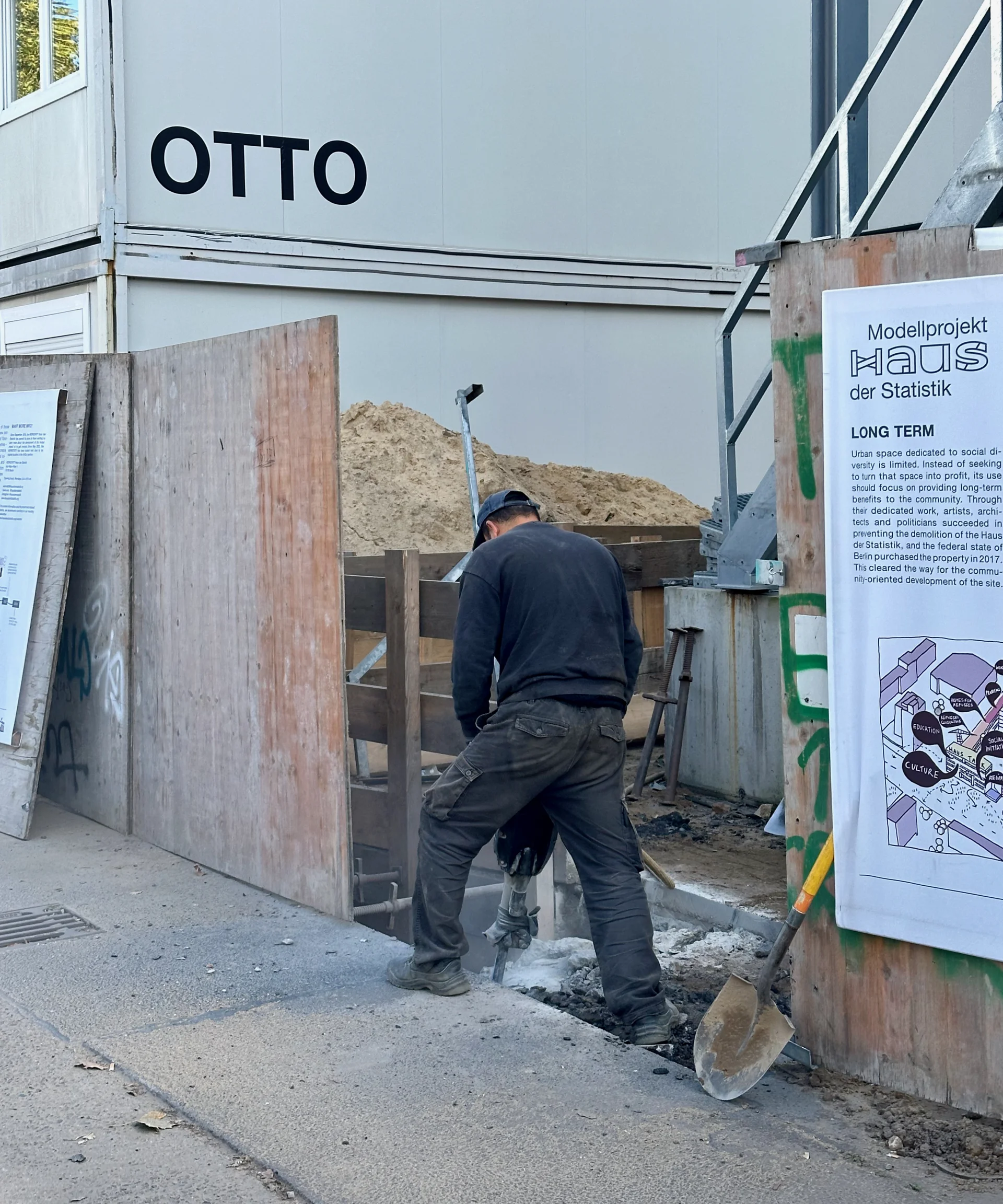
The second part of the event will be a workshop at Haus der Statistik, located at the corner of Otto-Braun-Str. and Karl-Marx-Allee. Within this workshop participants will be able to craft subjective maps of their listening experiences.
For whom?
In principle, anyone interested is welcome, regardless of their prior knowledge or intersectionality. In particular, we would like to reach out to everyday users, local residents, spatial practitioners and people of all ages. We are looking forward to diverse opinions and contributions.
Both the walk and the workshop will be offered in English and German. The route was chosen to accommodate people with disabilities.
Participation is free of charge and no prior knowledge is required.
Links
Event hosted by:

Soundtrackcity x A4F Berlin
SoundtrackcityIn a primarily visual culture, Amsterdam-based Soundtrackcity focuses on the auditory experience of the city. Sound is a fundamental part of the urban fabric. To a great extent, …