Building Together: Six Days at Our Earthship Construction Site
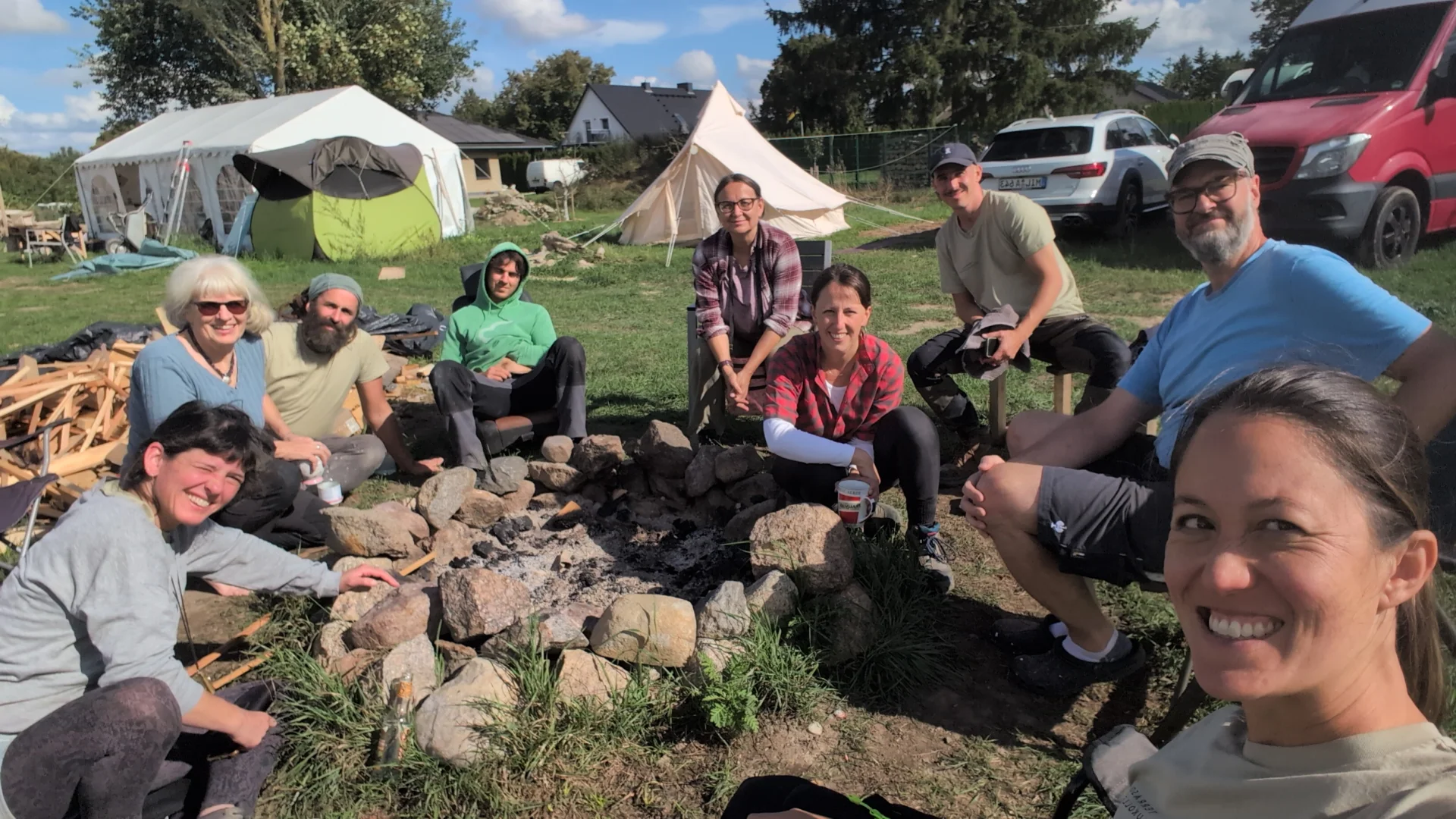
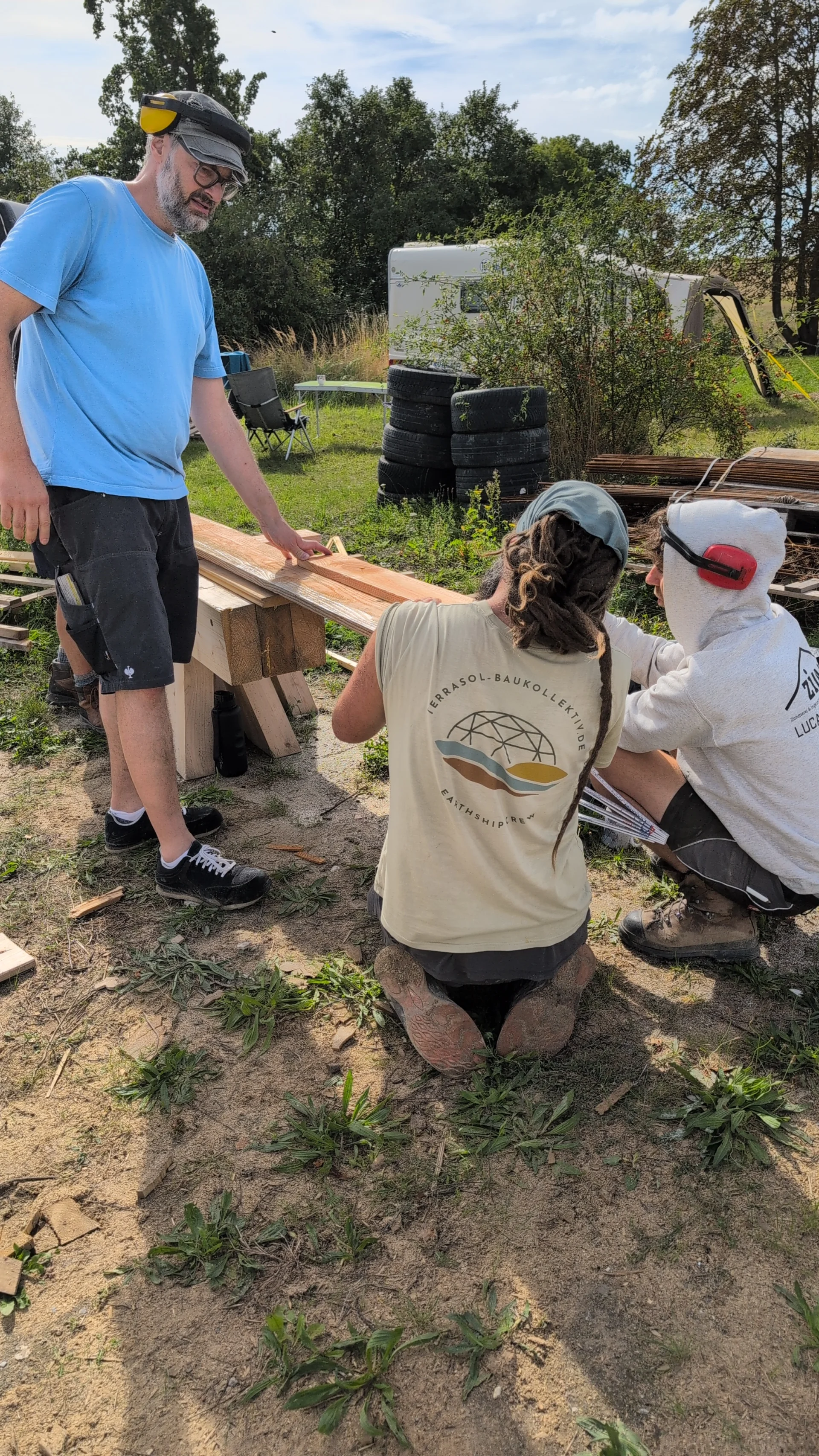
During the European Action Week, the Beeonik Institute for Regenerative Building Culture and Resilient Lifestyle opened its Earthship construction site to a wider community. Over six days, people from different backgrounds came together to learn, experiment and build side by side. Architects, craftspeople, engineers, planners, an opera singer, a retiree, a professor and an organisational developer all shared the same space, bringing different perspectives to the hands-on process.
Together, we continued building the second Earthship (to receive building permission) in Germany, exploring construction methods that make use of natural, recycled and locally available materials.
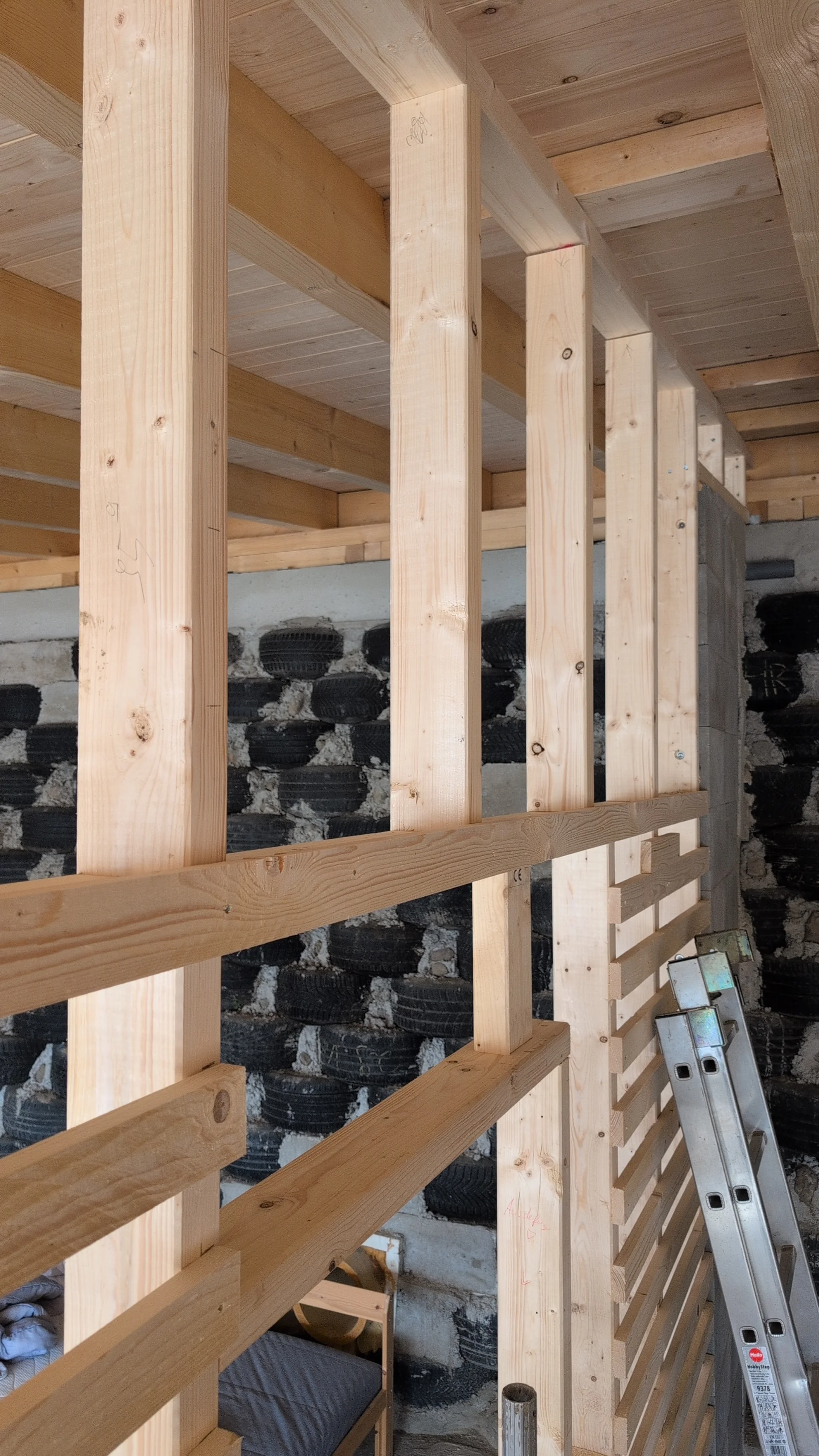
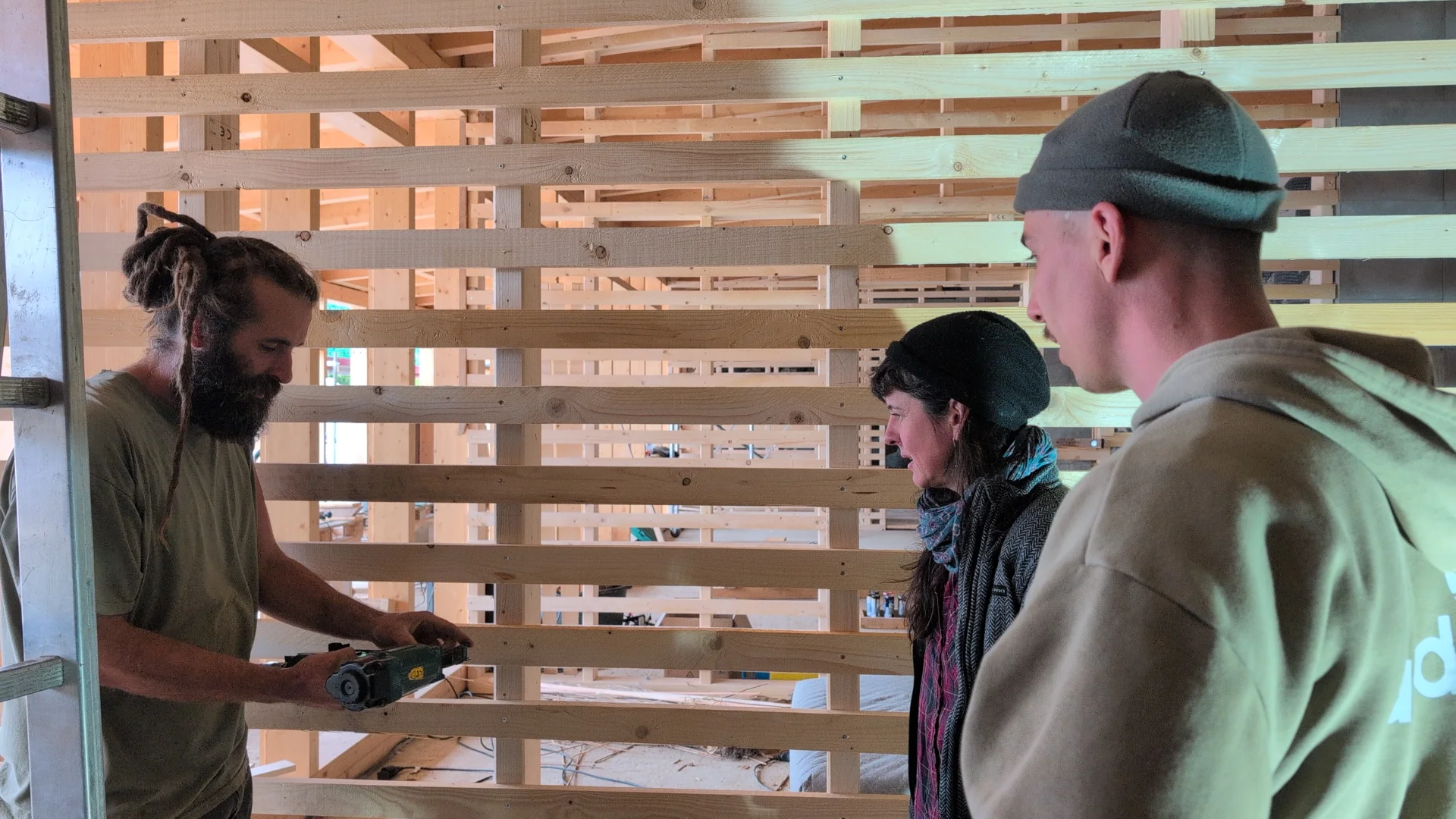
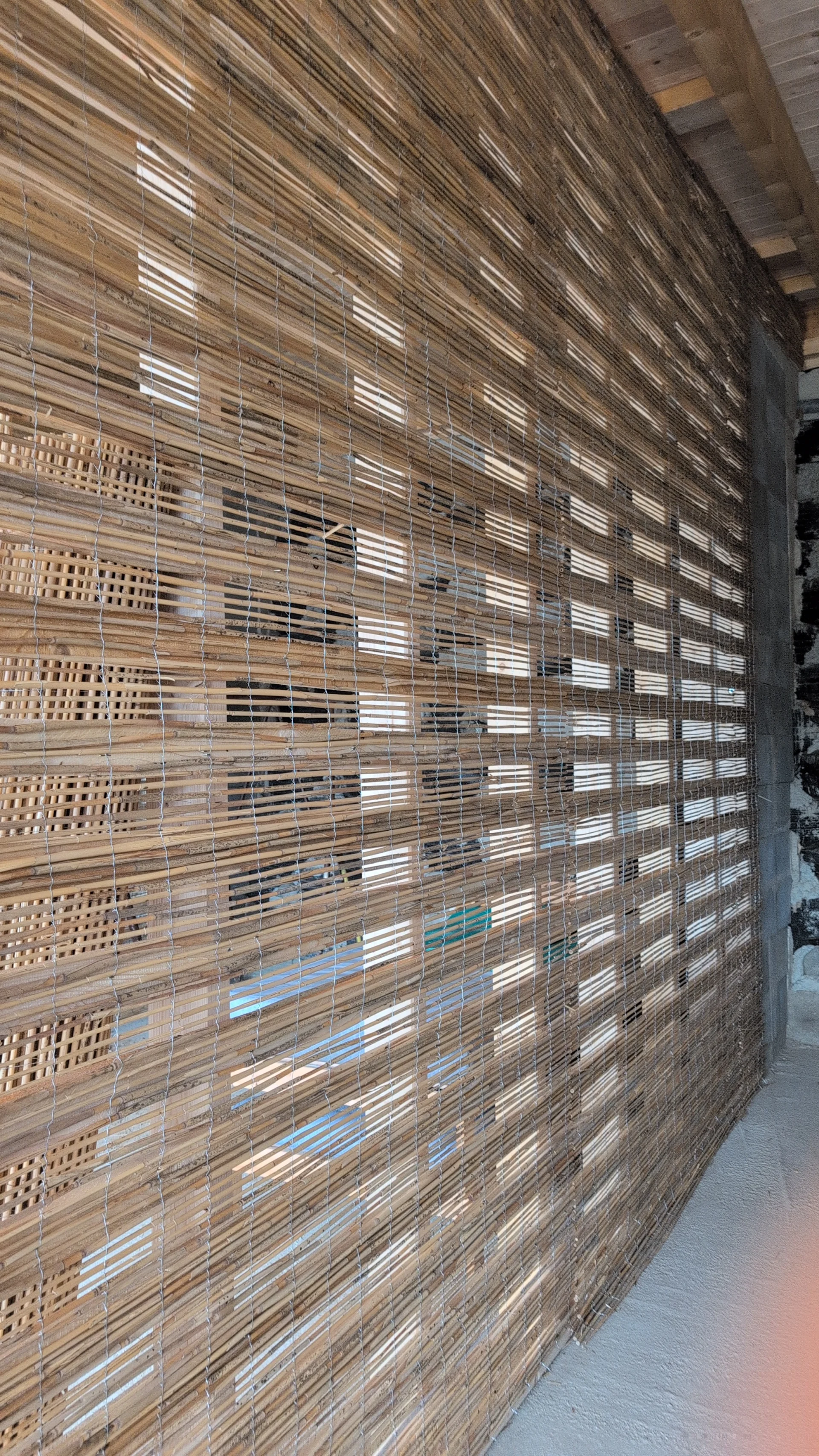
Our work focused on several key elements of the building. We prepared the interior adobe walls for their clay plaster finish, using wooden slats and reed mats to create a surface for the plaster to adhere to. On the outer tyre walls, which form an important thermal mass of the building, we attached Rabitz fabric and prepared the first layer of lime plaster as a base for the clay plaster.
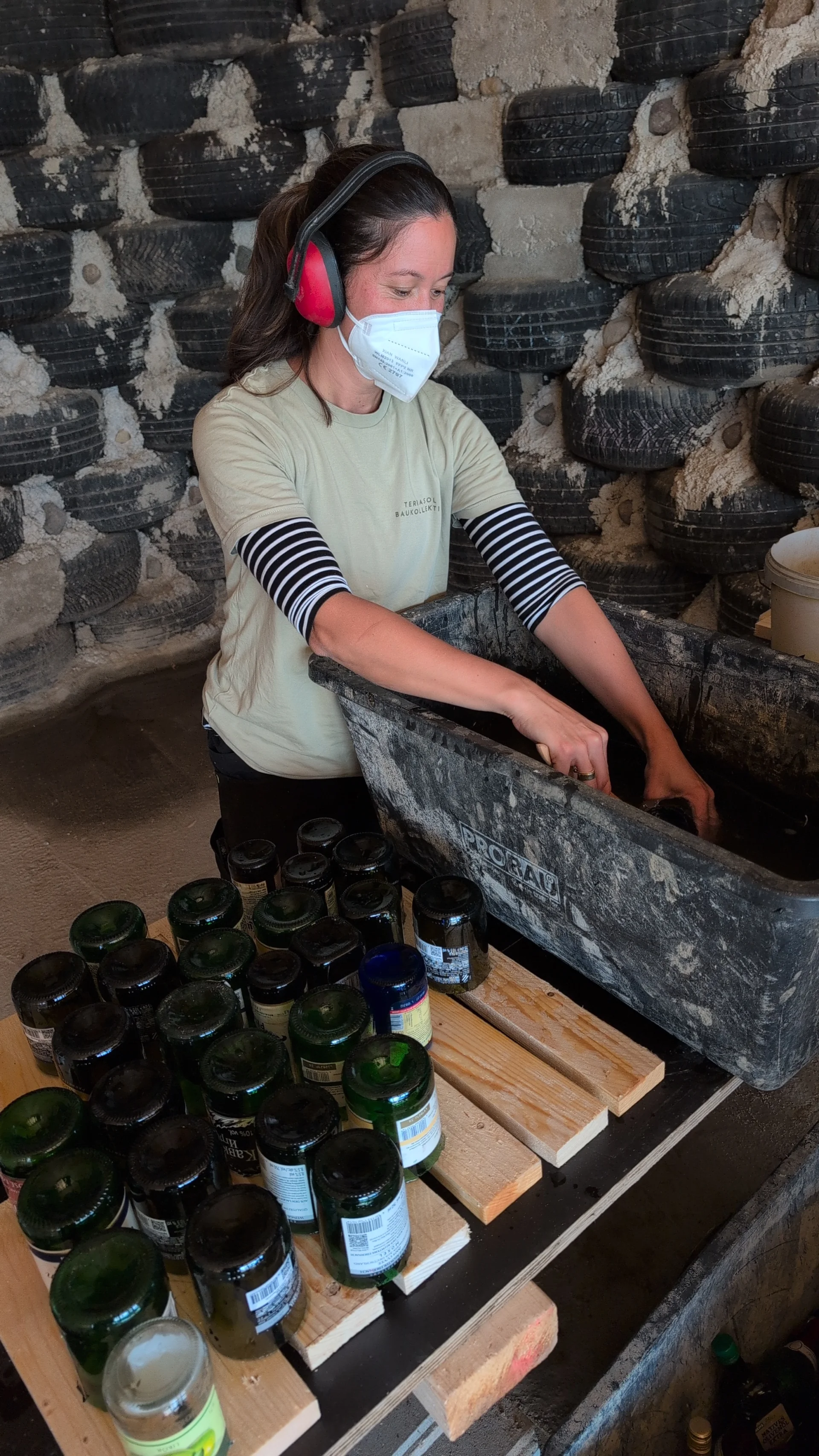
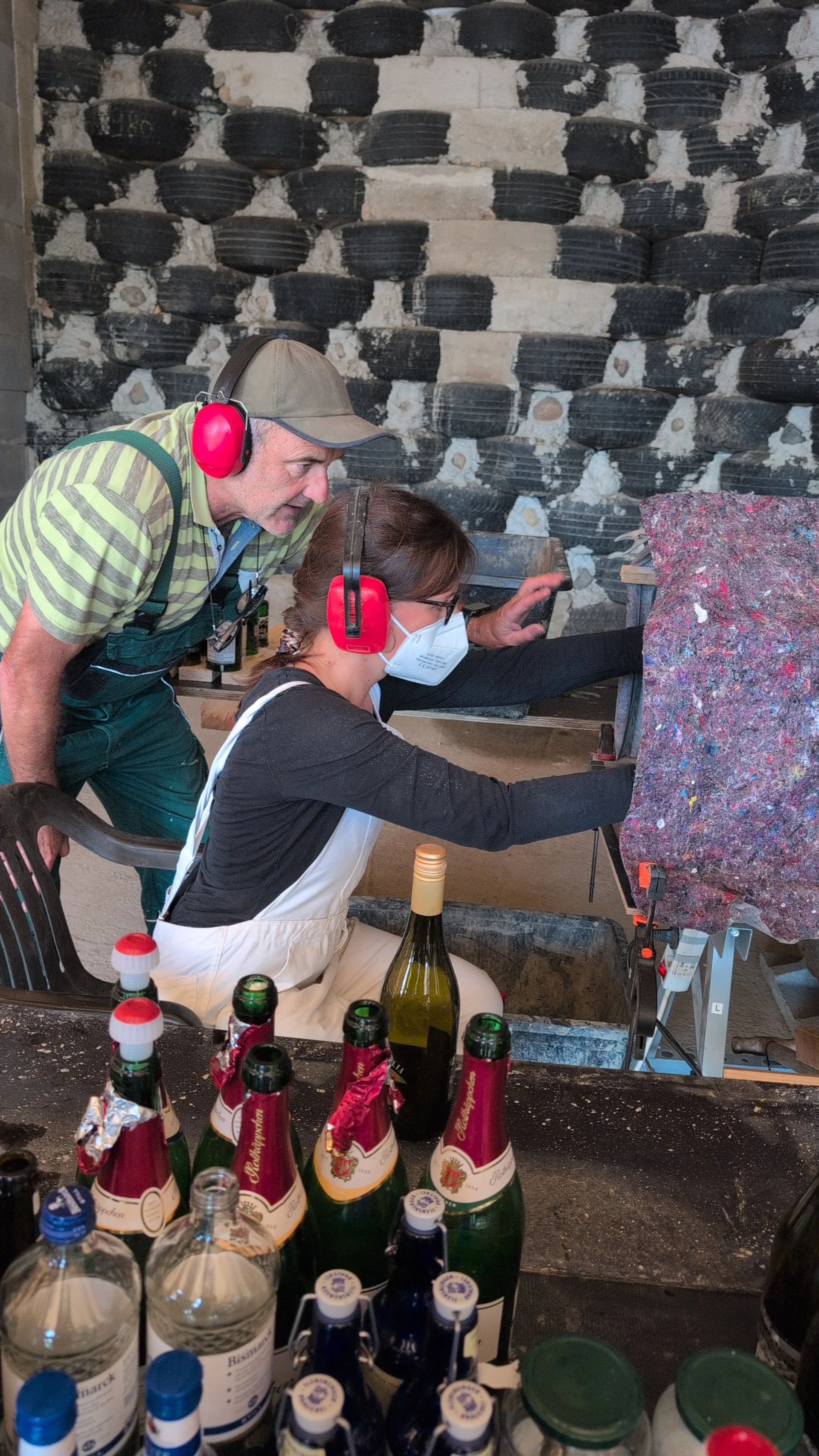
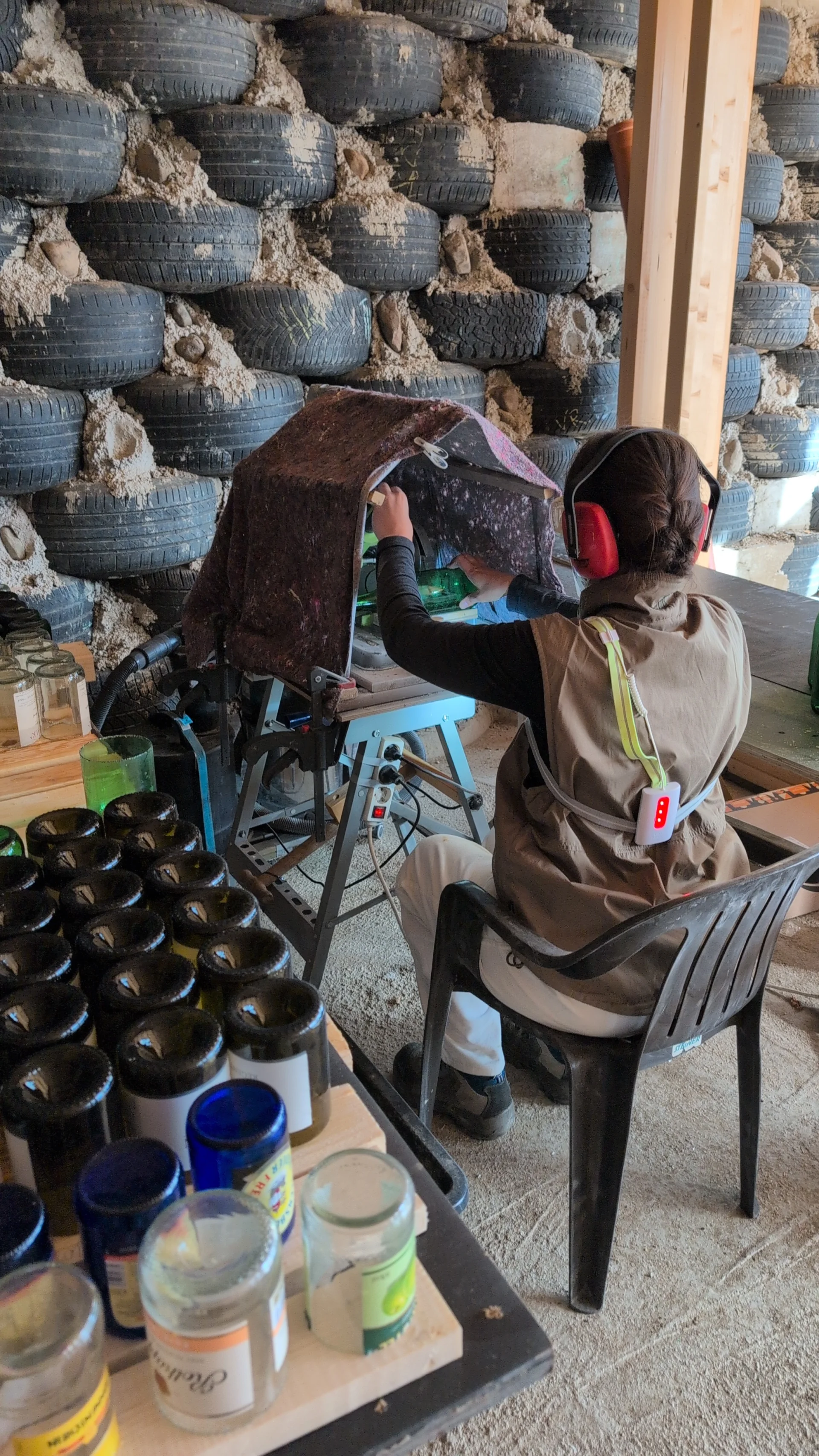
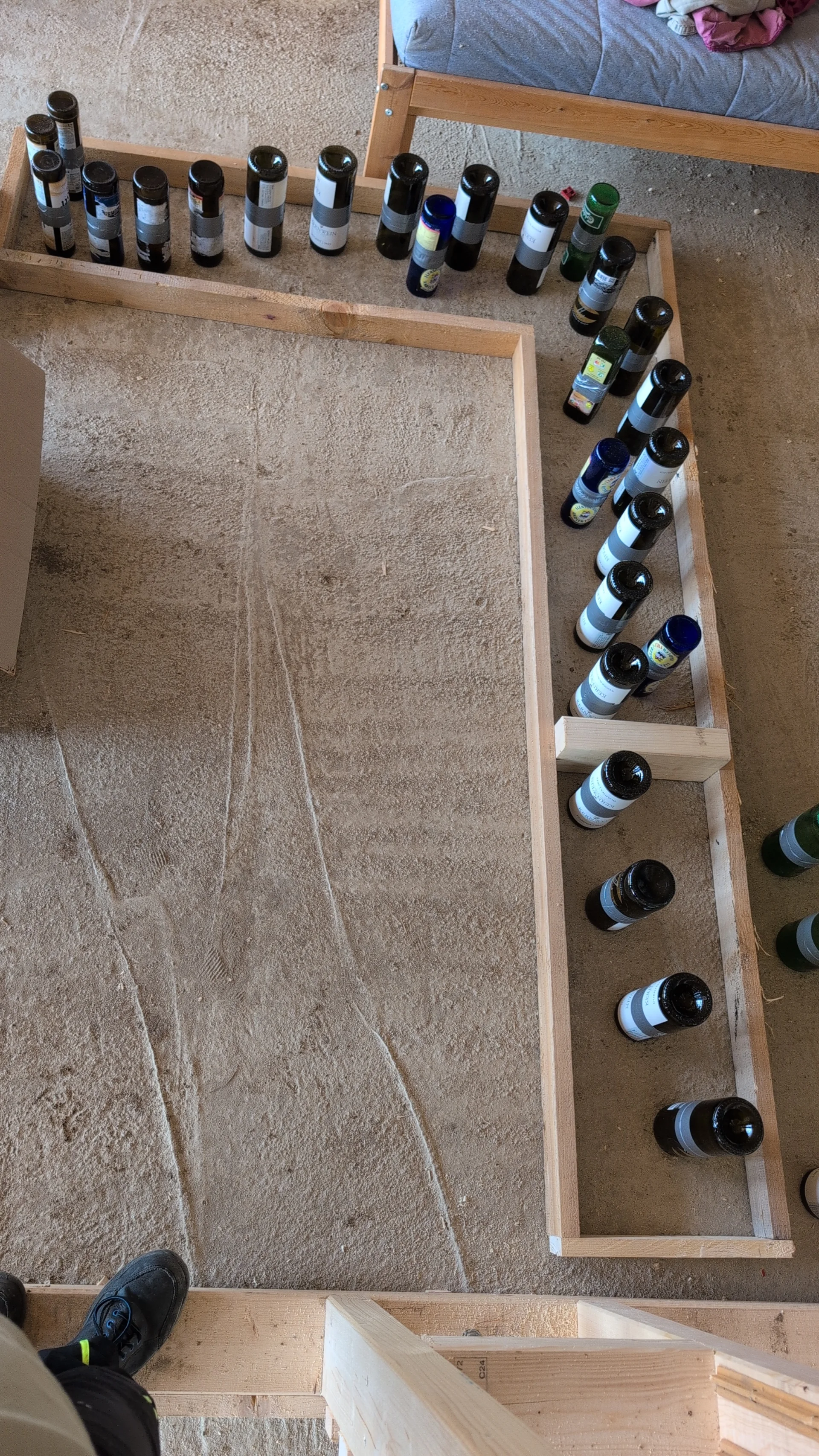
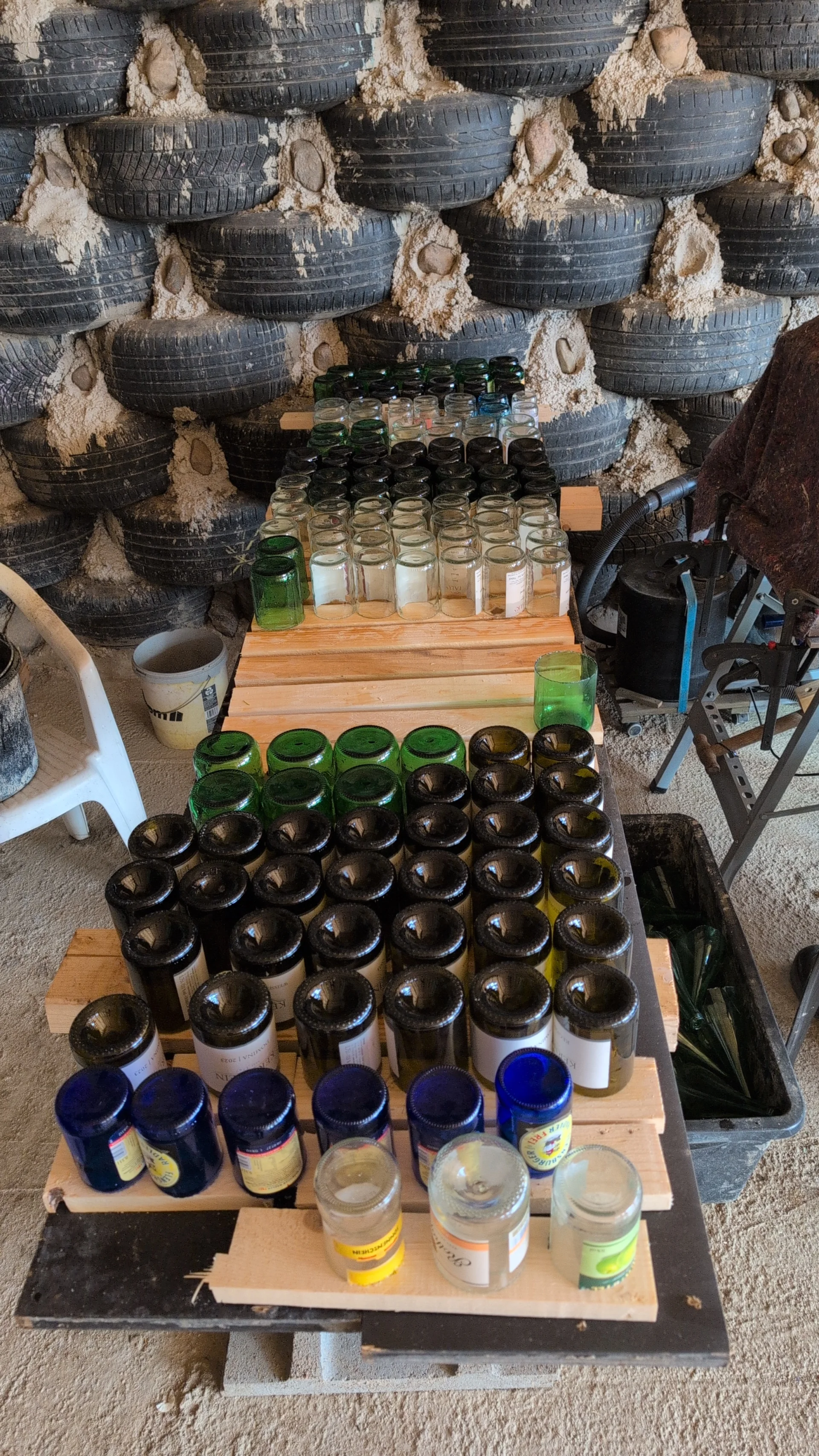
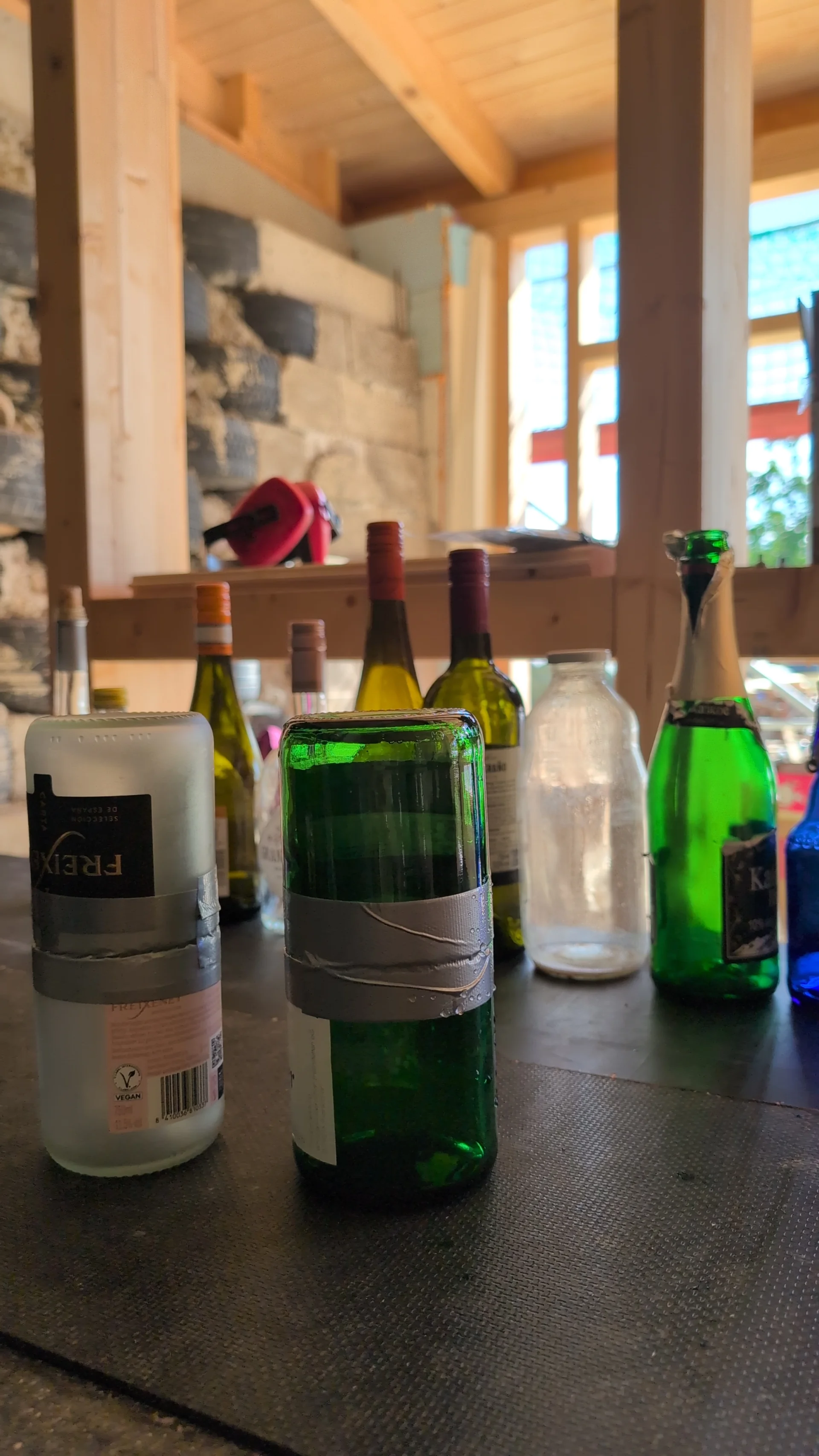
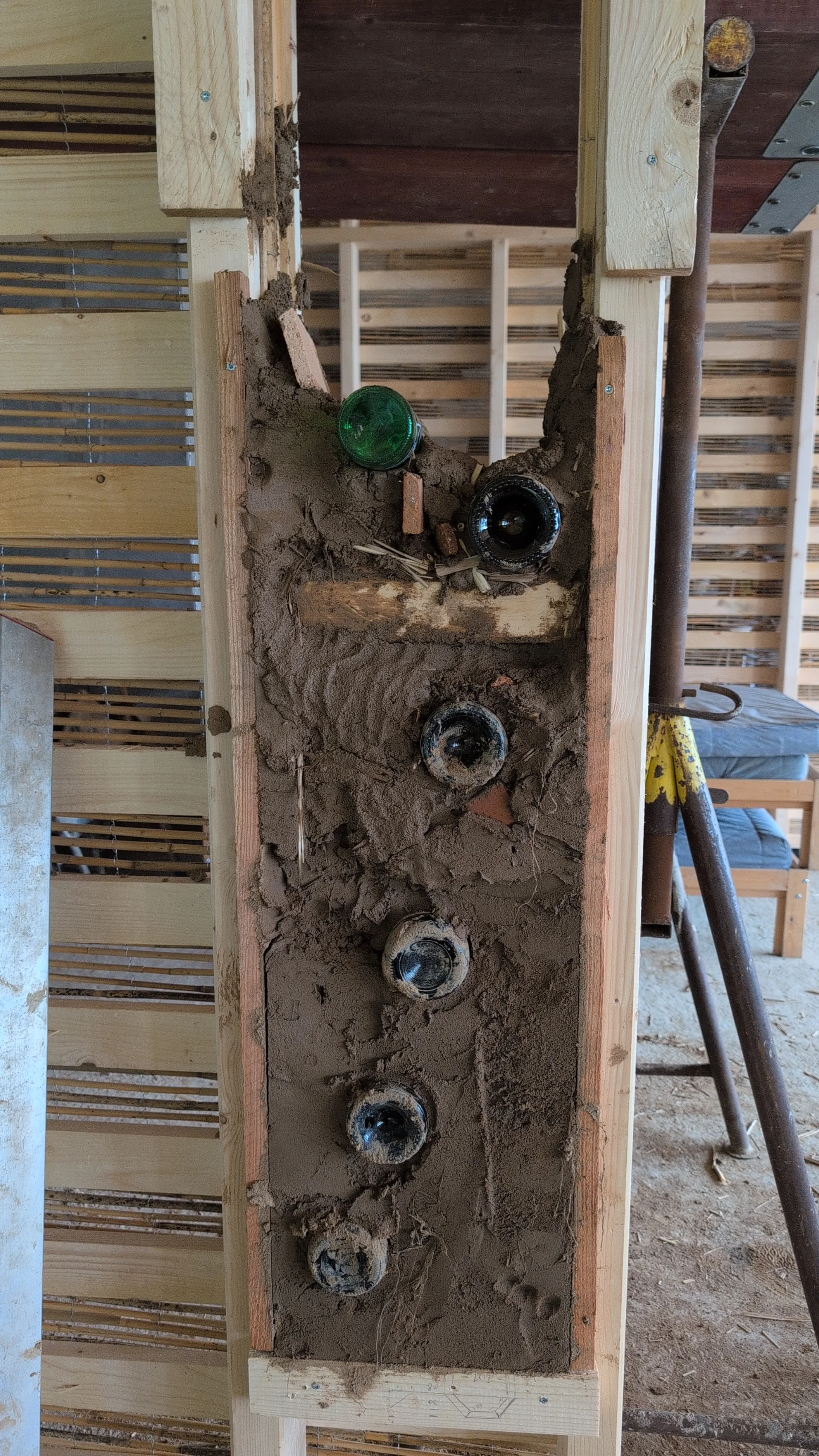
We also experimented with glass bottle bricks, transforming old glass bottles into new building elements. After learning how to cut and join the bottles safely, we developed the first wall designs, built the initial section and experimented with how the bottles could work together with adobe.
Outside the building, we continued shaping the surrounding earth mound. We created swales to guide and slow down water, while preparing the soil for plants to establish themselves. Once rooted, the vegetation will help stabilise the mound and reduce erosion.
The six days were not only about constructing a building. They were about opening up the construction process, sharing practical knowledge and experiencing what becomes possible when people with different skills and backgrounds learn and work together.
A little more about the building techniques
Tyre walls and thermal mass: The earth-filled tyres store heat and release it slowly, helping to moderate temperature changes inside the building. This allows the building to make use of naturally available heat, such as sunlight.
Reed mats and Rabitz fabric: These provide a stable surface for plaster to grip onto. They help bridge the transition between different materials and reduce the risk of the plaster cracking or falling away.
Glass bottle bricks: Reused bottles allow us to turn discarded material into part of the building itself. They can bring daylight into walls while adding a distinctive visual element and reducing the need for new building materials.