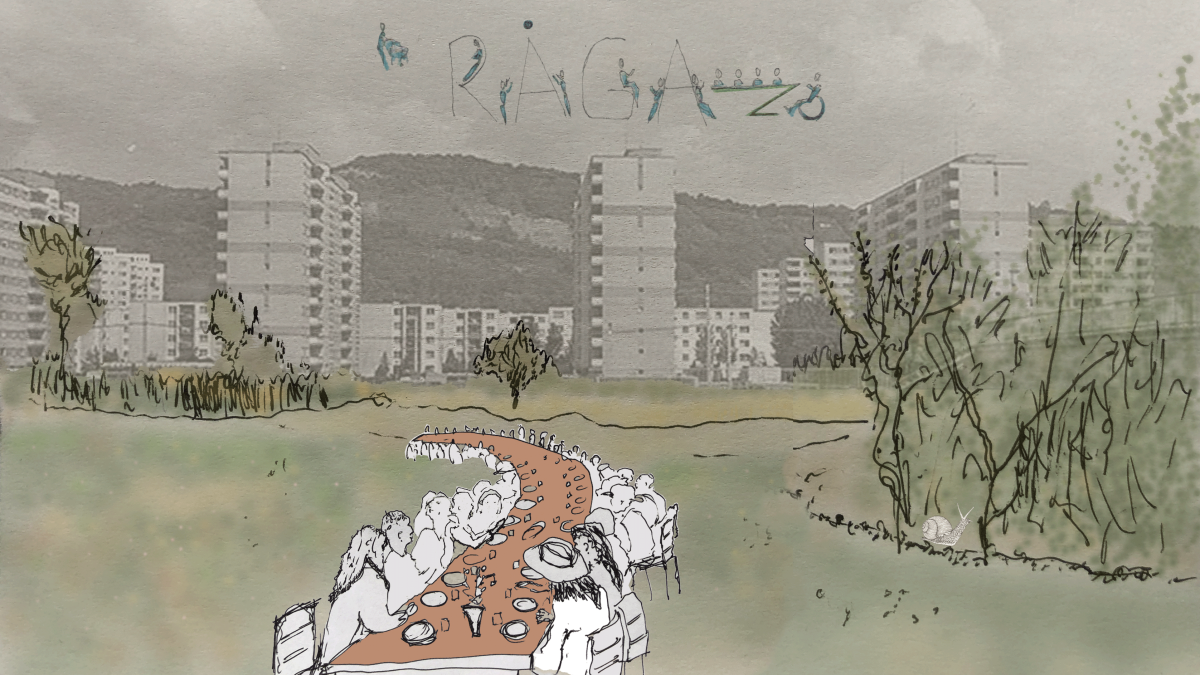
Răgaz de toamnă
Diese Seite enthält keine deutsche Übersetzung.
We are inviting people from various communities in our city for two convivial meals to reflect together on ways to build local solidarity infrastructure as degrowth in practice. We aim to put into practice the just and ecologically resilient world we wish for all living beings through the prefiguration of spaces, systems, relationships and dynamics that break away from capitalist individualistic logic.
Convivial conversations over dinner
There are few things that build closeness quite like a good meal cooked and enjoyed as a collective. We believe that food is the best connector of people and intermediator for ideas to emerge, so we want to make cooking and eating together a central pillar of our gathering. By sharing food, stories, ideas, lived experiences and personal hopes for a more inclusive, socially just and ecologically resilient city, we aim to prefigure alternative ways of being. As Annemarie Mol (2021) explores in her book "Eating in theory", the processes of food consumption foster "an alternative way of “being, knowing, doing and relating” that facilitate a deeper understanding of our interconnectedness and socio-material relations with other living beings, promotes collective responsibility and fosters sustainable practices".
That is why we are inviting people from various communities in our city for two convivial meals to reflect together on ways to build local solidarity infrastructure. We mean spaces or systems of prefiguration of the world we imagine, whether it's a library of things, a free store, a care and support system, a community kitchen, a time bank or any other community based context that not only breaks from capitalist individualistic logic but it's completely autonomous from it.
This action week is a first step in a larger endeavor of our collective - the planning of a Degrowth Conference in September 2027 in Cluj-Napoca. One important chapter of the conference is degrowth in practice, prefiguration of spaces, infrastructures, relationships and dynamics for the just world we wish for all living beings. So we start to explore such opportunities together with folks who live here, in different conditions, neighbours, friends, activists, professionals, youth, queer, elder, parents, working class people; you get the idea. Just like in a natural ecosystem, the bigger the diversity, the more equipped for adaptation and recovery, resilient and healthier the initiatives, ensuring the system's capacity to provide critical services for all members.
We aim for a weekend day and a week day so we can accommodate different schedules and have as much diversity as possible at the table. The exact locations of the two events will be confirmed closer to the time.
The first dinner is scheduled on September 6th and it will focus more on relational solidarity: what and how can we act towards others in a way that serves a collective well-being? The the second one, on September 9th will be more about material needs: what type of material gaps do we need to cover in order to meet at least basic needs for everyone?
Both meals will be vegan and locally sourced as we keep a transversal principle of antispeciism in all our activities.
Our facilitation approach for the two actions will draw on socio-affective methodology in order to help build trust and encourage the sharing of personal emotions, insights and lived experience. Some examples of techniques and tools we aim to use when facilitating the events are:
individual silent reflection and visual mapping using a large paper tablecloth as a canvas for capturing ideas and building a shared visual representation of the discussions
prompt questions to stimulate smaller-group conversations (with your table neighbour, for example) based on active listening, empathy and care
present existing examples of successfully implemented initiatives in similar contexts, that can be analysed and disseminated collectively
We estimate a total of 30-40 people will participate in the two collective meals.
Veranstaltet von:
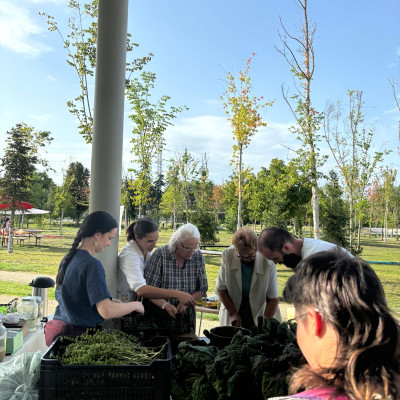
Degrowth Romania
We are a young degrowth collective – the first one in Romania – comprised of experienced individuals with backgrounds in environmental sciences, architecture, psychology, journalism, IT, economics,…