LAGERUNG ALS FÜRSORGE
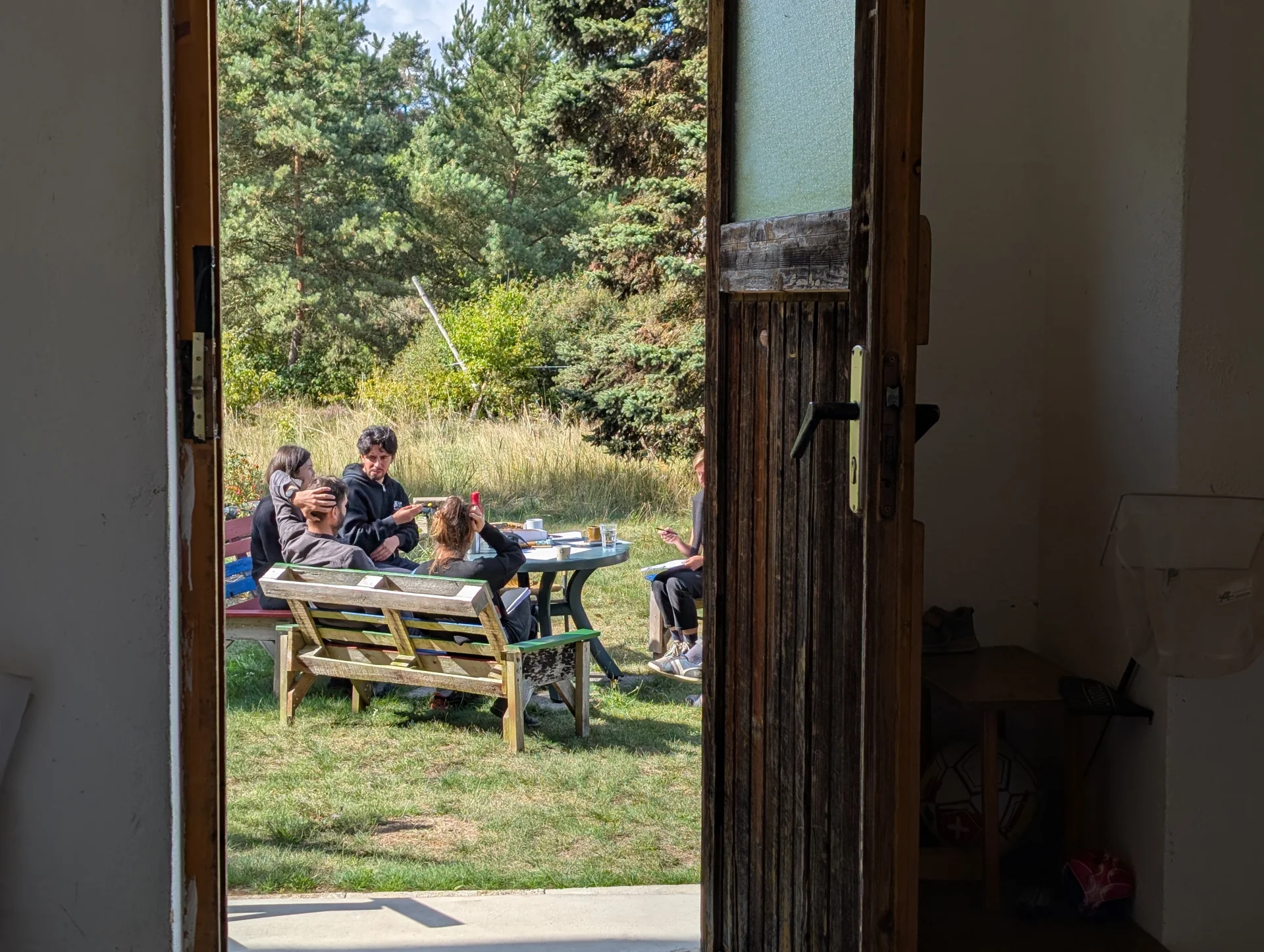



For three days, we stepped away from the familiar role of the architect as someone who begins with a programme, function, or predetermined form. Instead, we worked through action, intuition, observation, and experience.
We began by getting to know the place: its history, context, current condition, and ongoing processes, as well as the people connected to it. The site revealed layers of stories, gradually covered by the patina of time and nature. From this starting point, we opened a series of questions through four different perspectives: What does it mean to care? What can ruins offer as resources? And what is storage—not simply as keeping, but as a way of organising, ordering, and relating to materials? We also looked at the anthropological dimension of storage and how the ways we organise things reflect our relationships with the world around us.
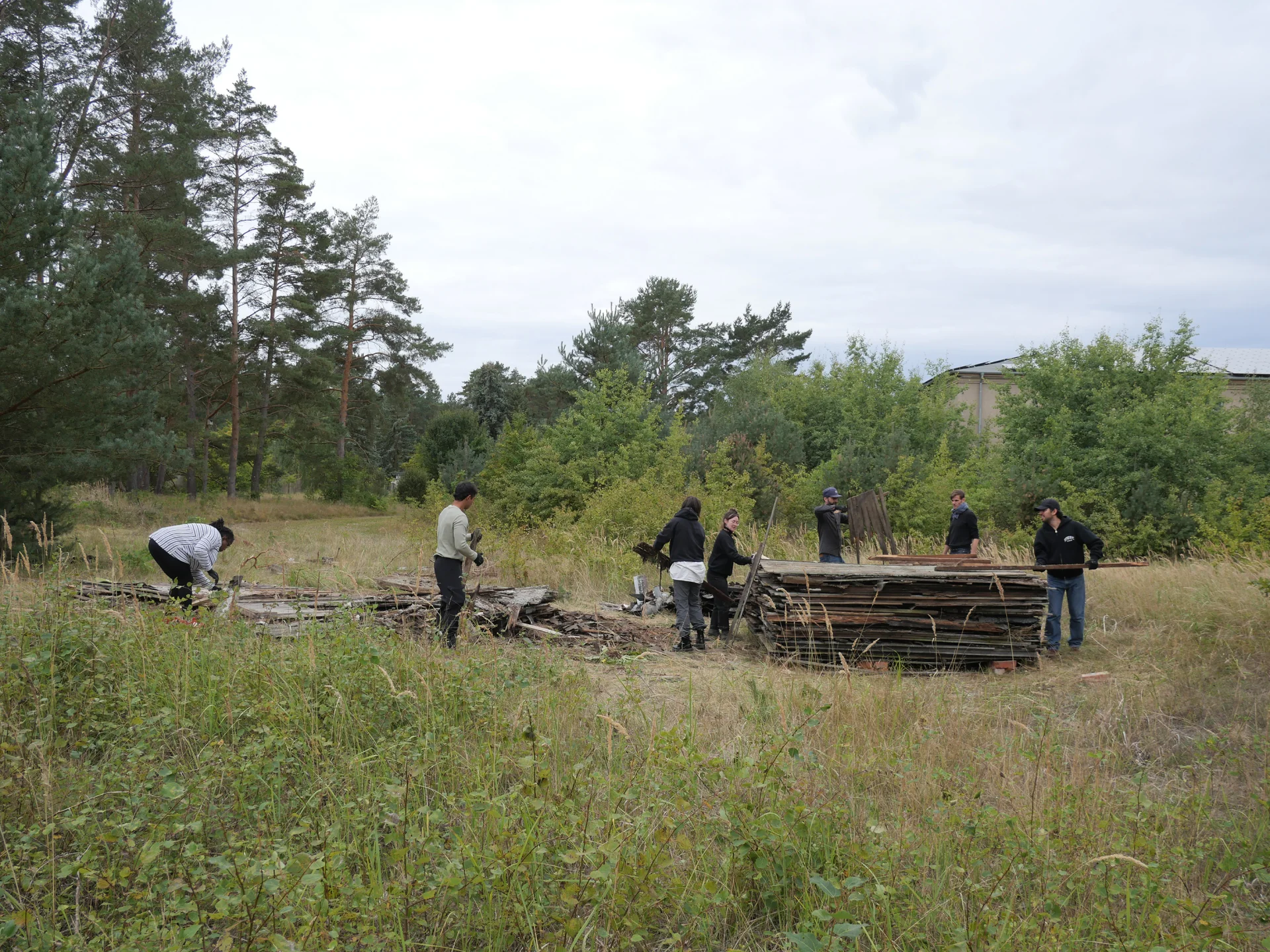
These questions became the starting point for a collective action. Participants came from different backgrounds: students, architects, invited professionals and guests, and members of the local community. Together, we took a pile of ruins and made another pile from it. There was no predetermined function, no final object to design, and no image to reproduce. Instead, we moved, handled, sorted, and stacked the fragments, paying attention to their weight, fragility, shape, and history.
Each time the pile would be rebuilt, it would become something different. Pieces broke, shifted, disappeared, or revealed themselves in new ways. The pile was never the same twice. In this sense, the process itself became part of the work: storage is not simply keeping something in place; it is also a transformation.
The pile was built on a base of old bricks, allowing air to pass underneath and creating a simple condition that could help extend the lifespan of the stored material. It is not intended as a finished object or permanent structure. It is a temporary state - waiting for the next energy to arrive: a new use, a new intervention, the forces of nature, or the people who will inhabit and shape the place.
At the end, the pile became a kind of building in itself - not a building with a programme, but an accumulation of the building’s own remains. The material became architecture through the act of caring for it.
Lagerung therefore became less about finding a function for the ruins and more about asking how we can care for material, place, and time in the present moment. What should be preserved? What can change? What can be allowed to disappear? And what possibilities emerge when we do not begin by asking what something should become, but by asking how we can give it time to become something else?
Lagerung was a collective experiment in staying with what already exists—between decay and renewal, between what has been and what might come next.
Thank you to everyone who participated and contributed to the process:
Akash, Anna S., Anna W., Gerrit, Harriet, Jan, Katrine, Leander, Nina, Oksana, Sah, Thomas