Esso-Park! Encounters with a Strange Place
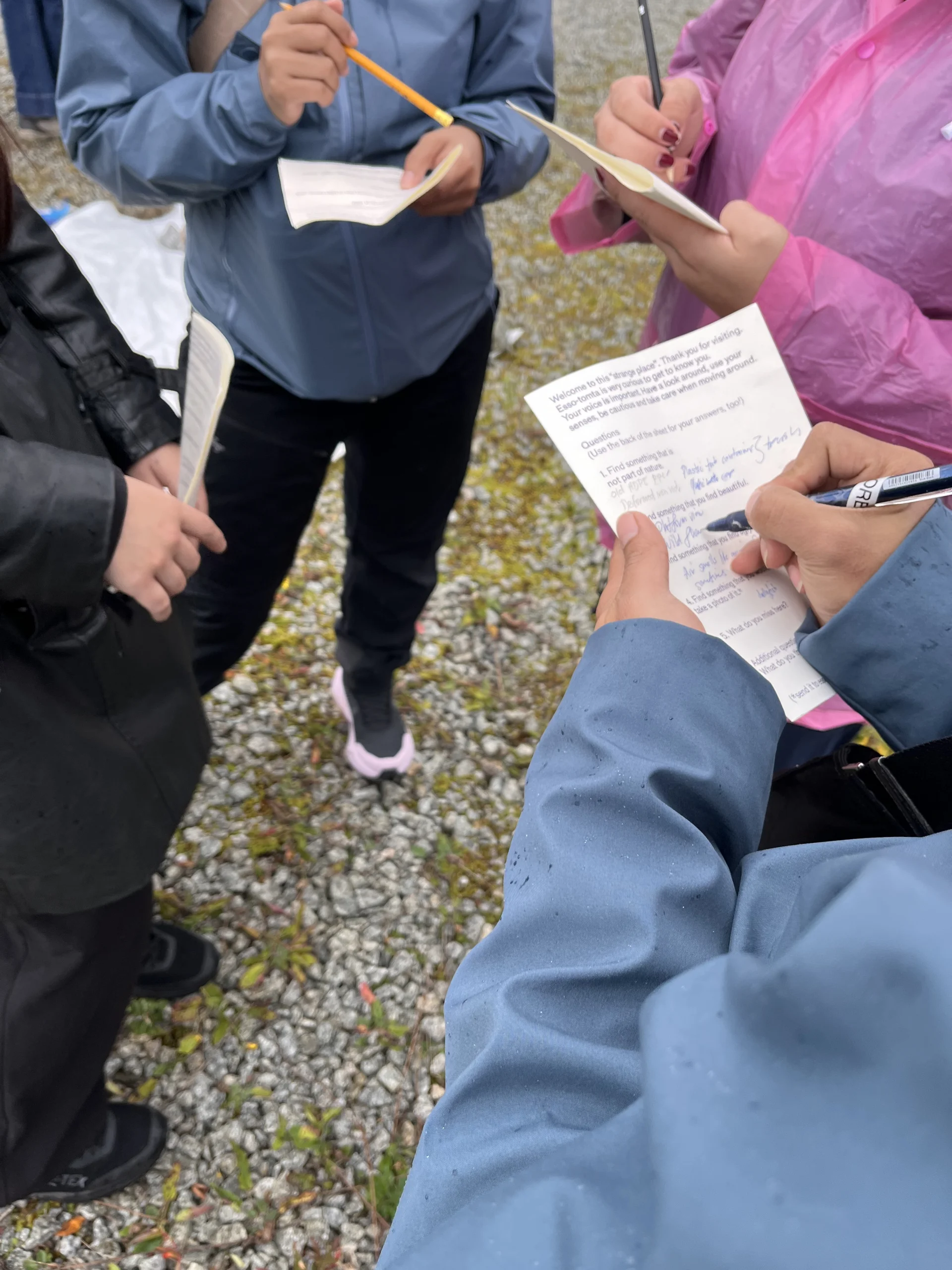
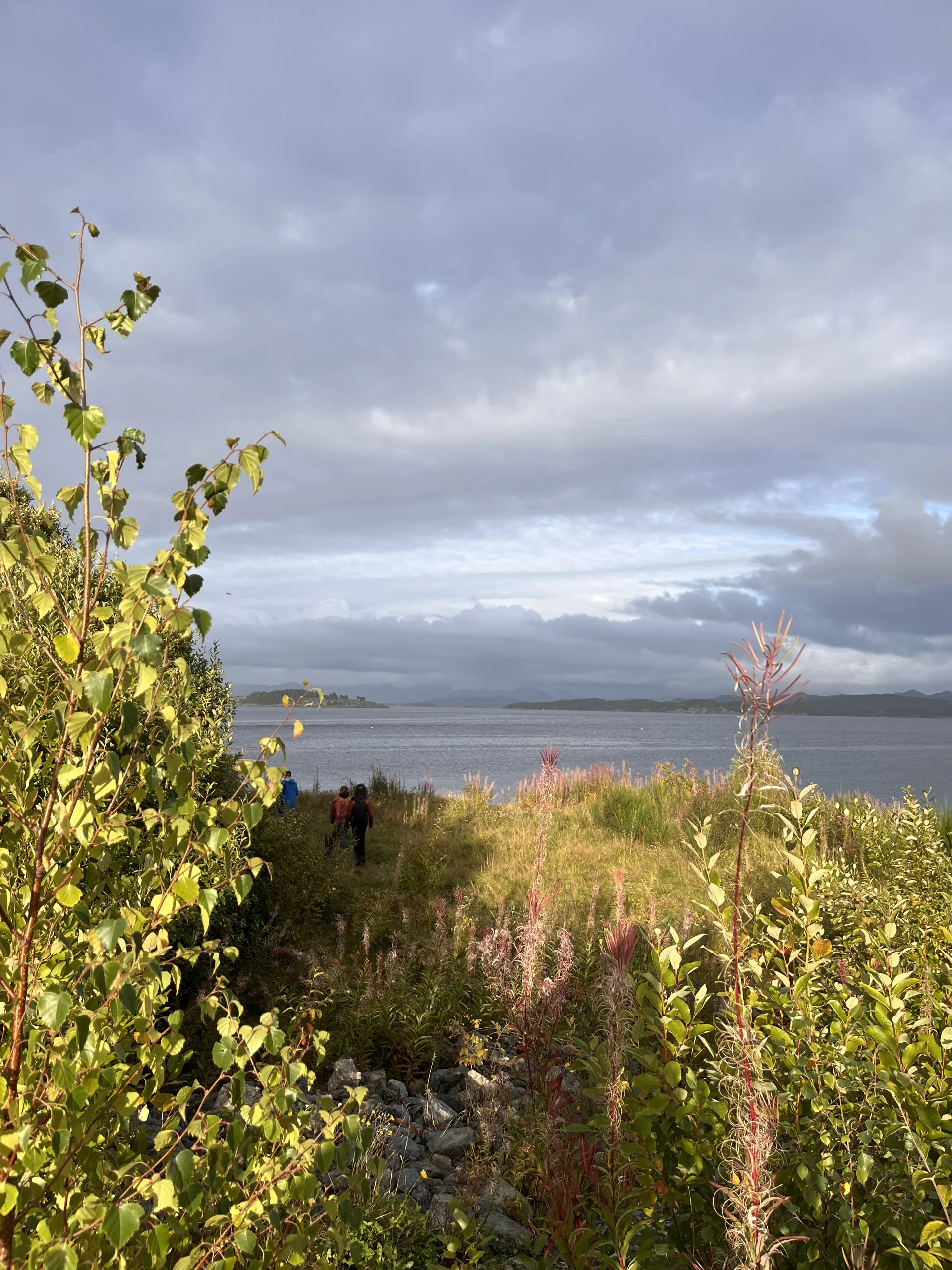
A light drizzle, noise from passing trains. More than 40 students roam around between metal rods, lush trees, and concrete rubble. A fisherman slips through the crowd out to the pier, perhaps wondering what we are doing here on a gloomy Saturday morning. Walking towards the fjord, a view of the mountains opens up, vastness stretching between a construction site for high-rise apartments and distant industrial fumes.
As the students share their first impressions, we start to see again what we organizers had taken for granted. What looks at first like an unremarkable vacant lot is, in fact, a place where several layers of Stavanger, Norway’s so-called oil capital, meet. The Esso-tomt (Esso lot) occupies the ruins of an abandoned oil depot, one of the city’s oldest and largely forgotten oil infrastructures. Nature has slowly reclaimed the site since the late 1980s. It remains a liminal, not quite defined place, and the last green space on the coast of Hillevåg, a historically working-class district now undergoing rapid waterfront transformation.
What can we learn from this urban wilderness in a city shaped by oil? What might we imagine when we allow a place to remain unresolved? And how was our workshop there—observing, walking, talking—changing it?

Esso-Park! as an experiment
Between 5th–20th September 2026, Esso-Park! hosted a series of public activities to collect reflections, concerns, and aspirations for the Esso-tomt before Stavanger municipality will develop it into a curated park. We organized two weeks of Esso-Park! programme to open up a public conversation on what is often overlooked, to document what might eventually be lost to urban development—urban nature and oil heritage—and to explore alternative ways of engaging with this ‘strange place.’
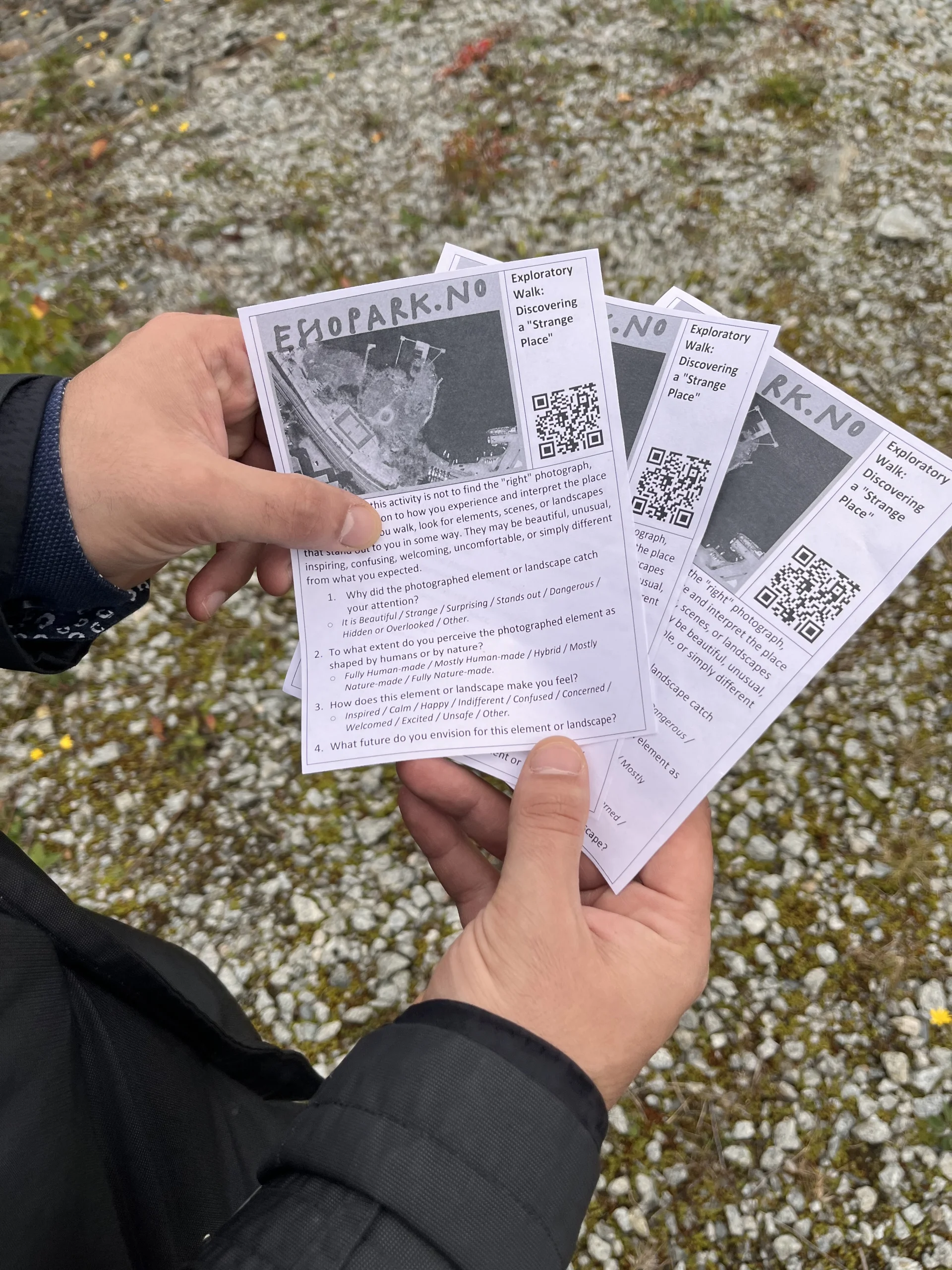
The programme included a clean-up dugnad, a reading of the post-oil sci-fi poem Solaris korrigert (2004) by Øyvind Rimbereid, exploratory walks, a screening of Andrej Tarkovky’s Stalker (1979), a zine workshop and various open conversation formats. All activities took place on-site and were held in Norwegian and English, free and open to everyone. The range of formats allowed us to experiment and form new relations with the site, inviting diverse stories and encounters, and opening up memory and imagination rather than offering fixed solutions.
Embracing Unruliness
The two weeks of activities ended up being gentle and profoundly strange. We dwelled with and listened to the ruins of former fuel tanks, plants, swans, woodlice, and rocks of the Esso-tomt, as the weather shifted constantly between rain, clouds and sun. The weather in Stavanger generally tends to be unpredictable, but on the small Esso-tomt peninsula, it determined what we could do and in which ways we could gather. The relative inaccessibility of the site, with long distances and lack of nearby storage or shelter, meant that most of the activities (except for the school workshop mentioned above) remained small and intimate, with a few friends, artists, students, a local film club, researchers, and neighbours joining in.
In the absence of a formal set up, the atmospheres of the Esso-tomt took center stage, sometimes supporting our activities or, at other times, quietly subverting them. Leftover materials from the clean-up on the first day—a red scooter and a children’s chair in particular—became unlikely companions over time, wandering around the site and showing up in unexpected places along the nearby street, next to benches, or on top of rubble. The wind became a visible presence in Stalker, distorting the projected images on our makeshift film screen. A double rainbow happened to frame the site during our zine workshop on climate futures and weather; the rain soaked our shoes, as we huddled together for shelter under the one umbrella someone had brought. And finally, the reading of a dystopian sci-fi poem turned into a sunny and warm outdoor solarpunk seminar.
In this sense, Esso-Park! became an exercise in attending to a place and to one another, and to what often goes unnoticed. Many of us who took part in the activities and spent time with the Esso-tomt are taking away a deeper familiarity with and fondness for this place: its unruliness as an urban wilderness, a polluted post-oil nature, an archive of local memories, and an anarchic playground.




Towards Decaying Futures
Esso-Park! sought to highlight the value of urban nature, of heritage, of undesigned urban spaces, of slowness and care, but reminded us also of the constraints of participation in the city. For our final Wrap-Up gathering (which we had to move indoors to a community space in the neighbourhood because of heavy rain), local artists, architects, urban planners and researchers from the University of Stavanger came together to reflect on the two weeks and discuss potential paths forward. The event was concluded by Folk music violinist Anders Hana, spanning the spectrum from folk music to democratic participation.
There was strong interest in continuing to work with the Esso-tomt, with ideas ranging from further public activities and zine publications to temporary installations for next spring when the municipality will open another participatory planning process. However, we are also taking away countless more questions about the site’s many layers as well as the ethics of working with the Esso-tomt, without a fixed sense of what it is or should become.
What counts as waste there?
Were we disrupting the place by drawing more attention to it? Were we disturbing the swans, neighbourhood youth or the fishermen on the pier?
Why did some corners of the Esso-tomt feel strangely distant? And why did we sometimes forget those were part of the site at all?
Who are we?
Who owns the Esso-tomt?
What rights does nature have in urban development?
And what is there still to learn for a good life after oil?
→ More info at essopark.no and @byverksted on Instagram.